




Taipei Exhibition | Ghibli Animation Master - Takahata Exhibition Ticket
- Takahata, an animation master who plays a very important role in the development of animation in Japan
- Co-founded "Studio Ghibli" with Hayao Miyazaki and Toshio Suzuki, which has influenced the development of Japanese animation for half a century and leapt to the international stage in one fell swoop
- Director Takahata's creative trajectory not only laid the foundation for the development of Japanese animation after the war, but also deeply influenced creators at home and abroad.
Product Info
The content of this product is provided by machine translation and may not reflect the actual information, please take this into consideration before booking.
- Ticket introduction-
- Venue: Special Exhibition Hall, 2nd Floor, Cultural Center, Taipei Pop Music Center
- Exhibition Dates: June 18, 2022 - September 25, 2022
- Exhibition time: 10:00 - 18:00 (ticket sales and admission will stop half an hour before closing)
- Exhibition address: No. 99, Section 8, Civic Avenue, Nangang District, Taipei City
- Exhibition introduction-
Takahata is an animation master who plays a very important role in the development of animation in Japan. In 1985, he co-founded "Studio Ghibli" with Hayao Miyazaki and Toshio Suzuki, which has influenced the development of Japanese animation for half a century and leapt into the international stage in one fell swoop. .
The Japanese animation giant died of lung cancer on April 5, 2018, which shocked and saddened many animation fans.
This exhibition is co-curated by the National Museum of Modern Art in Tokyo and Studio Ghibli, with up to 2,000 pieces on display. It has been on tour in Japan since 2019, fully presenting Director Takahata's influence on Japanese animation and his work with Ghibli. From the introduction of life to the origin of creation, story inspiration, storyboard manuscripts and images, one by one analyzes the master's heart, understands his persistence and persistence in his works, and makes the appearance of Japanese animation evolve and exert influence, at a glance The final gift from this talented director.
- About Takahata-
Takahata (1935-2018) has been an important film director who has continued to lead the development of Japanese animation for half a century since the 1960s. In 1985, he co-founded Studio Ghibli with Hayao Miyazaki, and discovered the musical wizard Joe Hisaishi as a film score master. The historical works produced by Takahata include many classic animations such as "Little Angel", "Grave of Fireflies", "Hui Yaoji Story", which are masterpieces that accompany us to grow up and are widely loved by fans.
The first full-length work "The Great Adventure of Sun Prince Hals" (1968) was the first attempt by him and the production team to construct a complex world view in a group production method, making this work an epoch-making animation in the history of Japanese animation.
With TV animations such as "Little Angel" (1974) and "Little Anne" (1979) in the 1970s, Takahata began to focus on the depiction of everyday life. He integrates daily life related to food, clothing, housing, transportation and nature into his works, which is different from the creation of fantasy atmosphere in the past, and instead depicts the richness of life.
After the 1980s, Takahata turned the stage of the story to Japan, including "Little Trouble Chie" (1981), "Grave of Fireflies" (1988), "Little Bits of Childhood" (1991), "Heisei Tanuki" He War" (1994), etc., expressing the real Japanese customs and life of the common people. This series of straightforward and powerful works has always made society rethink Japan's experience of reconnecting with modernity during and after the war. "The Story of Kaguya Princess" (2013), which became the last work, challenged the watercolor style of hand-painted lines and created a new expression style that surpassed the past.
Takahata is always exploring themes suitable for today, often exploring the theme of "everyday" in his works, and pursuing new expression methods in the process of animation creation. Director Takahata's creative trajectory not only laid the foundation for the development of Japanese animation after the war, but also deeply influenced creators at home and abroad.
【Main works】
1. "Wolf Boy" (1963-1965)
2. "The Great Adventure of Hals, Prince of the Sun" (1968)
3. "Panda Family" (1972)
4. "Little Angel" (1974)
5. "A Thousand Miles to Find My Mother" (1976)
6. "Future Boy Conan" Episode 9, Episode 10 (1978)
7. "Little Anne" (1979)
8. "Small Trouble Chie" (1981)
9. "Cellist Gao Xiu" (1982)
10. "The Story of Yanagawa Excavation" (1987)
11. "Grave of the Fireflies" (1988)
12. "The Little Bits of My Childhood" (1991)
[The starting point of the first area - Ignite the enthusiasm of the animation world] This area presents the creative process of animation director Takahata after entering the Toei Animation Company in 1959, aiming to become an animation director. Focusing on Takahata's first feature-length animated film "The Adventures of the Sun Prince Hals" (1968), he and his colleagues in the production team tried to use a group production method to construct a complex world view of the work, and reveal the The secret of why this work can become an epoch-making masterpiece in the history of Japanese animation. (Real photos of the scene in Japan)
![[The starting point of the first area - Ignite the enthusiasm of the animation world] This area presents the creative process of animation director Takahata after entering the Toei Animation Company in 1959, aiming to become an animation director. Focusing on Takahata's first feature-length animated film "The Adventures of the Sun Prince Hals" (1968), he and his colleagues in the production team tried to use a group production method to construct a complex world view of the work, and reveal the The secret of why this work can become an epoch-making masterpiece in the history of Japanese animation. (Real photos of the scene in Japan)](https://image.kkday.com/v2/image/get/c_fit%2Cq_55%2Ct_webp%2Cw_960/s1.kkday.com/product_128948/20220428103329_XB01a/jpg)
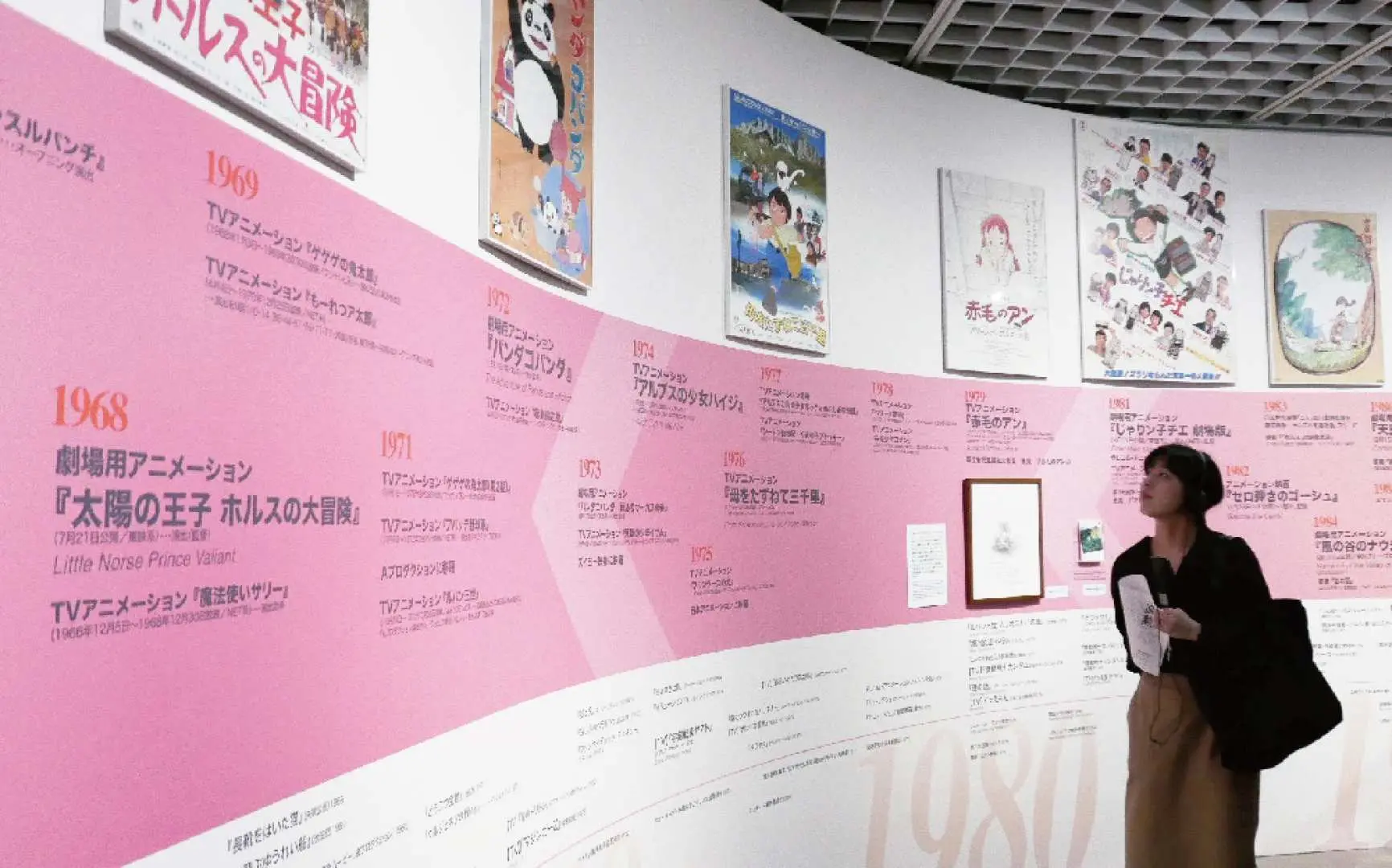
The Great Adventure of Hals, Prince of the Sun" (1968) © Toei


Live photos in Japan


【The joy of daily life in the second district - opening up a new field of animation】 After director Takahata left Toei Animation, he started with the works "Little Angel" (1974), "Mother in Thousand Miles" (1976), "Little Anne" ( 1979) These series of TV masterpieces took animation to a new level. Although TV animation has a time limit that must be completed one episode per week, director Takahata still concentrates on the performance of the animation, and delicately describes the daily life related to food, clothing, housing, transportation and nature, creating 52 episodes a year. Booming popular popular TV series. In this area, we will cooperate with the team of Hayao Miyazaki, Yoichi Odabe, Yoshifumi Kondo, Masahiro Ioka, Hiro Mukuo, etc., and introduce through storyboards, LAYOUT composition manuscripts, background paintings, etc., and get closer to Director Takahata. creative world. "Little Angel" (1974) HEIDI © ZUIYO


"Little Anne" (1979) © NIPPON ANIMATION CO., LTD.'Anne of Green Gables" ™️AGGLA


[The third area focuses on Japanese culture - a dialogue between the past and the present] After the films "Little Trouble Chie" (1981) and "Cellist Kosuke" (1982), Director Takahata began to focus on Japan as the background of the story. It vividly shows the reality of Japanese customs and common people's life. This kind of thinking is also produced by Studio Ghibli's three classic works, "Grave of the Fireflies" (1988), "Little Bits of Childhood" (1991), and "Heisei Tanuki War" (1994). presented in. This section will focus on the interpretation and description of the Japanese reconnecting with the modern world during and after World War II, and on the development of the theme of "mountains, forests and grasslands surrounding villages". (Actual photo of the scene in Japan © Nosaka Akira / Shinchosha, 1988)
![[The third area focuses on Japanese culture - a dialogue between the past and the present] After the films "Little Trouble Chie" (1981) and "Cellist Kosuke" (1982), Director Takahata began to focus on Japan as the background of the story. It vividly shows the reality of Japanese customs and common people's life. This kind of thinking is also produced by Studio Ghibli's three classic works, "Grave of the Fireflies" (1988), "Little Bits of Childhood" (1991), and "Heisei Tanuki War" (1994). presented in. This section will focus on the interpretation and description of the Japanese reconnecting with the modern world during and after World War II, and on the development of the theme of "mountains, forests and grasslands surrounding villages". (Actual photo of the scene in Japan © Nosaka Akira / Shinchosha, 1988)](https://image.kkday.com/v2/image/get/c_fit%2Cq_55%2Ct_webp%2Cw_960/s1.kkday.com/product_128948/20220428102909_EuM0s/jpg)

"Grave of the Fireflies" (1988) © Nosaka Akira / Shinchosha, 1988


"Heisei Tanuki War" (1994) © 1994 Hatake Jimusho - Studio Ghibli - NH


Live photos in Japan

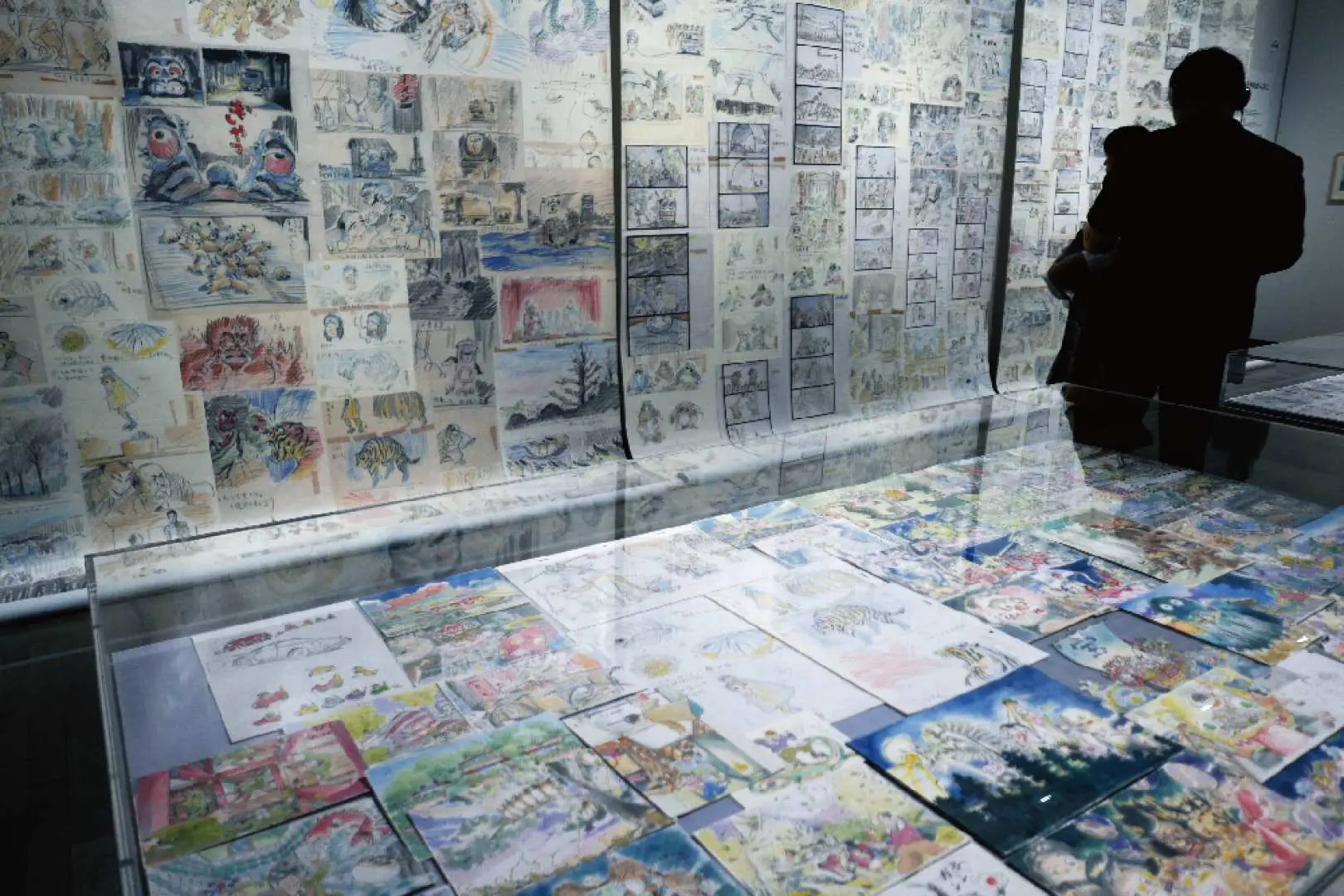
【Traditional dynamism in the fourth district - challenges in the new animation field】 In the 1990s, Director Takahata devoted himself to the study of traditional picture scrolls, exploring a new animation expression style that integrates characters and backgrounds. And this also blossomed in "The Yamada-kun Next Door" (1999) and "The Story of Kaguya Hime" (2013). Using digital technology in his works, he challenges the watercolor style of hand-painted lines and achieves a completely different expression from the original celluloid paintings. (Real photos of the scene in Japan)


Purchase Notice
- Each ticket can only be used by one person once, and admission is by ticket. Please take good care of the ticket. If the ticket is lost, damaged, punched, or other unrecognizable circumstances, it will be considered invalid, and will not be accepted for return, exchange and reissue.
- After the exhibition period, refunds cannot be cancelled. It is recommended to visit the exhibition venue as soon as possible during the exhibition period.
- Children under the age of 3 can enter for free. (Relevant documents need to be presented, and those who do not carry the documents will be judged to be less than 90 cm; parents need to be accompanied by tickets; the age calculation method is based on the actual age on the day of entry and visit)
- Those who are eligible for ticket-free status, please show their ID for verification by the service staff before entering the venue. If you do not meet the qualifications, please purchase tickets according to your identity; those who meet the preferential status (preferential tickets, love tickets) cannot ask for partial refunds or subsidized tickets after entering the venue. difference.
- In order to enable the service staff to clearly identify, the necessary companions of the disabled are requested to enter the venue closely with the disabled.
Reminders
There are lockers in the venue. The organizer does not provide storage services and is not responsible for personal property losses. Please keep your belongings and valuables properly.
Please abide by the visiting route, the rules of the exhibition hall and the instructions of the on-site staff. If there are many people, please wait in order.
Photography is prohibited in the exhibition hall, and video recording and the use of flash, tripods and selfie sticks are prohibited throughout the venue.
Playing, running and eating are prohibited in the exhibition venue, and food or beverages are not allowed to enter the venue; smoking, chewing gum and betel nut are prohibited; it is prohibited to sell or resell tickets at the venue; Immediate departure without objection, no compensation or refund of ticket fees.
Pets (except guide dogs), long-handled umbrellas, and various dangerous and contraband items are not allowed in the exhibition venue; it is forbidden to tap, touch or climb the exhibits and showcases in the exhibition venue. If there is any damage, compensation will be required according to the price.
If you need to re-enter the venue after leaving the venue, you can stamp the repeated entry stamp at the exit of the exhibition venue and queue up at the entrance again to enter the venue, but only entering and leaving the exhibition during the opening hours of the exhibition on the day. There is no need to purchase additional tickets to purchase goods in the souvenir area. Please go to the souvenir area from the exit.
Strollers can be pushed into the exhibition hall. However, due to the large crowds, the strollers will be restricted from entering the venue depending on the crowd. Please understand.
If there is any change in the business hours and regulations of the exhibition, please refer to the site or the official fan group announcement.
How to Redeem Your Voucher
How to Use Your Voucher
- Please present your QR code on-site
Voucher Redemption Period
- Valid for redemption before 2022-09-25; Invalid after expiration
Experience Location
Location Name: Special Exhibition Hall, 2nd Floor, Cultural Center, Taipei Pop Music Center
Address: No. 99, Section 8, Civic Avenue, Nangang District, Taipei CityGet Help


