


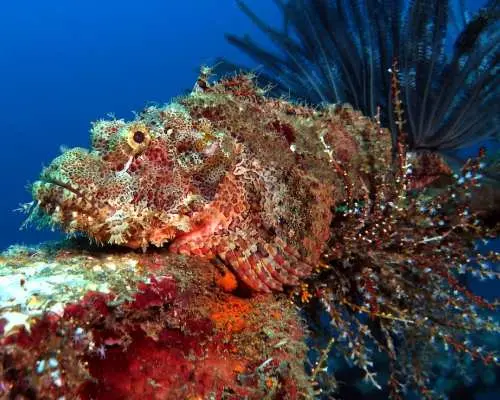
Boracay Budget Discover Scuba Diving Experience for Beginners | Philippines
Learn all the tips and tricks to becoming a scuba diving master with this experience! Enjoy a Boracay scuba diving session and be guided by an experienced diving coach. Get all the skills you need to explore the island’s beautiful marine life!
- Explore the underwater world with the help of a professional scuba diving instructor
- Learn the basics of scuba diving with this customized dive session
- Get a good deal for this experience with KKday
Package Options
Water Activities
| Water activity type | Diving |
| Special water activity | Trial dive (beginner) |
Product Info
What You Can Expect
1 Day
- Meet at Station 1, Astoria Boracay Beachfront
- Alternatively, meet at the other designated meeting point: 7-Eleven Convenience Store Beachfront
- Explore Boracay's rich marine life with this scuba diving experience


How to Redeem Your Voucher
How to Use Your Voucher
- Please present the e-voucher on-site
Validity Period
- The voucher must be used on the selected date and within operating hours; Invalid after expiration
- For immediate concerns, please contact supplier at these numbers: 09214520760, 09691010271, 09999928167
Pickup Point
Location Name: Station 3, 7-Eleven Convenience Store Beachfront
Address: 7-11 Station 3, Malay, Aklan, PhilippinesLocation Name: Station 1, Astoria Boracay Beachfront
Address: Boat Station 1 Boracay Island, Brgy. Balabag, Malay, 5608 AklanExperience Location
Location Name: Astoria Boracay Station 1 Beach Front
Address: Astoria Boracay

FAQ
1. What makes a Discover Scuba Diving experience in Boracay enjoyable for beginners?
Boracay offers calm, clear waters and vibrant shallow reefs, making it an ideal location for beginners to try scuba diving. The experience is enhanced by professional instructors who provide personalized guidance, ensuring comfort and safety throughout the session. Participants learn basic skills in a relaxed environment, allowing them to focus on exploring the island's beautiful marine life, such as colorful fish and corals, at a comfortable depth. This combination creates a thrilling yet accessible introduction to the underwater world.
2. What is the typical maximum depth for a beginner's Discover Scuba Diving session in Boracay?
For a Discover Scuba Diving (DSD) session in Boracay, beginners typically dive to a maximum depth of 12 meters (40 feet). This depth limit is established by international diving organizations to ensure participant safety and allow for a comfortable introduction to the underwater environment without requiring extensive prior training. Instructors diligently monitor the depth during the dive to guarantee a safe and enjoyable experience for all first-time divers.
3. What safety measures are in place for beginner Discover Scuba Diving experiences in Boracay?
Safety is paramount for beginner Discover Scuba Diving experiences in Boracay. Key measures include a comprehensive pre-dive briefing that covers equipment usage, communication signals, and essential safety procedures. Participants are always supervised by a certified professional instructor in small groups. Dives are conducted in shallow, controlled environments with well-maintained equipment. Instructors maintain constant vigilance, continuously monitoring participants' comfort and well-being underwater.
4. What is the 'no-decompression limit' or '120 rule' in recreational scuba diving?
The 'no-decompression limit' (NDL) in recreational scuba diving refers to the maximum amount of time a diver can stay at a specific depth without needing mandatory decompression stops during ascent to prevent decompression sickness. While not a strict '120 rule,' recreational diving guidelines emphasize staying well within these NDLs. For Discover Scuba Diving, participants are always kept well within safe, shallow limits and are closely supervised by instructors, making complex decompression procedures unnecessary.
5. What are the common local transportation options available for travelers in Boracay?
The primary local transportation in Boracay consists of electric tricycles, also known as e-trikes. These vehicles are widely available and can take you along the island's main roads and to various beaches. Some hotels also provide complimentary shuttle services for their guests. For longer distances or specific transfers, private vans can be arranged. Additionally, walking is a popular and enjoyable option for short distances, especially along the scenic beach paths.
6. Can ride-hailing services like Grab be used for local travel within Boracay?
Traditional ride-hailing services like Grab are not widely operational for local transportation within Boracay Island itself. The island primarily relies on its well-established system of electric tricycles (e-trikes) for public and short-distance travel between points like Stations 1, 2, and 3, and other attractions. However, Grab services might be utilized for booking transfers to and from Caticlan Airport, which serves as the mainland gateway to Boracay.
7. What kind of marine life can beginners expect to see during a Discover Scuba Diving session in Boracay?
During a Discover Scuba Diving session in Boracay, beginners can expect to encounter a vibrant array of marine life in the shallow coral gardens. Common sightings often include various species of colorful reef fish, such as clownfish, parrotfish, and damselfish, gracefully navigating the corals. You might also spot sea turtles, small stingrays, and an impressive diversity of both soft and hard corals, offering a beautiful and memorable introduction to the underwater ecosystem.
8. What fundamental skills are taught during a beginner's Discover Scuba Diving experience in Boracay?
A beginner's Discover Scuba Diving experience in Boracay focuses on teaching essential skills for a safe and enjoyable initial dive. These typically include how to breathe effectively underwater using the scuba equipment, techniques for clearing your mask if it fogs or fills with water, and methods for recovering your regulator should it come out of your mouth. You will also learn crucial hand signals for clear underwater communication with your instructor.


