


Litchfield National Park Waterfalls Day Tour | Darwin
- Embark on a journey to Litchfield National Park and marvel at its natural scenery, including the spectacular Florence Falls. Visit rainforest pockets and historical sites along the way. Greet hundreds of native bird species and see wide ranges of woodland flora.
Package Options


Product Info
Established in 1986, Litchfield National Park is a hidden gem only a one-hour drive south of Darwin. Marvel at stunning waterfalls that cascade into crystal clear pools, iconic magnetic termite mounds, and clusters of weathered sandstone pillars. Explore its rainforest pockets and spot historic sacred sites along the way.
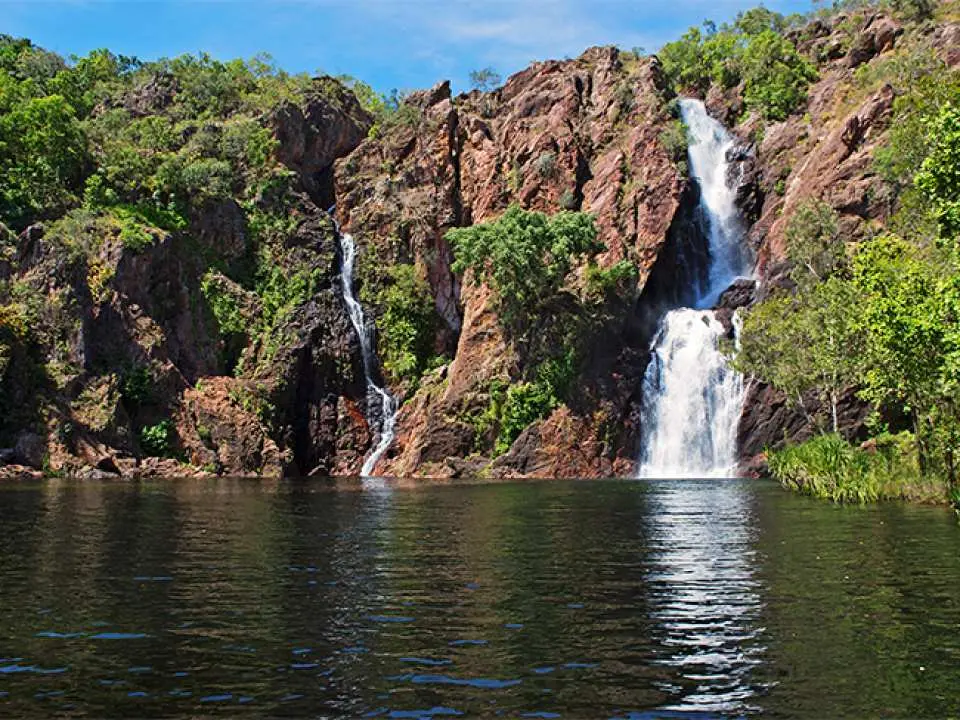
Enjoy swimming beneath the tumbling twin torrents of Florence Falls and take a visit to Wangi Falls, the largest and most accessible waterfall in Litchfield. Take a walk through the monsoon forest in the ancient gorges and spot hundreds of native bird species, as well as a rich range of woodland flora.
— Itinerary —
- Florence Falls: View the double falls from a high vantage point before making your way down to take a swim in the plunge pool
- Interpretive Guided walk: Walk through the scenic bush and monsoon vine forest
- Tolmer Falls: Take photos in front of the home of colonies of rare ghost and orange horseshoe bats
- Lunch: Enjoy a lunch break at the Litchfield Cafe
- Wangi Falls: Relax and swim in the large plunge pool at the most accessible waterfall in Litchfield
- Howard Springs Nature Park: Cool off and get the chance to feed barramundi and turtles
- Magnetic Termite Mounds: Snap a photo with the work of local termites that stand upright like magnetic compasses
— Available Booking Dates —
- Litchfield National Park Waterfalls (D5)_1: from October 26, 2021, to April 1, 2022
- Litchfield National Park Waterfalls (D5)_2: from April 2, 2022, to May 31, 2022
- Litchfield National Park Waterfalls (D5)_3: starts from June 1, 2022
Dip into the refreshing crystal clear water beneath the popular double falls, Florence Falls
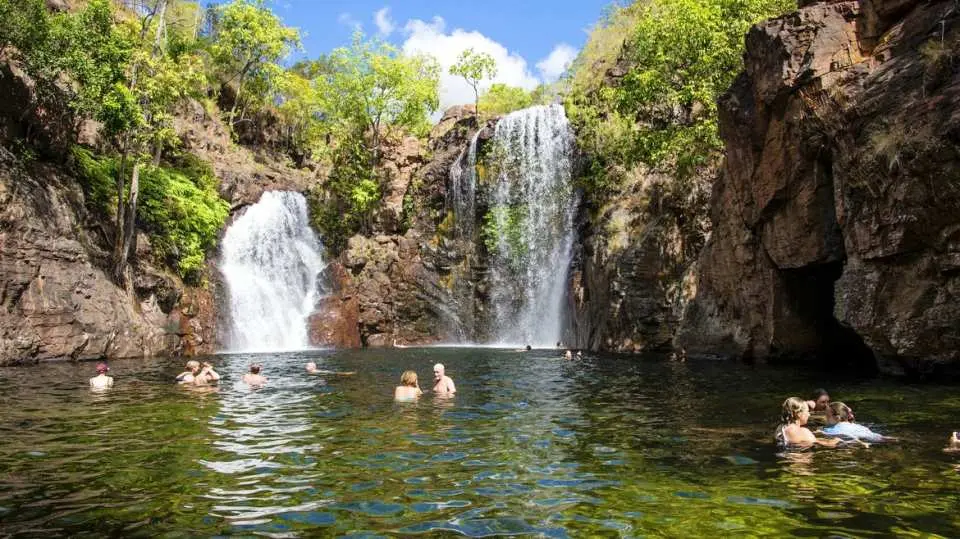

Relax and admire the beauty of surrounding natural landscapes


Visit the spectacular Tolmer Falls and see the sparkling cascade plunging into a swimming hole bordered by rainforest


Take a final dip in Wangi Falls surrounded by lush monsoon rainforest

Snap a picture of the soaring magnetic termite mounds


Purchase Notice
- The Northern Territory Park Pass will NOT be included for departures after 1 November 2023. Please purchase your Northern Territory Park Pass here
Reminders
Travelers are advised to bring enclosed walking shoes, sunglasses, a hat, sunscreen, a water bottle, swimming suit, and towel
(For departures after 1 November 2023) The Northern Territory Park Pass will NOT be included for departures after 1 November 2023. Please purchase your Northern Territory Park Pass here: https://nt.gov.au/parks/park-pass
Cancellation Policy
- Once the order has been completed, it cannot be canceled, modified, or refunded
- Due to time zone differences, the confirmed cancellation date is based on the supplier’s local time. Please allow 2–5 business days to process your cancellation request, after which the cancellation fee will be charged according to the product’s cancellation policy. Once the cancellation is confirmed, you will receive your refund within 14 working days.
FAQ
Litchfield National Park is conveniently located approximately 1.5 to 2 hours south of Darwin, the capital city of Australia's Northern Territory. This proximity makes it a popular destination for day trips and offers relatively easy access for visitors staying in Darwin.
Yes, both freshwater and saltwater crocodiles can inhabit the waterways of Litchfield National Park. While freshwater crocodiles are generally less aggressive, it is crucial to always observe warning signs and swim only in designated, safe areas. Always follow local advice for your safety.
To comprehensively experience Litchfield National Park's major waterfalls, swimming holes, and key attractions like Florence Falls, Tolmer Falls, and Wangi Falls, a full day (approximately 8-10 hours including travel) is generally recommended. This allows ample time for swimming, walking, and enjoying the natural scenery.
The most common way to reach Litchfield National Park from Darwin is by self-drive, taking approximately 1.5 to 2 hours. Alternatively, many guided day tours operate from Darwin, offering convenient round-trip transportation, often in air-conditioned vehicles, and including guided visits to key sites within the park.
Within Litchfield National Park, the main attractions are best explored by driving between sites and then taking short walks to viewpoints or swimming holes. Many waterfalls, like Florence Falls, have designated walking trails leading to viewing platforms and plunge pools, perfect for swimming and photography. Some areas are accessible by 4WD only.
At Florence Falls, visitors can marvel at the scenic twin waterfalls cascading into a clear plunge pool, which is ideal for swimming. There are multiple lookout points offering panoramic views, and a well-maintained boardwalk leads down through a monsoon rainforest to the base of the falls, providing a refreshing experience.
Litchfield National Park is rich in biodiversity. Visitors can often spot various native bird species, wallabies, and other mammals. The park is also known for its diverse woodland flora, including towering eucalyptus trees, cycads, and lush pockets of monsoon rainforest that thrive around the numerous waterfalls.
Yes, Litchfield National Park features several historical sites that offer insight into the region's past. These include remnants of early European settlement and mining activities. A notable example is the historic town of Batchelor, located near the park's entrance, which provides glimpses into its history as a uranium mining center.
Get Help


