


Introductory Scuba Diving Lesson in Boracay | Philippines
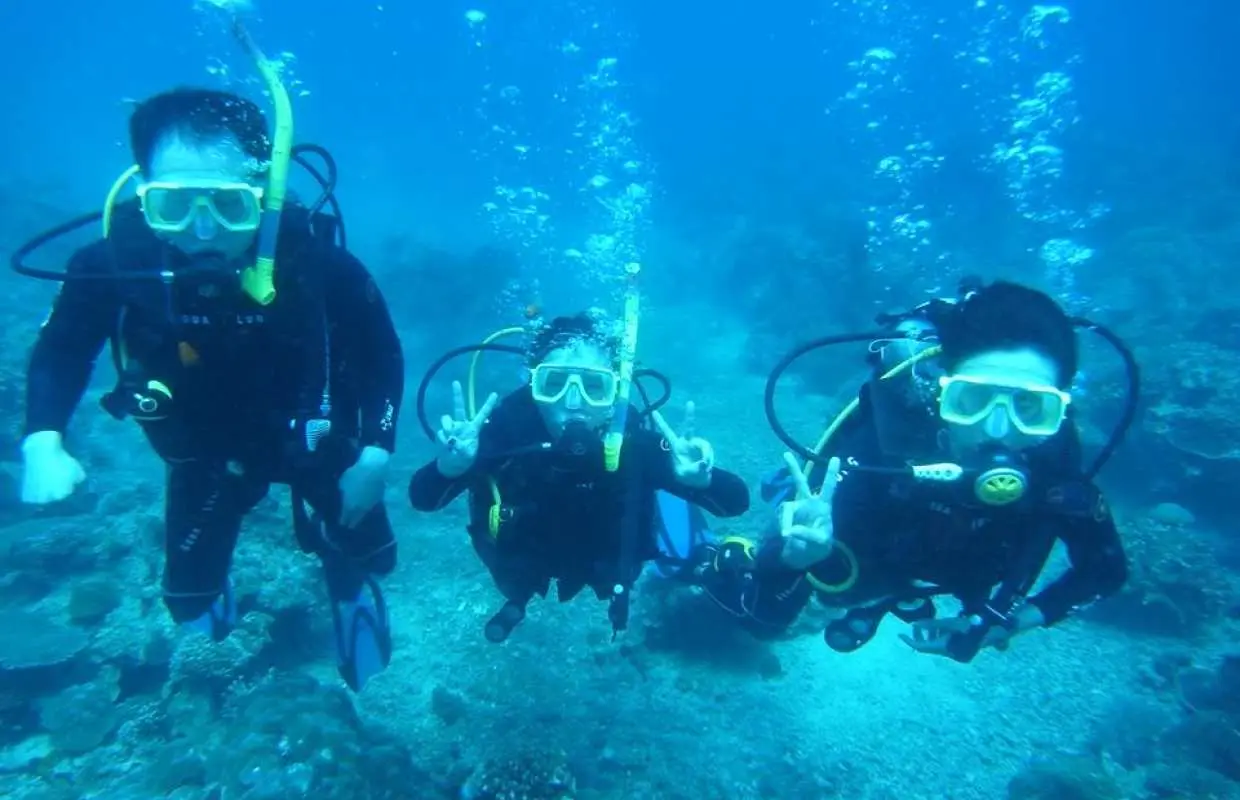
- Learn the fundamentals of scuba diving in a customized dive session with a small group
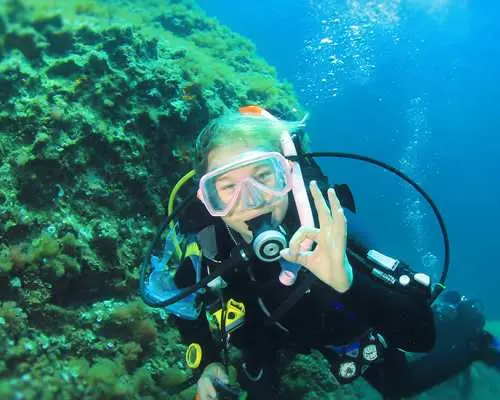
- Explore the underwater world with a professional scuba diving instructor
- Enjoy a free video recording of your scuba diving experience
Package Options
Water Activities
| Water activity type | Diving |
| Special water activity | Trial dive (beginner) |
| Activity level | Beginner |
Product Info
What You Can Expect
1 Day
- 09:00Gather at meeting point and begin your scuba diving adventure in Boracay.
- 10:00Listen to the safety briefing and learn how to use the equipment from your professional instructor
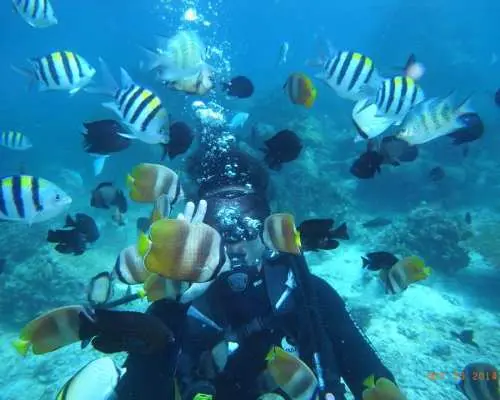
- Swim around with the fish in Boracay
- Explore the rich marine life on this scuba diving experience
- Make your holiday more memorable by scuba diving with friends and family
- 10:30Dive deeper and practice your scuba skills
- 11:30Return to the diving center


Purchase Notice
- Guest are required to sign a Diver Medical Form before experience. Guest who deny to sign will not be able to join, and no refund will be granted.
Reminders
Voucher will be sent within 2 working days of booking confirmed. Please look after it and contact the local agency in the event of any inquiries
Please refrain from eating an overly heavy meal before diving
Prescription goggles are available upon request; wearing contact lenses is also permitted
In the event of dangerous weather conditions (typhoons, severe storms, etc.), the trip will be canceled; participants will be informed about the cancellation in time and refunds will be granted
Guest are required to sign a Diver Medical Form (https://drive.google.com/file/d/1m61lP69QeTlcn2b1MkdYEmkfn-tOF2SK/view?usp=sharing) before experience. Guest who deny to sign will not be able to join, and no refund will be granted.
According to universal safety standards, participants are prohibited to go scuba diving 18 hours prior to taking a flight
The language of the guide will depend on availability. If a guide is not available in your chosen language, an English-speaking guide will be provided.
How to Redeem Your Voucher
How to Use Your Voucher
- Please present the e-voucher on-site
Meeting Point
Location Name: November - May (Amihan Season) - Astoria Station 1 Beachfront
Address: Astoria Boracay Boat Station 1 Boracay Island, Brgy. Balabag, Malay, 5608 Aklan, PhilippinesLocation Name: June - October (Habagat Season) - Mcdonalds Dmall Highway
Address: 389 Main Rd, Malay, 5608 Aklan, PhilippinesExperience Location
Location Name: Boracay Adventures Travel & Tours
Address: 2nd Floor Sunflower Resort BoracayFAQ
An introductory scuba diving lesson in Boracay is designed for beginners with no prior experience. It typically includes a brief theory session on equipment and safety, followed by shallow water practice of essential skills like mask clearing and regulator recovery. Afterwards, you'll enjoy a supervised open water dive with a professional instructor to explore Boracay's vibrant marine life, learning to breathe and move underwater.
Yes, Boracay is highly suitable for beginners interested in introductory scuba diving. Its waters are generally calm and clear, offering excellent visibility. The island boasts numerous reputable diving schools with experienced instructors who specialize in teaching first-time divers. You can comfortably learn the fundamentals and explore a diverse range of marine life in a safe and supportive environment.
The best time to experience introductory scuba diving in Boracay is generally during the dry season, which runs from November to May. During these months, the weather is more stable, visibility underwater is excellent, and the sea is calm, providing ideal conditions for beginners to learn and enjoy the underwater world. March to May often offers peak conditions with warm waters.
For introductory scuba diving in Boracay, essential hand signals include 'OK' (circle with thumb and forefinger), 'Something is wrong' (hand flat, palm down, rocking motion), 'Go up' (thumb pointing up), 'Go down' (thumb pointing down), and 'Stop' (flat palm facing forward). Your instructor will review these crucial signals during your lesson to ensure clear communication and safety underwater.
Several safety rules are vital for introductory scuba diving in Boracay. You must always dive under the direct supervision of a professional instructor and never hold your breath. The '120 rule' refers to avoiding flying for at least 12-24 hours after diving, depending on the number of dives, to prevent decompression sickness. Always ascend slowly and consistently, and report any discomfort immediately to your instructor.
During an introductory scuba diving lesson in Boracay, you can expect to learn the basic principles of scuba equipment, essential breathing techniques, and fundamental underwater safety procedures. This includes how to clear your mask, recover your regulator, and equalize pressure. After a confined water practice session, you will go on a supervised open water dive to apply your new skills and explore Boracay's stunning marine environment.
An introductory scuba diving lesson in Boracay often includes a customized dive session conducted in a small group, ensuring personalized attention from a professional instructor. You'll have the opportunity to explore Boracay's diverse underwater world and its vibrant marine life. Many lessons also offer a complimentary video recording of your entire scuba diving experience, allowing you to relive and share your adventure.
Yes, participants in introductory scuba diving in Boracay should generally be in good health and comfortable in the water, though strong swimming skills are not always a strict requirement. You should not have severe respiratory or cardiovascular conditions, such as asthma or heart problems. A minimum age, typically 10 years old, is also usually enforced. It's crucial to inform your dive center of any medical conditions.
Get Help


