


Hsinchu, Taiwan | 2 days and 1 night in Hsinchu | Simakus Sacred Trees Hiking & Zhenxibao Church & Secret Waterfall | Depart from Hsinchu
- Explore Smangus, known as "God's Tribe," and experience the Atayal culture in depth.
- Hiking through the Smangus Sacred Tree Grove offers a spectacular and sacred view of the entire ancient red cypress forest, allowing you to experience the cleansing power of nature.
- Visit the idyllic village and appreciate its natural ecology, ancient architecture, and historical background.
- The cherry blossom season in Smangus is expected to begin in February, while the cherry blossom season in Zhenxibao is expected to last from the end of February to the end of March. The actual blooming conditions will depend on the weather.
- The peach season is expected to be from mid-June to mid-August, and the maple leaf season is expected to be in December, but the actual season will depend on the weather conditions.
Package Options


Sightseeing Tours
| Transportation method | Transfer from meeting point |
| Tour types | Guided tour |
| Meal arrangement | Arrange yourself |
| Sightseeing type | Natural sights, Forest bathing, Eco-tourism, Hiking |
| Transport | Charter car, Walking |
Product Info
The content of this product is provided by machine translation and may not reflect the actual information, please take this into consideration before booking.
- Itinerary Introduction -
- Smangus
Smangus is located in the foggy northeastern corner of Taiwan, at an altitude of about 1,600 meters. It is known as "God's Tribe" and is famous throughout Taiwan for its giant red cypress forest. It takes about two hours to walk from the tribe to the primeval forest. When you arrive at the giant red cypress forest, you can see the giant tree known as "Grandpa Sacred Tree". It is about 2,500 years old, with a circumference of 20.5 meters and a height of about 35 meters. Its most distinctive feature is its "human" shape. The discovery of the sacred tree has attracted many people and made it the Furusato of cypress.
- Xinguang Tribe
Located in the 8th neighborhood of Xiuluan Village, Jianshi Township, Hsinchu County, at an altitude of 1,670 meters, the Xinguang Tribe is inhabited by Atayal people who migrated from the Ruiyan Tribe of Faxiang Village, Ren'ai Township, Nantou County. Originally named Smakus, the tribe was renamed Xinguang Tribe by the household registration authorities to avoid confusion with the homophonous name. The tribe comprises 50 households, with approximately 250 to 300 residents.
- Zhenxibao Church
The church, situated at an altitude of approximately 1,700 meters, is a breathtakingly beautiful Christian church built brick by brick by the Atayal people, embodying their wisdom and faith. The church also offers a superb view overlooking the town of Zhenxibao, symbolizing its protection of the town.
- Xiuluan Warship Rock Suspension Bridge
This giant rock stands quietly in the deep pool at the bottom of the stream, like a great river. Every autumn, the mountain is covered with maple leaves, attracting many photography enthusiasts to capture the unique beauty of this season. Listening to the natural melodies echoing in the valley, the chirping of insects and birds, the lush green forests, and the mottled red leaves, all those who stand here are travelers who linger.
-Accommodation Information-
- If Ririchun B&B and Xilike B&B are fully booked, we will arrange another B&B of the same standard.
- We regret that we cannot specify the guesthouse; arrangements will be made by our staff.
- Some guesthouses do not serve meals, so you may need to walk to a nearby guesthouse for a meal.
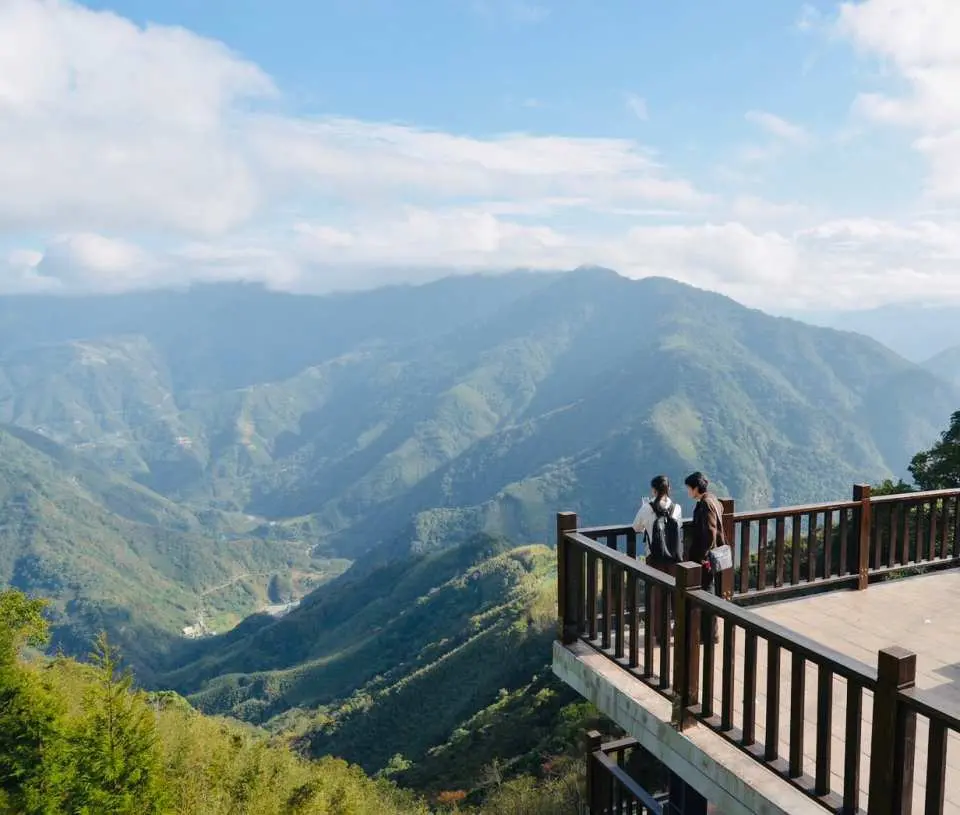
Yulao Observation Deck

Simakus Giant Trees


Simakusi Bamboo Forest Scenery


Town West Castle Church


Xiulan Gunkanyan Suspension Bridge


Battleship Rock


Purchase Notice
- Children under 3 years old do not occupy beds, meals or tickets. Please indicate the number of children traveling with you in the order.
- If you have special dietary needs (such as not eating meat or seafood, etc.), please make a note when placing an order.
- For vegetarians, we can only provide ovo-lacto vegetarian food, but not vegan food. Please place your order if you find it acceptable.
- The second day's itinerary is at Zhenxibao Forest Elementary School. Due to the epidemic and the fact that the elementary school has started, we will change the tour to the outer area on weekdays. We can only enter and visit on holidays. Please be advised
- The temperature in Simakus is relatively low from November to March of the following year. Travelers who are afraid of cold can prepare sleeping bags or blankets when going to the mountains.
Reminders
A minimum of 6 traveler(s) are required for the tour to depart. If the number of participants does not reach the minimum requirement, the tour will be canceled. An email regarding tour cancellation will be sent 10 day(s) before the departure date
In the event of inclement weather such as typhoons or snowstorms, a decision on whether to cancel the tour will be made 2 day(s) before departure (local time 00:00). Notifications will then be sent via email
Please arrive at the designated location 10 minute(s) before the scheduled departure time, as the tour will depart on time
Please wear a thick or thin coat, light clothing, and cloth shoes (hiking shoes are recommended) depending on the weather conditions.
The property does not provide disposable toiletries. Please bring your own bath towel, towel, shower gel, shampoo, facial cleanser, toothbrush, toothpaste, and slippers.
Please bring trekking poles, sunscreen, mosquito repellent, water bottle, umbrella (or light raincoat), personal items, and medicines.
FAQ
The round trip hike from the tribal entrance to the Smangus Giant Trees Trail takes approximately 4 to 5 hours. The trail is about 10.4 kilometers long, rich in diverse ecosystems, and is best enjoyed with half a day to slowly appreciate the magnificent scenery of the thousand-year-old red cypress giants.
The Smangus Giant Trees Trail is generally considered to be of moderate difficulty. The path is mostly natural mountain terrain, with some flatter sections but also some inclines and slippery spots. Visitors with basic hiking fitness are recommended. Family groups with children can also visit, but it's important to monitor the children's stamina. Wearing comfortable hiking shoes and light clothing will enhance the experience.
Smangus offers different charms throughout the year. If you wish to see cherry blossoms, February is the prime time. The plum season runs from mid-June to mid-August, and December is ideal for admiring beautiful maple leaves. To avoid the typhoon season, spring or autumn usually have pleasant weather and are the most popular travel seasons.
The maple viewing season in Smangus village primarily falls in December each year. At this time, the entire village and surrounding mountains will be adorned with beautiful red and yellow hues, presenting a charming autumn atmosphere. It's a must-visit time for photography and nature enthusiasts.
The Smangus Giant Trees cluster is renowned for its abundant thousand-year-old red cypress giants, the most famous among them being the 'Great Lord' (Da Lao Ye) tree. This cluster is one of Taiwan's most intact red cypress forests. The towering giants exude a sacred and magnificent aura, allowing visitors to deeply feel nature's baptism and experience the vitality and grandeur of the primeval forest.
The journey to Smangus village is quite remote with winding mountain roads, so self-driving requires special attention to road conditions and traffic control. If you wish to avoid transportation planning hassles, you can opt for professional package tours. For instance, booking through platforms like KKday often includes shuttle services from designated meeting points like Hsinchu High-Speed Rail Station, making your journey more relaxed, safe, and allowing for a deeper experience of the village's charm.
As Smangus village is situated in a remote location and the hike to the giant trees trail requires a considerable amount of time, plus there are other attractions like the Cinsinhpu Church to explore, a minimum of a two-day, one-night trip is recommended. This allows ample time to deeply experience the Atayal tribal culture, admire the grandeur of the giant trees, and feel the tranquility of the secluded mountain forest, avoiding a rushed itinerary.
Besides the spectacular Smangus Giant Trees cluster, there are other unique attractions worth exploring. You can visit the Cinsinhpu Church with its distinctive architectural style, experiencing its simplicity and sacredness. Additionally, a hidden waterfall is a popular spot, but it is currently closed due to repair work. If repairs are not yet complete, the itinerary might be adjusted to visit the North Gate Suspension Bridge instead. These sites offer a more comprehensive experience of the region's natural and cultural landscape.
Get Help


