


Feeling overwhelmed by the endless sea of JR Pass options? You aren’t alone.
For those struggling to choose the right regional pass or wondering how to activate your ticket at the station, this KKday guide is for you. Even the latest 2026 regulations are included in this ultimate “Cheat Sheet.”
The best part is that you can now secure your Japan Rail tickets on KKday up to 120 days in advance. That means you can beat the 2026 holiday rush!
Don’t risk sold-out seats during cherry blossom season or Golden Week. Lock in your itinerary today.

JR Pass vs. Shinkansen Individual Tickets: Which is Better?
A JR Pass allows for unlimited rides within a specific region and timeframe. The Shinkansen Point-to-Point Booking System is for single trips on specific routes.
| JR PASS [REGIONAL] | JR TICKETING SYSTEM [POINT-TO-POINT] |
| Best for long-distance, multi-stop, and in-depth travel; highly cost-effective and convenient. | Best for short-distance trips; offers high freedom without usage period restrictions. |
| Exclusive to foreign tourists (holding a “Temporary Visitor” visa). | Open to everyone, including residents and locals. |
| Scope is based on the specific “Region” purchased (e.g., Whole Japan, Tohoku). | Scope is based on the specific “Point-to-Point” route purchased. |
| Valid for consecutive days (e.g., 3, 5, or 7 days). | Usually valid only for the specified date or journey. |
| Offers unlimited rides within the validity period; great for flexible multi-city moves. | Limited to a single journey; cannot change routes or stop over mid-trip. |
| National JR PASS, Hokkaido JR PASS, Tohoku JR PASS. | Shinjuku–Kawaguchiko, Tokyo–Shin-Osaka, Shin-Osaka–Nagoya, Hakata–Yufuin. |
JR Pass vs. Single Shinkansen Tickets: Price Comparison
After comparing the features of the JR Pass and individual Shinkansen tickets, you’re probably wondering which option is actually cheaper!
Take a look at a real-world example of a Kyushu trip. You’ll see the price difference between using a JR Pass and booking individual train tickets.
Let’s see which one gives you the best bang for your buck.
Northern Kyushu 3-Day Mini-Trip (Point-to-Point Tickets are Cheaper!)
| ROUTE & ITEM | PRICE & TICKET INFO (USD) |
| Oita → Yufuin (Single) | ~$12.01 |
| Yufuin → Beppu (Single) | ~$15.03 |
| Beppu → Oita (Single)$15.03 | ~$5.49 |
| [Total] Single Ticket Sum | $32.53 |
| JR Kyushu Rail Pass (North – 3 Days) | $94.34 |
| Final Comparison Verdict | Single tickets save you about $61.81! |
All-Kyushu 3-Day Grand Tour (JR PASS is Cheaper!)
| ROUTE & ITEM | PRICE & TICKET INFO (USD) |
| Fukuoka (Hakata) → Kumamoto | ~$34.68 (Single Ticket) |
| Kumamoto → Kagoshima-Chuo | ~$48.56 (Single Ticket) |
| Kagoshima-Chuo → Fukuoka (Hakata) | ~$74.56 (Single Ticket) |
| [Total] Single Ticket Sum | $157.80 |
| JR All Kyushu PASS (3-Day) | $138.37 |
| Final Comparison Verdict | The JR Pass is cheaper! You save about $19.43. |
How to Buy Shinkansen Tickets Using the KKday’s Booking System?
Step-by-Step Guide to Buying Shinkansen Tickets
You can easily purchase your Shinkansen tickets directly through the KKday Japan Rail booking system.

Enter your departure point, destination, and travel date, then click search. You will see a clear display of departure and arrival times, train numbers, and prices: all in a user-friendly English interface.
Once your purchase is complete, take your QR Code voucher to the station. Exchange it for your physical ticket, and you’re ready to go.
Direct Entry with QR Codes: No Ticket Exchange Required!
Starting today, riding the Shinkansen is easier than ever.

If you book your tickets on KKday for the Tokaido, Sanyo, or Kyushu Shinkansen lines, you can skip the ticket counter queues entirely. Simply scan your QR code at the gate and head straight to your platform.
This convenient “no-exchange” feature applies to major routes like Tokyo–Shin-Osaka, Shin-Osaka–Nagoya, Kyoto–Nagoya, Shin-Osaka–Hakata, and Hakata–Kumamoto.
When booking, look for the “QR Code Entry (No Exchange Required)” label.
Japan Rail & Shinkansen Booking System FAQ
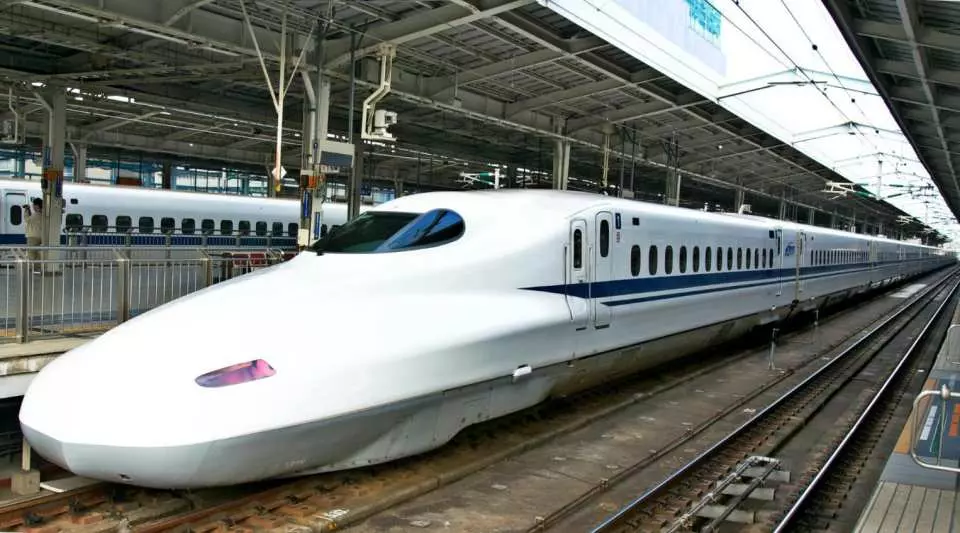
What if I miss my Shinkansen or JR Limited Express train? Do I need to buy a new ticket?
If you have a Reserved Seat ticket and miss your train, you can still board any subsequent train on the same day. But you’ll have to sit in the Non-Reserved section.
If you still want a guaranteed seat, purchase a new Limited Express ticket at the station.
For Non-Reserved ticket holders, it’s even simpler. You can just hop on any later train’s non-reserved carriage whenever there’s a seat available!
How do I cancel or change my Japan Rail tickets?
You can cancel your booking anytime through the KKday Japan Rail system before it’s confirmed.
Once confirmed, you must cancel at least two hours before departure and only if you haven’t collected the physical ticket yet.
If you’ve already picked up your ticket, bring the physical copy to a station ticket office before the train departs to process your refund!
How do I use a QR Code to collect my tickets?
-
Confirm Order: Once your booking is confirmed, open your KKday order page to access your QR Code.
-
Head to the Station: Go to your departure station and locate a ticket machine or counter with QR code scanning capabilities.
-
Scan and Collect: Scan your QR Code to receive your Basic Fare and Limited Express ticket.
Collection methods vary by region:
- JR East (Tokyo, Sendai, Niigata, etc.): Use designated Ticket Vending Machines or counters.
- JR Central (Shin-Osaka, Kyoto, Nagoya): Use dedicated machines at JR Central ticket offices.
- JR Hokuriku (Kanazawa, etc.): Use exchange machines at JR ticket offices.
- JR Hokkaido (Shin-Hakodate-Hokuto): Use automatic ticket vending machines.
If the QR Code won’t scan, enter your 17-digit order number to retrieve your tickets!
Helpful Japan Guides You Should Read
JR Pass FAQ | What types are there? Where can I use them?
There are seven main types of JR Passes: the Japan Rail Whole Japan Pass and six different Regional JR Passes.
Each of these is further divided into specific regions and varying durations.
Make sure to double-check the details before purchasing to ensure it fits your itinerary!


| JR PASS TYPE | COVERAGE & SCOPE |
| All Japan JR PASS | Covers the entire JR network across Japan. Includes Shinkansen, Limited Express, local trains, and select buses and ferries. |
| JR Hokkaido PASS | Covers all of Hokkaido Perfect for skiing, snow-watching, or hot spring (onsen) itineraries. |
| JR East PASS | Covers the six Tohoku prefectures, Nagano, and Niigata Very convenient for autumn foliage or seeing the “snow monsters” (Zao Juhyo). |
| JR Central PASS | Covers the Chubu region Includes Nagoya, the Mount Fuji area, and Ise-Shima. |
| JR West PASS | Divided into Kansai, Kansai Wide, Sanyo-San’in, and Hokuriku versions Ideal for Osaka, Kyoto, Kobe, Hiroshima, and the San’in/Sanyo area. |
| JR Kyushu PASS | Available as Northern, Southern, or All Kyushu versions Convenient for visiting Kumamoto, Kagoshima, and Nagasaki. |
| JR Shikoku PASS | Covers the entire Shikoku region, Includes Takamatsu, Matsuyama, Tokushima, and Kochi. |
JR PASS FAQ | Japan Rail Pass Destinations


Which hot spring/onsen and ski resort to go to with your Hokkaido JR Pass?
The best way to use your Hokkaido JR PASS is to combine hot springs and skiing into one trip.
For hot springs, choose Noboribetsu Onsen. Take the JR to Noboribetsu Station and transfer to a bus to enjoy the baths and explore Hell Valley.
For stunning lake views while you soak, head to Lake Toya Onsen, or plan a day trip to Jozankei Onsen located just outside of Sapporo.
For skiing, the world-class powder of Niseko is easily accessible by taking the JR to Kutchan Station, followed by a shuttle bus.
Furano Ski Resort offers excellent snow quality and allows you to easily visit Biei nearby.


Advanced skiers should head to Asahidake Ski Resort. Just take the JR to Asahikawa Station and transfer to a bus to experience both the slopes and the Asahidake hot springs!
Where should you go this fall and winter with a Tohoku JR Pass?
With a JR East (Tohoku Area) Pass, you can easily plan a freestyle trip from Sendai and Yamagata all the way up to Aomori.
For Autumn, KKday’s top pick is Naruko Gorge. Take the JR to Naruko-Onsen Station to see the valley filled withred maples and enjoy the local hot spring town.


Another must-see is Goshikinuma in Fukushima, easily reached by taking the JR to Inawashiro Station and transferring to a local bus.
In Winter, you can’t miss the famous Zao Snow Monsters in Yamagata. It’s very convenient to take the JR to Yamagata Station and hop on a bus.
For breathtaking snowy landscapes, head to Oirase Gorge and Lake Towada in Aomori for a serene escape. Or, visit Akita’s Nyuto Onsen-kyo for the ultimate “snow-viewing bath” experience!
Which areas can you visit with the Sanyo–San’in JR Pass?
If you want to go “god mode” on your West Japan trip, the 7-Day JR Sanyo & San’in Area Pass is your best friend!
On the Sanyo side, you can hit up Osaka, Kobe, and Himeji, then zip over to Okayama, Hiroshima, and Yamaguchi.
You’ll get to see everything from the Himeji Castle to the dreamy vibes of the Kurashiki canals and the floating gate at Miyajima.


Feeling adventurous? Head to the San’in side to trek the Tottori Sand Dunes, catch the views at Matsue Castle, or manifest some good luck at the Izumo Taisha shrine.
The best part is that it covers the Shinkansen from Shin-Osaka all the way to Hakata (Fukuoka!).
You can bounce between the mountains and the ocean whenever you want. Total freedom!
JR Pass FAQ | Buying Your Tickets
Who can buy a JR Pass?
Basically, anyone with a non-Japanese passport entering the country under the “Temporary Visitor” status. To put it simply: if you are a foreign tourist visiting Japan, you’re good to go!
Why should I buy a JR Pass? What are the perks?
The number one reason is Savings! Savings! Savings! Getting around Japan is pricey, especially on the Shinkansen or Limited Express trains. Picking the right JR Pass is the ultimate hack to travel without breaking the bank.
Tally up your estimated train costs and compare them to the price of the pass.
If your travel costs are higher, grab that JR Pass immediately. The golden rule is that if you’re travelling between major cities or using the Shinkansen once or twice, the pass usually pays for itself.


Do I need to buy in advance? Can I buy it in Japan?
It depends. Most JR Passes require you to buy an Exchange Voucher online first. This saves you tons of time at the station and guarantees you get your pass.
While a few specific passes can be bought locally in Japan, it’s always safer to check the details and book ahead.
Should I reserve seats online? How do I do it?
Think of your JR Pass as your “Golden Ticket” to board, but whether you reserve a seat depends on whether you want a guaranteed spot.
Regions like JR East and JR West have their own sites or apps where you can pick your train and seat before you even arrive.
If you prefer to wing it, you can reserve seats at the station via the Green Windows (Ticket Offices) or vending machines.
However, we highly recommend booking early, especially during peak seasons or holidays, so you don’t get stuck standing.
JR Pass FAQ | Using the Japan Rail Pass
Do I have to use it on consecutive days? Is there an expiration date?
Every JR Pass has a specific validity period. For example, the 7-Day Sanyo & San’in Area Pass, the Hokkaido Rail Pass, and the Tohoku JR East Pass must be used on consecutive days.
Once you start using it, the clock starts ticking. You can’t pick and choose random days to use it!


Do I need to print my voucher? Do I have to exchange it?
When you buy through KKday, you can choose between a physical or digital voucher.
You don’t need to print the digital one. But once you land in Japan, you must take your voucher and your passport to a “Green Window” (Ticket Office) or a designated vending machine.
You should exchange it for the actual physical pass before travelling.
What can I ride? Can I use it for the Shinkansen, Subways, Haruka, Buses, or Ferries?
Basically, your JR Pass is your “all-access pass” for most JR-operated transport.
This includes most Shinkansen (excluding the “Nozomi” and “Mizuho” trains), JR local lines, and Limited Express trains (note: some passes don’t include the Haruka Express).
It also covers certain JR bus routes and even the JR Ferry to Miyajima in Hiroshima.
Just a heads-up: private railways, city subways, local city buses, and highway buses are usually not covered. If you see the JR logo on the train or bus, you’re likely good to go. If not, you’ll probably need to pay extra.
JR Pass FAQ | Everything Else You Need to Know
Can I change or extend the duration of my JR Pass after booking?
Unfortunately, you cannot extend the number of days on your JR Pass. Make sure to double-check your itinerary and choose your region and duration carefully before hitting that buy button.
If you just need to change the start date, it is possible, but rules vary by region. For example, with JR East or JR Kyushu, you can change the date for free once, as long as you haven’t exchanged the voucher for the physical pass yet.
Now, if you need to change it a second time, a handling fee will apply.


Can I get a refund for my JR Pass? How does it work?
If you bought your voucher on KKday but haven’t exchanged it for a physical pass in Japan yet, you can request a refund based on KKday’s platform policy.
However, once you have the physical pass in hand, the rules depend on the specific JR region.
Usually, once you start using the pass, refunds are a no-go. If the pass is still unused and within certain time or mileage limits, you might be able to get a refund, though a percentage-based handling fee will be deducted.
Always check the official JR Pass website for the latest specifics.
Ready to win at Japan travel?

Be it JR Pass or Shinkansen tickets, whatever fits your vibe, KKday’s got you covered.
Grab your tickets on KKday now and lock in those 2026 savings before the best seats are gone!


