


The JR Tokyo Wide Pass is a three-day unlimited regional rail ticket designed for foreign tourists. It’s used for excursions from the capital to major destinations like Mount Fuji, Nikko, and Karuizawa. What’s great is that it can easily pay for itself in just two days!
In this updated 2026 breakdown, discover how to successfully book the notoriously “sold out” Fuji Excursion and avoid surcharges on certain Mount Fuji railway cars. You’ll also learn which northbound bullet trains will reject your pass.
Already planning your trip? Grab your JR Tokyo Wide Pass now.
JR Tokyo Wide Pass at a Glance (2026)
| Price (2026) |
Adult (12+): ¥16,000 Child (6–11): ¥8,000 (Under 6 ride free if no seat reservation is needed) |
| Validity | 3 consecutive calendar days (cannot be split, paused, or extended) |
| Eligibility | Foreign passport holders only. Must show your original, physical passport at pickup/purchase (no photocopies; no third-party collection). |
| Key Coverage | JR East lines in Kanto, Narita Express, Tokyo Monorail, Fujikyu Railway, Izu Kyuko, Rinkai Line, Joshin Dentetsu, and JR-Tobu through-trains to Nikko/Kinugawa. |
| Seat Reservations | Free in Ordinary Cars. Must issue physical seat tickets at machines or ticket counters before boarding. |
| Top Exclusions | Tokaido Shinkansen (Kyoto/Osaka), Hayabusa & Komachi Shinkansen, GranClass, Green Cars, JR Buses, and extra fee cars on Fujikyu lines. |
| Ticket Gate Rule | Automatic gates will not work on non-JR partner lines (Fujikyu, Tokyo Monorail, Izu Kyuko, etc.). Show your pass to staff at the gate. |
Who Should Buy, and Who Should Not Buy the JR Tokyo Wide Pass
Is the JR Tokyo Wide Pass Worth It? The Break-Even Maths

Yes, the ¥16,000 JR Tokyo Wide Pass easily pays for itself as long as you take at least one major regional excursion outside central Tokyo.
However, if your itinerary is limited to short city trips on local lines, you won’t reach the ¥5,334 daily break-even threshold.
What the Same Journeys Cost Without the Pass
To understand the pass’s value, you must look at standard ticket prices for reserved seats during normal travel periods. When buying individual tickets, you pay a base fare plus a mandatory limited express or Shinkansen surcharge for every single leg of your journey.
Here is what the most popular tourist routes currently cost if you pay out of pocket:
Joetsu Shinkansen
Round-trip: ~¥14,660
Fuji Excursion
Round-trip: ~¥8,260
Spacia/Nikko Limited Express
Round-trip: ~¥8,160
Odoriko Limited Express
Round-trip: ~¥13,500
Narita Express
Round-trip: ~¥6,500
Note: Prices fluctuate slightly based on peak/off-peak travel days, but these standard rates reflect typical 2026 pricing.
The Break-Even Point
When you look at the raw numbers above, the break-even math becomes obvious.
A simple round-trip to the Izu Peninsula (¥13,500) combined with a single Narita Express airport transfer (¥3,250) already costs ¥16,750. You have paid off the ¥16,000 pass with just three train rides, making the rest of your three-day itinerary completely free.
Here is the only officially costed multi-stop comparison published by JR East for 2026:
| Booking Method | Total Estimated Cost |
| Buying Individual Tickets (Tokyo → GALA Yuzawa → Omiya → Tobu-nikko → Shinjuku) | ¥21,500 |
| Using the JR Tokyo Wide Pass | ¥16,000 |
| Total Savings | ¥5,500 |
Three Sample Trips, Costed
Here are three ways to structure your three days to ensure you beat the ¥16,000 price tag, starting with JR East’s official itinerary.
Trip 1: The Official JR East Multi-Stop (The ¥5,500 Saver)
This is JR East’s own published example of how to maximize the pass over three days using strictly reserved seats during regular periods.
| Route Leg | Train / Seat Type |
| 1. Tokyo Station to GALA Yuzawa | Reserved Shinkansen seat (Winter/Spring only) |
| 2. GALA Yuzawa to Omiya | Reserved Shinkansen seat |
| 3. Omiya to Tobu-nikko | Reserved seat on JR-Tobu through-train |
| 4. Tobu-nikko to Shinjuku | Reserved seat on JR-Tobu through-train |
| The Maths | Cost without pass: ~¥21,500. You save ¥5,500. |
Trip 2: The Mount Fuji & Airport Combo

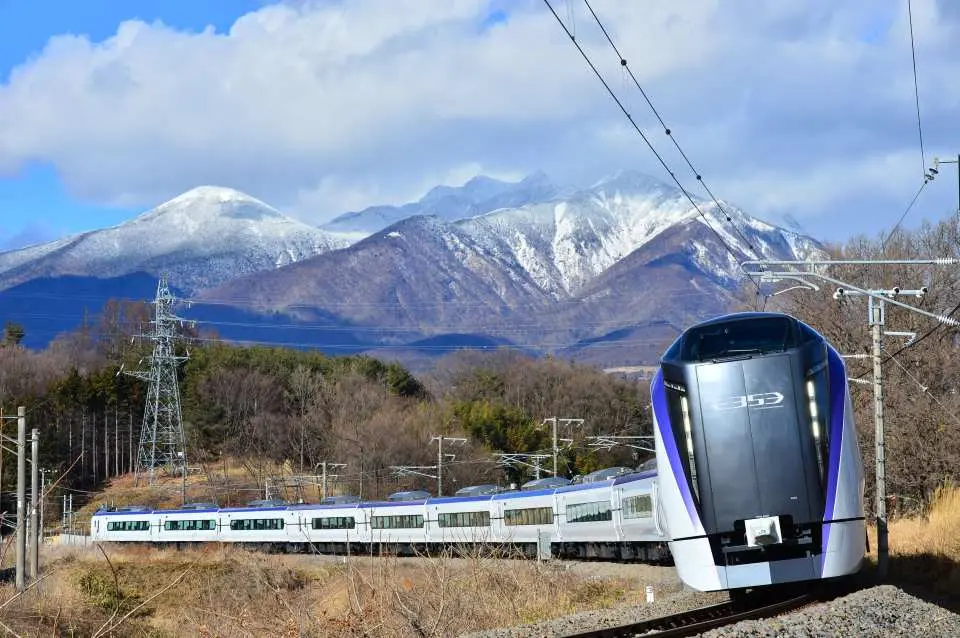
If your goal is seeing Mount Fuji without getting caught by hidden fees, this route uses the pass exactly as intended while taking care of your airport transit.
| Route Leg | Pass Coverage Details |
| 1. Narita Airport to Tokyo | Fully covers the Narita Express (all ordinary seats can be reserved). |
| 2. Shinjuku to Mt. Fuji (Round Trip) | Fully covers the FUJI EXCURSION limited express (base fare + reserved seat). |
| 3. Local Kanto Travel | Unlimited use of JR East lines in Tokyo for the remainder of the 3 days. |
| The Maths | The Narita Express and a round-trip on the direct Fuji Excursion easily push you past the ¥16,000 break-even point.
(Note: Do not take the Fujisan Express or Fuji Tozan Densha, as they require extra fees). |
Trip 3: The Spacia Kinugawa & Coastal Run

If you want to experience both the mountains of Tochigi and the coast of Shizuoka without paying out of pocket for expensive private railway lines.
| Route Leg | Pass Coverage Details |
| 1. Shinjuku to Kinugawa-onsen | Fully covers reserved seats on the SPACIA Kinugawa limited express (JR/Tobu through-train). |
| 2. Tokyo to Izu Peninsula | Fully covers the Izu Kyuko Line down the eastern coast of the peninsula. |
| 3. Haneda Airport to Tokyo | Fully covers the Tokyo Monorail outbound journey. |
| The Maths | By covering costly Tobu and Izu Kyuko railway segments, this route easily exceeds the ¥16,000 pass price. |
What the JR Tokyo Wide Pass Covers and What It Does Not
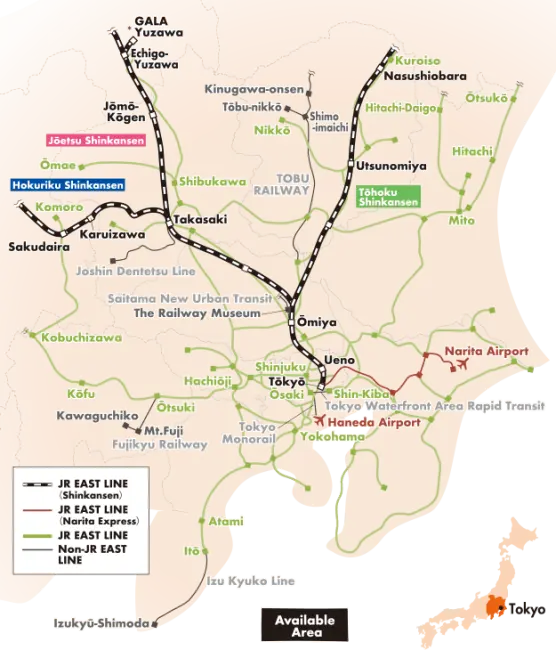
Understanding exactly which trains you can board and which will reject your ticket at the gate is crucial.
The pass grants unlimited rides on ordinary cars (both reserved and non-reserved) across JR East’s network in the Kanto region, alongside a specific roster of private partner lines.
Lines and Trains Included
Here is a breakdown of the major railway networks and services fully covered by your three-day pass:
| Railway Network | Coverage Details |
| JR East Lines (Kanto Region) | Unlimited travel on local, rapid, express, limited express, and Shinkansen services (ordinary cars) within the designated zone. |
| Fujikyu Railway | The base fare is covered. The direct FUJI EXCURSION limited express from Shinjuku is fully covered, including the reserved seat. |
| Tobu Railway (Through-Trains) | Covers reserved ordinary seats on the Nikko, Kinugawa, and SPACIA Kinugawa limited expresses that run continuously between JR and Tobu tracks. It also covers local Tobu trains between Shimo-imaichi and Tobu-nikko or Kinugawa-onsen. |
| Private Partner Lines | Fully covers the Izu Kyuko Line, Joshin Dentetsu Line, Rinkai Line, and the New Shuttle (but only between Omiya and the Railway Museum). |
Does It Cover the Narita Express and Airport Transfers?
Yes, it does. If you activate your pass on the day you land, it immediately covers your transit into central Tokyo.
The Exclusions That Catch People Out
Many online guides oversimplify the coverage by claiming you can ride “any train” in the Kanto area or “everything on the Fujikyu line.”
This bad advice routinely sends travelers to the station expecting a free ride, only to be hit with unexpected gate surcharges or denied entry altogether.
Pay close attention to these strict exclusions:
| Train, Class, or Route | The Rule |
| Tokaido Shinkansen | Completely Invalid. This Shinkansen is operated by JR Central, not JR East. You cannot use this pass to travel toward Kyoto, Osaka, Nagoya, or even nearby Atami on the bullet train. |
| Special Mount Fuji Trains | Extra Fees Required. Fuji Excursion is covered, but Fujisan Express, Fujisan View Express, and Fuji Tozan Densha require paying extra out of pocket. |
| Hayabusa & Komachi Shinkansen | Completely Invalid. No guide in the top ten mentions this, but if you plan a northbound Shinkansen day trip, these specific ultra-fast services will reject your pass and demand separate fees. |
| Premium Carriages | Not Valid. Ordinary cars only. GranClass, Green Cars, and sleepers require extra fees. |
| Tobu-Only Journeys | Not Valid. Your trip must start or end at a JR station. |
| JR Buses | Not Valid. Unlike the national Japan Rail Pass, the JR Tokyo Wide Pass does not cover local JR bus routes. |
JR Tokyo Wide Pass Price and Where to Buy It

Price by Age
| Passenger Type | Price |
| Adult (12 years and older) | ¥16,000 |
| Child (6 to 11 years old) | ¥8,000 |
| Infant (Under 6 years old) | Free (Unless they require their own reserved seat) |
Buying Online Before You Fly vs Buying in Japan
Because seat reservations on popular trains like the Fuji Excursion sell out weeks in advance, buying online before you arrive in Japan is highly recommended.
| Purchase Method | How It Works & What to Know |
| Buying Online (JR-EAST Train Reservation) | Purchase online up to 90 days ahead. Seat reservations open one month in advance. |
| Buying In-Person in Japan | Purchase at a JR Ticket Office or Travel Service Center. You can only reserve seats after the pass is issued. |
Note: Even if you buy the pass online, it’s not a digital ticket. You must still collect a physical paper pass once you arrive in Japan.
Collecting Your Pass
If you purchased online, you can collect your physical pass inside Japan using one of two methods:
Strict Passport Rules for Collection:
The rules for collection are inflexible. You must present the original, physical passport of the person using the pass (which must be issued by a country other than Japan).
-
Photocopies or digital scans are completely rejected.
-
You cannot collect a pass on behalf of someone else. Every single person in your group, including children, must be physically present at the counter with their own passport to receive their ticket.
JR Tokyo Wide Pass Reviews: What Travelers Say
What Works Well
The overwhelming consensus from travelers is that the pass pays for itself with very little effort. If you pair a premium airport transfer like the Narita Express with just one major Shinkansen journey, you immediately start traveling for free.
Travelers also highly rate the ability to reserve seats at no extra cost, easily locking down trips to popular spots like Kawaguchiko, Nikko, and Karuizawa.
The Most Common Complaints
What Buyers Ask Us Most After Booking
What documents must I present when picking up the pass?
You must present the original, physical passport for every traveler in your group. Both JR staff and ticket machines strictly reject photocopies, digital photos, or PDF scans.
Your foreign passport must also display a valid “Temporary Visitor” status stamp or sticker from Japanese immigration.
How do I make free seat reservations after receiving my pass?
You can reserve seats at no extra cost using any JR East Reserved Seat Ticket Vending Machine or at a JR Ticket Office (Midori-no-Madoguchi).
Insert your physical pass into the machine, select your train, choose your seat, and the machine will issue a separate paper seat ticket.
When do the 3 consecutive days actually start?
The 3-day validity period begins on the start date you specify when activating or picking up your pass in Japan, not the date you purchased the voucher online.
Once you activate the pass, it runs for 3 consecutive calendar days. You cannot pause, split, or extend your travel period.
How to Use the JR Tokyo Wide Pass Day to Day

Reserving Seats
The pass covers the base fare and reserved seat fees for ordinary cars. However, the pass itself does not act as a seat ticket. If you board an all-reserved train (like the Narita Express, FUJI EXCURSION, or SPACIA Kinugawa) with only the pass, you risk being fined or forced to stand.
You must issue a physical paper seat ticket before you board. You can do this at no extra cost in two ways:
Note: For trains that offer non-reserved seating (like local city trains), you simply walk through the gate with your pass and sit in any empty seat.
Ticket Gates and Non-JR Lines
Your experience at the station ticket gates changes entirely depending on which railway company operates the track.
If your train travels past the designated JR Tokyo Wide Pass coverage boundary, stay on the train.
When you arrive at your final destination, head to the staffed ticket gate, present your pass, and pay the standard base fare for the distance you traveled outside the coverage zone.
Mistakes That Void the Pass
JR East strictly enforces its usage rules. Violating them can result in immediate confiscation of your pass, forcing you to pay full out-of-pocket fares for your entire journey plus hefty penalty fees.
Avoid these common mistakes:
JR Tokyo Wide Pass vs JR EAST PASS
If you’re planning to travel further north than Nikko or Gala Yuzawa, you need to look beyond the Tokyo Wide Pass.
Following their March 2026 revisions, JR East consolidated its former regional passes (the Tohoku Area and Nagano/Niigata Area passes) into a single, unified JR EAST PASS.
While both passes cover the Kanto region and airport transfers, they serve entirely different travel itineraries and budgets.
The 2026 Comparison
Here is how the 3-day Tokyo Wide Pass stacks up against the entry-level 5-day JR EAST PASS:
Buy the JR Tokyo Wide Pass if: You’re basing yourself in Tokyo and taking short 1- to 2-day excursions to nearby Kanto destinations like Mount Fuji (Kawaguchiko), Karuizawa, Nikko, or the Izu Peninsula.
Buy the JR EAST PASS if: You’re embarking on a long-distance cross-country trip into northern Japan.
If you want to ride the Hayabusa Shinkansen to Sendai or Aomori, ski in Hakuba or Zao, or explore the deep Nagano/Niigata regions over a 5- to 10-day period, the ¥35,000 JR EAST PASS is the ticket you need.
JR Tokyo Wide Pass FAQs

JR Tokyo Wide Pass FAQs
Can I use the pass on the Tokaido Shinkansen to Kyoto or Osaka?
No. The Tokaido Shinkansen belongs to JR Central, not JR East. Your pass is completely invalid on this line. You must buy a separate, full-price ticket to travel west to cities like Kyoto, Osaka, Nagoya, or even nearby Atami on the bullet train.
Can I use the pass for local Tokyo subways?
No. The pass covers only JR East commuter lines (like the Yamanote Line) and specific private partner railways. It does not cover the Tokyo Metro or Toei Subway networks.
You must pay separately using an IC card (like Suica or Pasmo) for inner-city subway rides.
Can I pause or split the 3-day validity period?
No. The pass runs for three strictly consecutive calendar days. You cannot split the days across a longer trip or pause the validity if you decide to stay at your hotel for a day without traveling.
Do children under 6 need their own pass?
Children under six travel for free as long as they sit on an adult’s lap. However, if you want a dedicated reserved seat for your child on an all-reserved train like the Narita Express or the Fuji Excursion, you must purchase a ¥8,000 child pass for them.
Can I buy two passes to cover a 6-day trip?
No. JR East policy forbids holding more than one active JR Tokyo Wide Pass at a time. You cannot purchase two passes with overlapping dates or activate a second pass to artificially extend a trip.
What happens if I lose my pass?
If you lose your physical pass or someone steals it, JR East will not reissue it under any circumstances. You cannot receive a refund for a lost ticket, and you will have to pay standard out-of-pocket fares for the remainder of your journey.


