



[2-Day Tour] Western Australia Hutt Lagoon Secret Stargazing + Pinnacles Desert + Nature’s Window + White Sand Dunes + Most Beautiful Pink Lake Tour Includes Pink Lake Aerial Photography [Small Group, Up to 11 People]
- The Pink Lake in Western Australia, also known as Hutt Lagoon, is a very famous tourist attraction.
- The Pinnacles is a limestone formation about three hours' drive from Perth. The most eye-catching thing is the strange stone pillars.
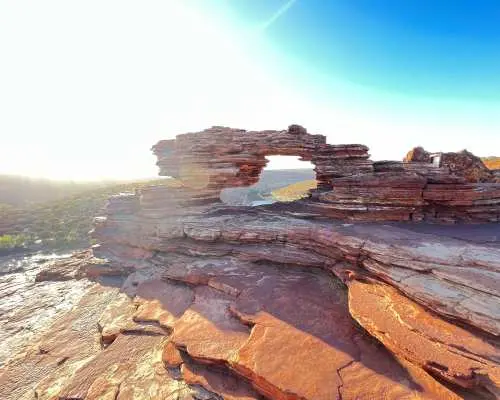
- Nature's Window was formed by the erosion of the Kalibari River over millions of years, forming a natural stone window landscape shaped like a window, hence the name.
- Skywalk – A Western Australia landmark located in Kalbarri National Park, featuring a platform built on the edge of a canyon cliff.
- Lancelin Sand Dunes is located in the small town of Lancelin in Western Australia. It is a beautiful place surrounded by natural sand dunes. You can also experience dune boarding (AUD 10 at your own expense).
Package Options


Product Info
The content of this product is provided by machine translation and may not reflect the actual information, please take this into consideration before booking.
2-Day Western Australia Tour – Four Major Attractions: Pink Lake, Nature’s Window, Pinnacles Desert, White Sand Dunes
- Day 1 Evening: Optional stargazing activity (Secret Stargazing, at your own expense)
- Day 2: Guaranteed visit to Pink Lake during golden hour
Notes: The order of attractions in the itinerary may change depending on local conditions, but all main sites will remain included.
[Hotel Pickup & Drop-off]
- Door-to-door pickup is only available for Perth city hotels with postal codes 6000, 6003, or 6004. Guests outside these areas must go to the designated pickup point.
- If booking is made the day before departure or a valid pickup hotel cannot be confirmed the day before, please go to the designated pickup point.
- Oaks Perth Hotel does not offer luggage storage.
[Luggage & Group Travel]
- Small groups, limited luggage space. Bring light luggage.
- Standard luggage: one 20-inch carry-on per person; small bags not counted.
- Extra luggage should be stored at your city hotel (most Perth hotels offer storage).
- On return day, choose one city drop-off point; changing hotels will not include luggage transfer.
- Free hotel pickup within the city; airport drop-off on return day: AUD 30 per group.
[Fees & Optional Activities]
- Tour cost excludes guide gratuities (AUD 5 per person per day, payable on-site).
- Optional stargazing is weather- and full-moon dependent; guided decision. AUD 20 per person.
- Children under 6 cannot participate due to long distances and tight schedule.
[Safety & Timing]
- Pink Lake tour requires at least 40 minutes at the site.
- For more time to take photos, consider the 3-day option.
- Elderly participants should assess their health before joining.
- Plan according to participants’ physical condition to ensure a safe and enjoyable experience. Enjoy your trip!
Pink Lake


Suggested Charter Routes
- Perth CBD
Purchase Notice
- The 2-day Pink Lake tour is tight and includes rugged roads; travelers with limited mobility cannot participate.
- Specific seats cannot be reserved; seating is assigned based on boarding order at the first stop, without separating other group members.
- Tour is conducted in Mandarin and Cantonese only; non-Chinese speakers cannot join.
- Optional Secret Stargazing activity requires minimum 2 participants (AUD 20 per person); guide decides based on weather, full moon, and other conditions.
- Tour prices are in Australian Dollars (AUD).
- Special dietary requirements must be notified at least 48 hours before departure; post-departure requests may not be accommodated.
- International travelers must purchase travel insurance before booking for coverage during the trip.
- YoYo Travel WA Pty Ltd may adjust the itinerary due to traffic, weather, flights, or other circumstances to ensure safety and comfort; force majeure events may lead to cancellations without refunds.
- Additional costs caused by personal circumstances (e.g., emergency services) must be borne by the traveler; refunds may not be provided.
- During peak seasons, weekends, or school holidays, accommodations may be full; alternative hotels or upgrades may be offered. Once tickets are issued, itinerary changes are not allowed.
- Travelers should carry water, sun protection, warm clothing, medications, and personal items; luggage should be soft, under 7 kg. Recommended items: sunglasses, hat, sunscreen, rain gear, camera, warm jacket, water, comfortable walking shoes, and clothing.
- The company is not responsible for additional costs due to strikes, political issues, war, disasters, weather, or other uncontrollable factors.
- The company reserves the right to adjust the itinerary due to vehicle issues or other factors; personal property loss, damage, or injury caused by third parties is the traveler’s responsibility.
- Minimum group size is 2 participants; tours may be canceled or changed if minimum is not met.
- Travelers must provide accurate personal information; incorrect or incomplete details may result in order cancellation or invalidity without refund.
- Travelers must arrive at the meeting point on time; arriving 5+ minutes late may be considered forfeiting the booking without refund.
- Booking is confirmed only after receipt of payment; travelers must arrange payment promptly to secure the reservation.
- Travel service providers may remove participants who act inappropriately or disrupt other travelers; participants are responsible for any damages caused.
- If a tour cannot proceed, YoYo Travel WA Pty Ltd will notify travelers at least 4 days before departure and provide a full refund.
- Guide gratuities are not included; recommended AUD 5 per person per day, payable on-site.
- Smoking is prohibited in Australian hotel rooms, bathrooms, or balconies; minimum fine AUD 1,000 per incident. Any fire-related costs are the guest’s responsibility.
- Hotels may require a credit card deposit to cover extra charges (phone, minibar, laundry, etc.); room rate only covers accommodation.
- Once booked, hotels, attractions, and restaurants cannot be canceled; no refunds for traveler cancellations.
- Tour includes a Chinese-speaking guide/driver and vehicle fuel for convenient transport and assistance.
- The company reserves the final decision in case of disputes to ensure smooth travel and resolution of issues.
Reminders
A minimum of 2 traveler(s) are required for the tour to depart. If the number of participants does not reach the minimum requirement, the tour will be canceled. An email regarding tour cancellation will be sent 4 day(s) before the departure date
In case of delays caused by traffic, weather, or other force majeure factors resulting in the cancellation of some itinerary attractions, please contact customer service. We will arrange a partial refund for you
In the event of inclement weather such as typhoons or snowstorms, a decision on whether to cancel the tour will be made 1 day(s) before departure (local time 17:00). Notifications will then be sent via email
Travelers with the following conditions or other health issues that could be worsened by excessive stimulation should not participate in this activity: Pregnant women, Asthma
Please arrive at the designated location 5 minute(s) before the scheduled departure time, as the tour will depart on time
Cancellation Policy
- Cancellations 29 day(s) (inclusive) before the selected date are allowed. Unused orders can be canceled for free
- Cancellation is not allowed between 0–28 days from the selected date. Orders cannot be canceled or modified, and refunds will not be granted.
- Due to time zone differences, the confirmed cancellation date is based on the supplier’s local time. Please allow 2–5 business days to process your cancellation request, after which the cancellation fee will be charged according to the product’s cancellation policy. Once your refund request is confirmed, KKday will initiate the refund to your original payment method within 15 days. The actual refund timing depends on your card-issuing bank’s policy.
FAQ
1. Is Hutt Lagoon consistently pink, and what factors influence its color intensity?
Hutt Lagoon's pink color is not constant; its intensity varies throughout the day and year. Key factors include sunlight intensity, cloud cover, and most importantly, the concentration of Dunaliella salina algae. This microalgae produces beta-carotene, especially under high salinity and light, causing the lake to appear pink, red, or even purple. Clear skies and midday sun often enhance the vibrancy.
2. What is the scientific reason behind Hutt Lagoon's distinctive pink color?
The striking pink color of Hutt Lagoon is primarily due to a high concentration of Dunaliella salina algae. This salt-tolerant microalgae produces a red pigment called beta-carotene as a protective mechanism against intense sunlight and high salinity. The interaction of this pigment with other microorganisms and the surrounding salt crusts creates the lake's unique and varying shades of pink, red, and sometimes purple.
3. What time of day is considered ideal for viewing the most vibrant pink hues at Hutt Lagoon?
The most vibrant pink hues at Hutt Lagoon are generally observed during the middle of the day, typically between 10:00 AM and 2:00 PM. During these hours, the sun is highest in the sky, directly illuminating the lake and maximizing the reflection of the beta-carotene pigment produced by the algae. Clear, sunny weather conditions further enhance the intensity of the color.
4. Are there specific seasons or weather conditions that enhance the pink coloration of Hutt Lagoon?
While Hutt Lagoon can appear pink year-round, its coloration is often more intense during dry, sunny periods, typically in the warmer months from spring to autumn (September to May). High salinity and strong sunlight encourage the Dunaliella salina algae to produce more beta-carotene. Clear skies and minimal cloud cover allow for optimal light penetration, making the pink even more vivid.
5. Beyond tourism, what are the commercial and ecological roles of Hutt Lagoon?
Hutt Lagoon holds significant commercial value as a site for aquaculture, primarily for the cultivation of Dunaliella salina algae. This algae is harvested for its high beta-carotene content, which is used in health supplements, cosmetics, and food coloring. Ecologically, it serves as an important habitat for various extremophile organisms adapted to its high salinity, contributing to unique biodiversity.
6. What safety guidelines and activity restrictions should visitors be aware of when visiting Hutt Lagoon?
Visitors to Hutt Lagoon should be aware that swimming is generally not recommended due to the extremely high salinity, which can irritate skin and eyes. The lakebed can also be uneven and muddy. It's important to stay on designated paths and follow any local signage to protect both personal safety and the fragile ecosystem. Always carry water, wear sun protection, and avoid disturbing the natural environment.
7. Which nearby towns provide accommodation and services for visitors exploring Hutt Lagoon?
Port Gregory is the closest small town directly adjacent to Hutt Lagoon, offering limited accommodation and basic services. Kalbarri, a larger town about an hour's drive north, provides a wider range of hotels, restaurants, and tour operators, making it a popular base for exploring the region including Hutt Lagoon. Geraldton, further south, is a major regional city with comprehensive amenities.
8. How can visitors typically access Hutt Lagoon, and what is its general location in Western Australia?
Hutt Lagoon is located on the Coral Coast of Western Australia, approximately 515 kilometers north of Perth and just south of the town of Port Gregory. Visitors typically access it by car, often as part of a road trip along the scenic Indian Ocean Drive or via organized tours. Viewing points are available along George Grey Drive, which runs alongside the lagoon.
Get Help


