

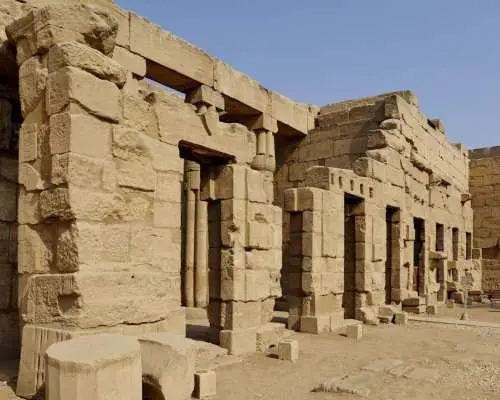


Guided Valley Of The Kings Tour With East Bank Temples
- Start with Luxor Temple Tour and your private local guide.
- Continue to Karnak Temple Tour during the East Bank route.
- Follow Avenue Of Sphinxes Tour according to daily timing.
- Visit Valley Of The Kings Tour on the West Bank side.
- Combine East Bank temples with royal tomb atmosphere.
- Enjoy one of the focused Luxor Tours without museum stops.
- Select English, Italian, German, French, Spanish, or Russian.
- Book privately for 1 to 9 participants in your group.
- Choose tickets and lunch included or exclude both services.
- Pickup details are confirmed one day before your activity date.
Package Options
Product Info
Begin your private Luxor day with pickup from your hotel or selected pickup point, then travel by private air-conditioned vehicle with your guide. This tour is created for guests who want to combine the temple atmosphere of the East Bank with the royal tomb setting of the West Bank in one guided route. Instead of focusing only on one side of Luxor, the experience connects Luxor Temple Tour, Karnak Temple Tour, Avenue Of Sphinxes Tour, and Valley Of The Kings Tour in a clear full-day flow. Transfer time may vary depending on your hotel location, and your final pickup details will be confirmed one day before your activity.
The day begins with Luxor Temple Tour. This first stop introduces guests to the historic city side of ancient Luxor, where temple architecture and local surroundings create a strong opening for the day. With your selected guide language, the visit becomes easier to follow, as your guide explains the site according to the confirmed package, ticketing process, access conditions, and daily timing.
Continue afterward to Karnak Temple Tour, one of the major temple experiences included in many Luxor Tours. Karnak gives the day a wider sense of ancient scale, with open temple spaces and a strong historic atmosphere. Your guide helps connect Karnak with Luxor Temple, so the East Bank section feels like one connected story rather than separate stops. The route is planned to remain focused on the temples and the listed itinerary, without adding museum visits unless clearly confirmed in another booking.
The tour also includes Avenue Of Sphinxes Tour according to timing, access conditions, and local operation. This section adds an important connection between Luxor’s ancient temple landscape and the historic route that links key areas of the city. The visit order may change depending on traffic, site access, ticketing flow, and daily operation, but the East Bank experience remains centered on the listed temple route.
After the East Bank section, continue to the West Bank for Valley Of The Kings Tour, the main keyword focus of this product. This part of the day changes the atmosphere from temple spaces to the royal burial landscape. Your guide introduces the visit according to the confirmed package, tomb access, local timing, and ticketing rules. Guests should note that extra tombs are not included unless clearly confirmed in the selected booking.
Guided Valley Of The Kings Tour With East Bank Temples
This main option follows the provided itinerary: Luxor Temple Tour, Karnak Temple Tour, Avenue Of Sphinxes Tour, and Valley Of The Kings Tour. After selecting the tour, guests can customize the booking through the available sub-options. Tour guide language can be selected from English, Italian, German, French, Spanish, or Russian. Participant number can be selected from 1 to 9 participants. Package type can be selected as with tickets and lunch included or without tickets and lunch.
If the with tickets and lunch package is selected, the listed required entry tickets and lunch are included according to the confirmed booking. Lunch location may vary depending on timing and daily operation, so guests should not expect one fixed restaurant. If the without tickets and lunch package is selected, the tour still includes private transport, guide service, and the guided route, but entry tickets and lunch are not included and must be paid separately if needed.
This product does not include Valley Of The Queens Tour, Colossi Of Memnon Tour, Queen Hatshepsut Temple Tour, Luxor Museum Tour, Luxor Mummification Museum, Luxor Hot Air Balloon Ride, Nile felucca ride, or extra tombs unless clearly booked through another product. Please ensure the phone number provided during booking is connected to WhatsApp for quick pickup and timing updates. If it is not connected to WhatsApp, kindly share an alternative number in advance.

Your tour begins with pickup from your hotel or selected pickup point. Transfer time may vary depending on your hotel location, and final pickup details are confirmed one day before the activity. After meeting your guide and driver, travel by private air-conditioned vehicle to begin the route. Start with Luxor Temple Tour according to the selected language, confirmed package, ticketing process, and site access. Continue afterward to Karnak Temple Tour, where your guide leads the visit according to timing and local operation. Follow Avenue Of Sphinxes Tour according to access conditions and daily flow. After completing the East Bank section, continue to Valley Of The Kings Tour on the West Bank according to tomb availability, ticketing rules, and local operation. Lunch is included only if the with tickets and lunch package is selected. If the without tickets and lunch package is selected, lunch is not included. Entry tickets are included only when the ticket-included package is selected. At the end of the tour, return by vehicle for drop-off.
Purchase Notice
- Please check the selected main option carefully before purchase.
- Sub-options apply only to the selected tour option.
- Available guide languages are English, Italian, German, French, Spanish, and Russian.
- Participant selection is available from 1 to 9 participants.
- Package type may be with tickets and lunch or without both.
- With tickets and lunch includes listed required entries and lunch.
- Without tickets and lunch excludes entry fees and lunch.
- Pickup time may vary depending on your hotel location.
- Final pickup details will be confirmed one day before the activity.
- Please provide a WhatsApp-connected phone number for updates.
- If your number has no WhatsApp, share an alternative number early.
- Temple access may depend on local operation and daily timing.
- Tomb access may depend on local operation and availability.
- Lunch location may vary according to daily operation and timing.
- Drinks and personal expenses are not included.
- Extra tombs are not included unless clearly confirmed.
- Valley Of The Queens and Hatshepsut Temple are not included.
- Museum visits and Nile sailing are not included.
- Comfortable shoes are recommended for temple and tomb areas.
- Valley Of The Kings Tour details depend on selected package.
How to Use
How to Use Your Voucher
- Please present the e-voucher on-site
FAQ
1. How many tombs are open for visitors at the Valley of the Kings, and what are some key historical facts about this site?
The Valley of the Kings contains over 60 known tombs, primarily for pharaohs and nobles of the New Kingdom. While not all are open simultaneously, a rotating selection is usually accessible to visitors. This site served as the primary burial ground for pharaohs from the 18th to the 20th Dynasties (roughly 1539-1075 BC), featuring intricately decorated tombs designed to protect the deceased for eternity.
2. What is the historical significance of the Valley of the Kings compared to other ancient Egyptian sites?
The Valley of the Kings holds immense historical significance as the burial site for New Kingdom pharaohs, distinct from the Old Kingdom pyramids. It represents a shift in funerary practices, with tombs carved into rock rather than monumental structures. This location provided a concealed, secure necropolis for powerful rulers like Tutankhamun and Ramesses II, preserving their elaborate burial chambers and valuable artifacts.
3. Is visiting the Valley of the Kings a worthwhile experience for first-time travelers to Luxor?
Visiting the Valley of the Kings is highly recommended for first-time travelers to Luxor. It offers a unique opportunity to explore the burial chambers of ancient pharaohs, marvel at their intricate wall paintings, and understand their funerary beliefs. The atmosphere of the royal necropolis, combined with the historical depth, makes it a profoundly moving and educational experience, central to Luxor's ancient heritage.
4. Which major temples on the East Bank, such as Luxor Temple and Karnak Temple, are typically included in a guided tour?
A comprehensive guided tour of Luxor's East Bank typically includes the magnificent Luxor Temple, known for its grand colonnades and sphinx avenue, and the sprawling Karnak Temple complex, one of the largest religious sites in the world. Depending on local timing and operational considerations, the tour may also feature the Avenue of Sphinxes, connecting these two iconic temples.
5. What is the typical itinerary and duration for a guided day tour covering the East Bank temples and the Valley of the Kings?
A guided day tour usually begins with convenient hotel pickup, followed by visits to the East Bank temples, starting with Luxor Temple, then Karnak Temple. If conditions allow, the Avenue of Sphinxes may also be included. Afterward, the tour proceeds to the West Bank to explore the Valley of the Kings. This comprehensive experience typically spans a full day, offering a focused exploration of Luxor's major historical sites.
6. What should visitors expect regarding accessibility and the general experience when touring Luxor Temple and Karnak Temple?
When touring Luxor Temple and Karnak Temple, visitors can expect extensive walking around vast complexes. Both sites are largely accessible, though paths may be uneven in areas. The experience involves marveling at colossal statues, towering obelisks, and intricate hieroglyphs. Your guide will provide historical context and insights, allowing for a deep appreciation of these ancient architectural wonders and their significance.
7. How is transportation managed between attractions like Luxor Temple, Karnak Temple, and the Valley of the Kings during the tour?
Transportation between attractions such as Luxor Temple, Karnak Temple, and the Valley of the Kings is seamlessly managed via a private, air-conditioned vehicle throughout the tour. This service includes pickup from your hotel or a designated point, ensuring a comfortable and efficient journey between the East Bank temples and the West Bank's royal burial grounds, eliminating any transit worries.
8. What are the key differences between exploring the royal tombs in the Valley of the Kings and visiting the temples on Luxor's East Bank?
The key difference lies in their purpose and atmosphere. The Valley of the Kings offers an intimate experience of underground royal tombs, adorned with intricate funerary art and hieroglyphs, focusing on the afterlife. In contrast, the East Bank temples, like Luxor Temple and Karnak Temple, are vast, open-air complexes dedicated to worship and grand public ceremonies, featuring colossal structures, courtyards, and hypostyle halls.


