
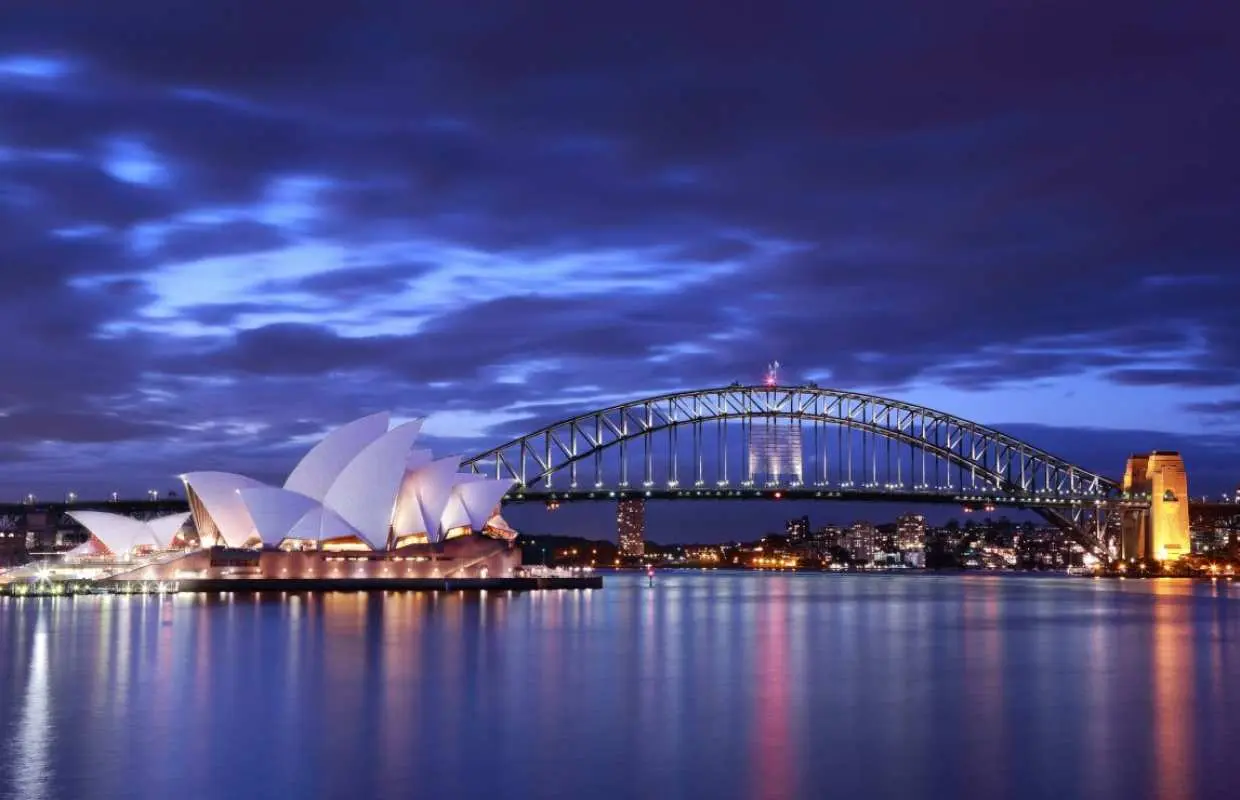

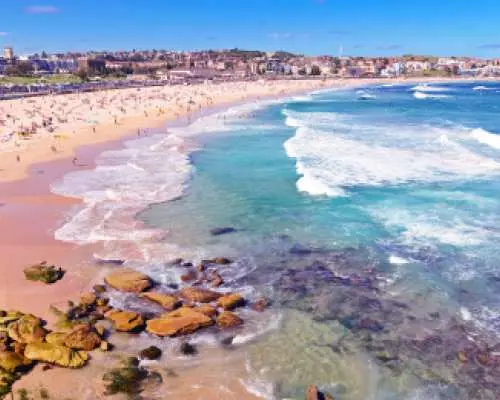


Australia | Sydney City Landmarks Day Trip (Sydney Opera House + Harbour Bridge + Hyde Park + Fish Market + University of Sydney + Bondi Beach + Jones Bay Marina)
Package Options


Sightseeing Tours
| Tour Type | Shared tour |
| Transportation method | Transfer from meeting point |
| Minimum participant requirement | 4 travelers |
| Sightseeing type | City walking tour |
Product Info
Purchase Notice
Luggage is not permitted on this itinerary.
Reminders
Please proceed to the designated boarding location on your own and arrive at the meeting point 20 minutes in advance.
Please arrive at the departure point 20 minutes in advance. You will be responsible for any consequences resulting from your failure to arrive on time and thus being unable to participate in the trip.
The itinerary time is for reference only. The specific itinerary may be affected by the weather and traffic on the day. Please refer to the actual itinerary on the day and make reasonable arrangements accordingly.
Please wear comfortable walking shoes, bring sunglasses, sunscreen, and a hat. In colder months, it's best to bring a jacket.
The order of the itinerary may be adjusted; the actual itinerary on the day of departure shall prevail.
Group size: This tour requires a minimum of 2 people to proceed. If the tour cannot proceed 3 days prior to departure, our company will contact you for a refund or rescheduling.
In the event of natural disasters, traffic control, or other objective factors that lead to the cancellation of the trip, our company will refund the full tour fee; if the trip cannot be completed in whole or in part during the trip, our company will coordinate and handle the matter according to the actual situation.
Cancellation Policy
- Cancellations 8 day(s) (inclusive) before the selected date are allowed. Unused orders can be canceled for free
- Cancellation is not allowed between 0–7 days from the selected date. Orders cannot be canceled or modified, and refunds will not be granted.
- Due to time zone differences, the confirmed cancellation date is based on the supplier’s local time. Please allow 2–5 business days to process your cancellation request, after which the cancellation fee will be charged according to the product’s cancellation policy. Once your refund request is confirmed, KKday will initiate the refund to your original payment method within 15 days. The actual refund timing depends on your card-issuing bank’s policy.
FAQ
1. What is the recommended dress code for visiting the Sydney Opera House?
When visiting the Sydney Opera House, a smart casual dress code is generally appropriate for tours and most performances. Jeans are usually acceptable. For more formal events, patrons often opt for business casual or semi-formal attire. Comfort is key, especially if you plan to join a walking tour of the premises.
2. Why is the Sydney Opera House considered a famous architectural landmark?
The Sydney Opera House is renowned globally for its distinctive shell-like roof design, which revolutionized 20th-century architecture. Designed by Jørn Utzon, its innovative and complex structure, coupled with its stunning waterfront location, makes it a unique and instantly recognizable UNESCO World Heritage site, symbolizing Australia's cultural vibrancy.
3. What are some interesting historical facts about the Sydney Opera House?
The Sydney Opera House project spanned over 14 years, from 1959 to 1973, facing numerous design and construction challenges. Its roof comprises more than one million ceramic tiles, specially manufactured in Sweden. The building was officially opened by Queen Elizabeth II, marking a significant moment in Australia's cultural history.
4. What makes the Sydney Harbour Bridge a renowned global icon?
The Sydney Harbour Bridge is celebrated worldwide for its impressive scale and iconic arch design, earning it the nickname 'The Coathanger.' It is one of the world's largest steel arch bridges and a marvel of engineering from its construction era. Its prominent position over the spectacular Sydney Harbour contributes to its status as an enduring global symbol.
5. How old is the Sydney Harbour Bridge and what is its construction history?
The Sydney Harbour Bridge officially opened in 1932, making it over 90 years old. Construction commenced in 1924 during the Great Depression, providing employment for thousands of people. Its completion represented a monumental feat of engineering and human endeavor, connecting the city's north and south shores and transforming Sydney's infrastructure.
6. Is there an entry fee to walk across the Sydney Harbour Bridge pedestrian pathway?
Walking across the designated pedestrian pathway of the Sydney Harbour Bridge is generally free of charge, allowing visitors to enjoy magnificent views of the city and harbor. However, the separate BridgeClimb experience, which involves scaling the bridge's arch with a guide, is a distinct, ticketed activity.
7. What unique engineering features make the Sydney Harbour Bridge stand out?
The Sydney Harbour Bridge is distinguished by its colossal steel arch, which supports a composite deck for road, rail, bicycle, and pedestrian traffic. It holds the record as the world's tallest steel arch bridge. Four massive granite pylons at each corner of the arch serve as architectural features and provide structural stability.
8. What is the historical significance of Hyde Park in Sydney?
Hyde Park is Australia's oldest public park, first established in 1810. It holds significant historical value, having served various purposes from a racecourse and sporting ground to a military parade field. Today, it is a key green space in Sydney's city center, housing important landmarks like the Anzac Memorial and the Archibald Fountain, offering a tranquil historical retreat.
Get Help


