

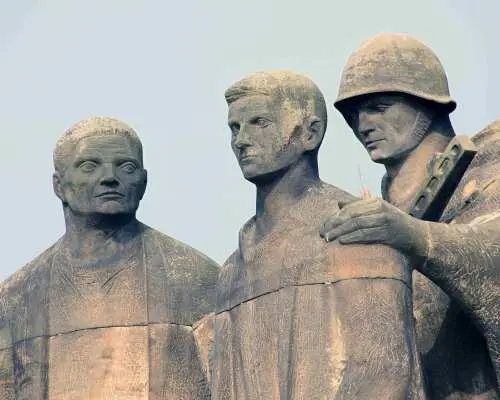


Concentration Camp Memorial Sachsenhausen - Small group tour | Germany
Explore the history of Nazi concentration camps and the Holocaust in depth with a licensed, expert guide. Join a small-group tour of up to 15 people for a personal and meaningful experience.
- Behold historic artifacts within the Sachsenhausen Memorial and Museum
- Dive deep into the site's rich history with the expertise of a seasoned tour guide
- Join this poignant tour to encounter Sachsenhausen's meticulously preserved facilities
Package Options


Sightseeing Tours
| Tour Type | Small Group |
| Transportation method | Get there on your own |
| Departure Time | Late Departure (After 9 am) |
| Minimum participant requirement | 15 travelers |
| Tour types | Guided tour |
| Meal arrangement | Arrange yourself |
| Sightseeing type | Museum tour, Historic site tour |
| Transport | Walking |
Product Info
Purchase Notice
- This tour involves extensive walking and public transportation transfers, so please assess your health condition before booking. It's not recommended for travelers with limited mobility
- Ensure you have your own transportation pass covering zones ABC
- Once the tour concludes, the tour guide will lead the group to a bus/train station in downtown Berlin. Please note that you won't be returning to the initial departure point
Reminders
The tour staff will display a sign reading "Original Berlin Walks." Please arrive at the designated meeting point 10 minutes in advance for check-in
The tour operates regardless of weather conditions, so please bring your own rain gear if necessary
There are no food and beverage options available on-site, so please bring your own snacks if needed
Please note: you will need an ABC day pass for public transport
Cancellation Policy
- Cancellations 3 day(s) (inclusive) before the selected date are allowed. Unused orders can be canceled for free
- Cancellation is not allowed between 0–2 days from the selected date. Orders cannot be canceled or modified, and refunds will not be granted.
- Due to time zone differences, the confirmed cancellation date is based on the supplier’s local time. Please allow 2–5 business days to process your cancellation request, after which the cancellation fee will be charged according to the product’s cancellation policy. Once the cancellation is confirmed, you will receive your refund within 14 working days.
FAQ
The Sachsenhausen Memorial itself does not charge a general entry fee for visitors to the memorial site and its permanent exhibitions. However, there may be costs associated with specific services like renting an audio guide, joining a guided tour provided by an external operator, or transportation expenses to reach the memorial from Berlin. It's advisable to check for any potential fees for these additional services.
Yes, visitors are welcome to explore the Sachsenhausen Memorial independently. The site provides extensive informational panels, detailed exhibitions within the museum areas, and meticulously preserved facilities that offer significant historical context and understanding. Audio guides are also available for rental, providing a self-paced interpretive experience for those preferring to visit without a group.
While there is no formal dress code, visitors are strongly advised to dress respectfully and modestly out of reverence for the solemn nature and historical significance of the Sachsenhausen Memorial. Comfortable walking shoes are also highly recommended, as the site is extensive and requires considerable walking outdoors. Be prepared for varying weather conditions as much of the visit is outside.
A small-group tour provides a more personal and intimate experience, fostering deeper engagement with the Sachsenhausen Memorial's complex history. Expert, licensed guides can offer comprehensive historical insights, facilitate meaningful discussions, and answer questions more readily than in larger groups. This setting helps visitors process the somber history in a supportive environment, focusing on historical context and individual stories.
Visitors should maintain a respectful and contemplative demeanor throughout the Sachsenhausen Memorial. This includes speaking softly, refraining from eating, drinking, or smoking outside designated areas, and avoiding any disruptive or disrespectful behavior. Photography is generally permitted but should be done discreetly and without disrespecting the site, its significance, or other visitors.
The Sachsenhausen Memorial offers a profound exploration of the history of Nazi concentration camps. Visitors can see preserved barracks, the camp prison, the execution site, the infirmary, and the pathology building. Exhibitions within the museum provide detailed insights into the daily life of prisoners, the SS administration, and the camp's liberation, alongside numerous historic artifacts and testimonies.
Visitors should approach the Sachsenhausen Memorial with a serious and reflective mindset, acknowledging it as a site of immense human suffering and profound historical significance. Taking time for reflection, reading some background information beforehand, and being mentally prepared for emotionally impactful content can enhance the visit while ensuring respect for the memory of the victims and the site itself.
A licensed guide brings in-depth historical knowledge and critical contextual understanding of the Sachsenhausen Memorial. They can illuminate the complex political and social factors leading to the Holocaust, provide detailed accounts of the camp's operations, and share poignant stories of prisoners and victims. This expertise offers a nuanced and educational perspective that greatly enriches the visitor's understanding beyond what independent exploration might provide.
Get Help


