


Learn Zen by enjoying Wagashi and participating in a matcha tea ceremony class near Osaka Castle
Even beginners can learn how to use the brush by practicing repeatedly. It is important to note, however, that it is important to understand the technique used, rather than just practicing in the dark. Practice will be more effective after you understand the technique.
➤Please observe and learn from the teacher's demonstration by example.
Calligraphy is a traditional Japanese culture that uses brush and ink to express characters artistically, and is appreciated for the neatness of the characters, the way the brush is carried, the shade of the ink, and the beauty of the overall arrangement.
➤Calligraphy is a traditional Japanese culture that uses brush and ink to ex
Your name is converted into Kanji characters and a calligraphy master writes a stroke on a wooden plaque. Each kanji character has its own meaning, so find out what the characters used in your name mean.
➤When writing, it is important to keep the mind quiet and focused.
Seisho] Participants will be asked to write selected kanji characters on a fan or a piece of colored paper for calligraphy, keeping in mind what they have learned so far. The folding fan is a tool that is still very familiar to the Japanese people as it appears at milestones in their lives. You will also write on a fan, which was born in Japan.
➤ This experience plan is fun and challenging for children.
Children can also feel a sense of Japan by wearing kimonos, and the experience of calligraphy, a traditional Japanese culture, will bring children closer to the history of Japan.
➤ The whole family can enjoy it together.
For family travelers with children, experiencing traditional culture together as a family will become a precious family memory that will last for a long time to come.
Package Options
Cultural Experiences
| Activity time | Morning, Afternoon, Evening |
| Transportation method | Get there on your own |
| Location | Indoor |
| Activity level | Beginner |
| Experience type | Costume rental |
| Cuisine type | Wagashi (Japanese sweets) |
| Rental duration | 2 hours |
| Outfit type | Kimono |
| Additional service & facility | Photography service |
| Minimum participant requirement | 1 traveler |
| Cultural experience type | Japanese tea ceremony |
Product Info
What You Can Expect
1 Day
- Activity,4 ➤Understand that hospitality is not a one-way street. As a guest invited to the tea ceremony by the master, you will be treated with hospitality and experience the profound charm of the samurai tea.
- ➤ Preparation Zen lives on in the traditional culture of our country, and you can expect many changes by learning the tea ceremony. Before experiencing the tea ceremony, you will be asked to change into Japanese traditional clothes.
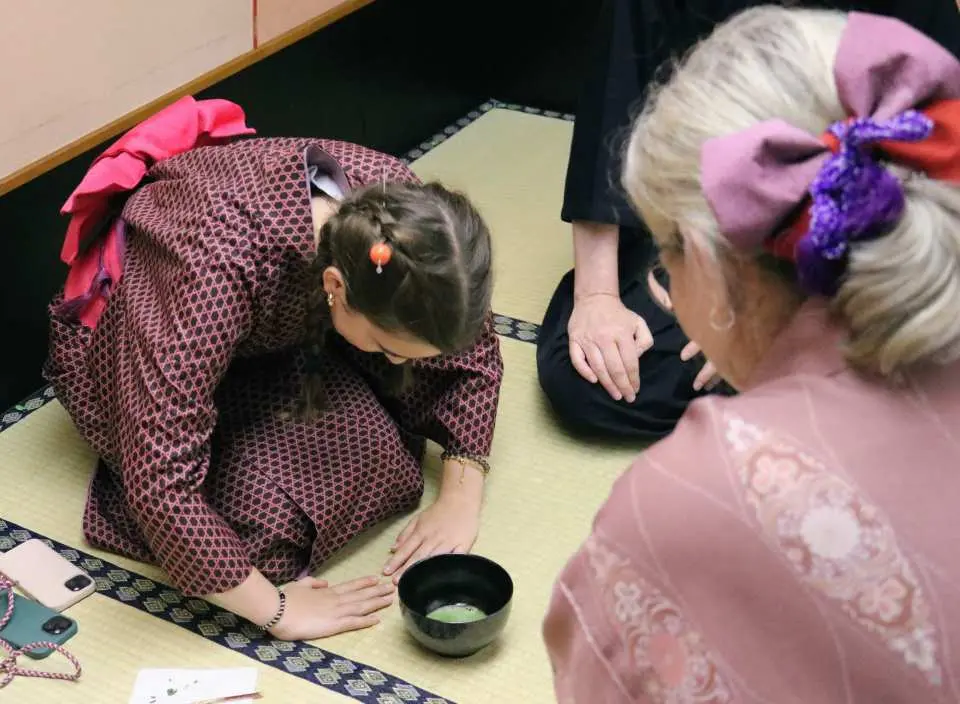
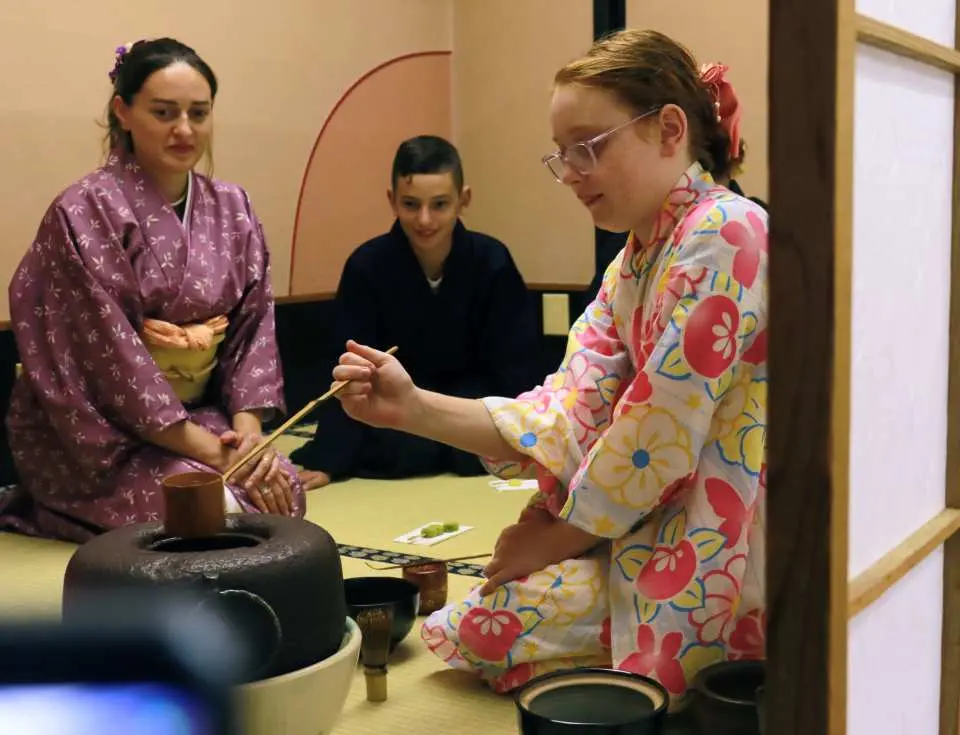
- ➤ The hostess will entertain the guests according to the traditional manners prescribed. The master of the tea ceremony will serve matcha (powdered green tea) and serve it to the guests.
- 00:00➤ Photo Shoot Capture your beautiful kimono outfit and artwork in a photo. You will be photographed dressed as a beautiful Yamato Nadeshiko or a brave samurai. Photography service to capture serious figures during the activity. We will send you the photo data within both days.
- Activity,1 ➤ You will learn etiquette, manners, beautiful gestures, and the spirit of hospitality.
- Activity,4 ➤Understand that hospitality is not a one-way street. As a guest invited to the tea ceremony by the master, you will be treated with hospitality and experience the profound charm of the samurai tea.
- The hostess will entertain the guests according to the traditional manners prescribed. The master of the tea ceremony will serve matcha (powdered green tea) and serve it to the guests.
- You will learn etiquette, manners, beautiful gestures, and the spirit of hospitality.
- You will learn etiquette, manners, beautiful gestures, and the spirit of hospitality.
- The tea ceremony is rooted in the attitude and idea that “the master not only entertains, but the guests also respond to him or her, creating an atmosphere in which the master and the guests become one. This is the basis of the tea ceremony.
- The tea ceremony is rooted in the attitude and idea that “the master not only entertains, but the guests also respond to him or her, creating an atmosphere in which the master and the guests become one. This is the basis of the tea ceremony.
- The tea ceremony is rooted in the attitude and idea that “the master not only entertains, but the guests also respond to him or her, creating an atmosphere in which the master and the guests become one. This is the basis of the tea ceremony.
- The tea ceremony is rooted in the attitude and idea that “the master not only entertains, but the guests also respond to him or her, creating an atmosphere in which the master and the guests become one. This is the basis of the tea ceremony.
- Through wagashi, students learn about the wabi and sabi, the Japanese sense of beauty, the four seasons, etc.
- Understand that hospitality is not a one-way street. In chanoyu, which is the art of showing the utmost care and hospitality to guests, a high level of awareness is required of the guests as well.
- Understand that hospitality is not a one-way street. In chanoyu, which is the art of showing the utmost care and hospitality to guests, a high level of awareness is required of the guests as well.
- Understand that hospitality is not a one-way street. In chanoyu, which is the art of showing the utmost care and hospitality to guests, a high level of awareness is required of the guests as well.
- beautiful gestures




Purchase Notice
Clothing and personal belongings
You will change from casual clothes to Iaidogi (Hakama), so you can wear whatever you want.
About Rental Items (FREE)
Dressing of guests when dressing
When you wear hakama for a sword fight, you will sweat and get sweaty easily, so please wear the following clothing.
① His upper body is a long-sleeved undershirt. I ask you to put on a samue.
② The lower part of the body is an easy to move samue.
③ We have tabi socks for your feet.
④ Swim caps are available for the head.
Assistant staff will do things like wearing hakama and armor. You can't wear it alone
Includes/Excludes
- Bottled water
- Tips
- Consumption tax
- Service charge
- Tickets
- Photo Shooting - Send data to designated e-mail address
- English guide
- 10% Service charge
- Material fee
- Taxes
- Experience fees
- Professional coach
- Clean clothes
- Personal expenses
- Accommodation
- Transportation fare
- Insurance
- Hotel transfer
- Movie Shooting *Paid option
- Round-trip shuttle
Eligible Users
Notes
- Children (6 years and older) Adults (90 years and younger)
Reminders
time one is supposed to meet
Please arrive 30 minutes before your appointment time to change into kimono and prepare for your appointment.
Cancellation
Cancellations and changes must be notified by e-mail at least 24 hours in advance.
How to Redeem Your Voucher
How to Use Your Voucher
- Please present the e-voucher on-site
Experience Location
Location Name: SAMURAI HONOR
Address: 日本、〒536-0014 大阪府大阪市城東区鴫野西2丁目3−19 エクセレンス高山 1F
Monday 10:00–21:00 (Last Entry Time: 20:00)
Tuesday 10:00–21:00 (Last Entry Time: 20:00)
Wednesday 10:00–21:00 (Last Entry Time: 20:00)
Thursday 10:00–21:00 (Last Entry Time: 20:00)
Friday 10:00–21:00 (Last Entry Time: 20:00)
Saturday 10:00–21:00 (Last Entry Time: 20:00)
Sunday 10:00–21:00 (Last Entry Time: 20:00)
Cancellation Policy
- Cancellations 1 day(s) (inclusive) before the selected date are allowed. Unused orders can be canceled for free
- Cancellation is not allowed between 0–0 days from the selected date. Orders cannot be canceled or modified, and refunds will not be granted.
- Due to time zone differences, the confirmed cancellation date is based on the supplier’s local time. Please allow 2–5 business days to process your cancellation request, after which the cancellation fee will be charged according to the product’s cancellation policy. Once your refund request is confirmed, KKday will initiate the refund to your original payment method within 15 days. The actual refund timing depends on your card-issuing bank’s policy.
FAQ
1. What can participants expect from the matcha tea ceremony and calligraphy class near Osaka Castle?
Participants can expect a comprehensive cultural immersion. This class near Osaka Castle typically includes a guided session on the traditional Japanese art of preparing and enjoying matcha tea, often paired with traditional Wagashi (Japanese sweets). Additionally, you'll engage in a calligraphy session, guided by a master, learning brush techniques and writing Kanji characters. The experience aims to introduce both the tranquility of the tea ceremony and the artistic expression of Japanese calligraphy in a peaceful setting.
2. What are the key etiquette rules to follow during a matcha tea ceremony class in Osaka?
During a matcha tea ceremony, key etiquette involves showing respect for the host and the utensils. Guests usually bow upon entering and exiting the tea room, and when receiving the tea bowl. It is customary to hold the bowl with both hands and rotate it slightly before drinking. Quiet reverence and mindfulness are highly valued, encouraging participants to appreciate the moment and the craftsmanship involved in the ceremony.
3. Is there a specific dress code recommended for attending a matcha tea ceremony class near Osaka Castle?
While there isn't a strict formal dress code, it is recommended to wear neat, modest, and comfortable clothing suitable for sitting, potentially on the floor (though alternative seating is often available). Avoid strong perfumes, excessive jewelry, or noisy accessories that might disrupt the serene atmosphere. Practical attire that allows ease of movement and respect for the traditional setting is ideal.
4. What aspects make the matcha tea ceremony and calligraphy class near Osaka Castle a unique cultural experience?
This class near Osaka Castle offers a unique blend of traditional Japanese cultural practices. Beyond learning to prepare and enjoy matcha tea, it deeply integrates a calligraphy experience led by a master. Participants can learn brush techniques and write Kanji, even having their names converted to Kanji. This combination provides a holistic understanding of Zen aesthetics, hospitality, and artistic discipline, offering a deeper cultural insight than a standalone tea ceremony.
5. Are there opportunities to learn calligraphy during the matcha tea ceremony experience near Osaka Castle?
Yes, calligraphy is a significant component of this combined experience near Osaka Castle. Participants will receive hospitality and guidance from a master calligrapher. You'll learn fundamental brush techniques, practice writing selected Kanji characters, and may even write on a fan or wooden plaque. This artistic segment allows for creative expression and a deeper connection to traditional Japanese culture alongside the tea ceremony.
6. Does the matcha tea ceremony class near Osaka Castle offer alternative seating for participants who cannot do seiza?
Yes, recognizing that traditional Japanese seiza (sitting on the floor) can be challenging for some, the matcha tea ceremony and calligraphy class near Osaka Castle provides alternative seating options. Chairs are available to ensure that all participants, including those with physical limitations or long legs, can comfortably concentrate and fully engage in the cultural experience without discomfort, allowing everyone to focus on learning and enjoyment.
7. Is the matcha tea ceremony and calligraphy experience near Osaka Castle suitable for families with children?
Absolutely, this cultural experience near Osaka Castle is designed to be engaging and enjoyable for the entire family, including children. Kids can actively participate in both the calligraphy and matcha tea ceremony aspects, which serves as a unique and educational introduction to Japanese traditions. It's a wonderful opportunity for families to create lasting memories together through shared cultural discovery.
8. How can one book the matcha tea ceremony and calligraphy class near Osaka Castle?
To book the matcha tea ceremony and calligraphy class near Osaka Castle, you can conveniently use an online travel platform. Booking through KKday offers a seamless process, secure payment options, and instant confirmation, ensuring a hassle-free reservation. The platform provides comprehensive details about the experience, making it easy to plan your cultural immersion and secure your spot in advance.
Get Help


