


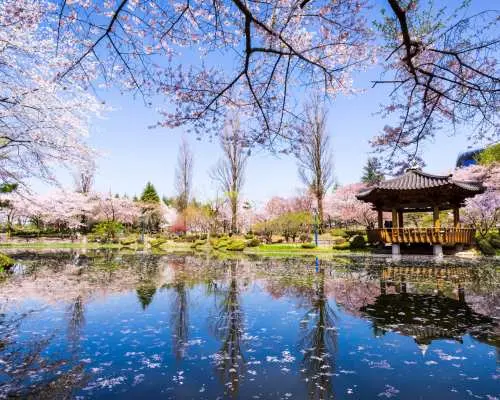
30% Early Bird Discount | Gyeongju Cherry Blossom Day Tour (From Busan)
- 🌸 Visit the most popular cherry blossom spots in Gyeongju.
🌸Gyeongju is famous for its spring cherry blossoms and is a favorite destination for Koreans and foreigners alike.
🌸 Here, you can enjoy a unique landscape where you can see not only spring flowers, but also historical sites and hanoks.
💕 Feel like you're traveling from modern to ancient Korea.
💕 Don't miss the opportunity to take some great photos under the cherry blossom trees. There may also be stalls in the area selling cute souvenirs and snacks.
Product Info
The content of this product is provided by machine translation and may not reflect the actual information, please take this into consideration before booking.


Purchase Notice
- Children under the age of 3 can participate for free if they do not occupy a seat. Please notify us in the 'Notes' section when booking
If you plan to bring a baby stroller or wheelchair, please indicate in the 'Notes' section when booking.
When booking, please provide your contact information, such as your messaging App ID (e.g., LINE or KakaoTalk)
Reminders
In the event of inclement weather such as typhoons or snowstorms, a decision on whether to cancel the tour will be made 1 day(s) before departure (local time 18:00). Notifications will then be sent via email
The itinerary is subject to change based on traffic and weather conditions. Operating hours may vary depending on cherry blossom conditions.
Please arrive at least 10 minutes before your departure time. Buses depart on time and no refunds will be given for late arrivals.
If you're bringing a stroller or wheelchair, let us know in advance.
Infants are free of charge; no seat is available
One day before departure, we will send you a reminder email between 3:00 PM and 5:00 PM. This email will contain a link to a group chat where you'll be able to communicate directly with our tour staff. If you can not find the email, please check your spam or junk mail section.
⚠️All itineraries do not include personal travel insurance. Outdoor activities involve certain risks and hazards. Guests should evaluate their own health or abilities. The company is not responsible for any physical harm or damage caused by accidents or unforeseeable factors.
Cancellation Policy
- Cancellations 2 day(s) (inclusive) before the selected date are allowed. Unused orders can be canceled for free
- Cancellation is not allowed between 0–1 days from the selected date. Orders cannot be canceled or modified, and refunds will not be granted.
- Due to time zone differences, the confirmed cancellation date is based on the supplier’s local time. Please allow 2–5 business days to process your cancellation request, after which the cancellation fee will be charged according to the product’s cancellation policy. Once the cancellation is confirmed, you will receive your refund within 14 working days.
FAQ
Gyeongju is celebrated for its harmonious blend of cherry blossoms and historical scenery. Popular spots often include areas around Bomun Lake, which offers stunning lakeside views. Additionally, historical sites and traditional hanok villages, such as those near Daereungwon Tomb Complex or Bulguksa Temple, become particularly picturesque with blooming cherry trees, allowing visitors to experience ancient Korea amidst spring flowers.
The cherry blossom season in Gyeongju typically falls during the spring months. While exact dates vary yearly due to weather conditions, the peak viewing period often occurs from late March through mid-April. This is when Gyeongju transforms with vibrant pink and white blooms, creating beautiful landscapes around its historical sites and scenic areas.
Gyeongju stands out due to its distinctive combination of ancient history and natural beauty. Unlike many other cherry blossom destinations in Korea, Gyeongju allows visitors to enjoy spring flowers alongside UNESCO World Heritage Sites, ancient tombs, and traditional hanok architecture. This unique setting provides an experience that beautifully bridges modern and ancient Korea, offering exceptional photo opportunities.
Yes, Gyeongju's historical sites and hanok villages are renowned for their cherry blossom displays. Locations such as the Daereungwon Tomb Complex, Cheomseongdae Observatory, and the areas around Bulguksa Temple often feature beautiful cherry trees complementing the ancient architecture. Strolling through these sites offers a unique cultural and visual experience, perfect for memorable photos amidst the spring blooms.
Participating in a day tour from Busan makes visiting multiple cherry blossom spots in Gyeongju highly convenient. These tours typically provide organized transportation, allowing you to seamlessly travel between popular locations like Bomun Lake and historical sites without the hassle of navigating public transport or parking. This ensures a relaxed experience focused on enjoying the beautiful scenery.
For a Gyeongju cherry blossom day tour departing from Busan, comfortable and organized group transportation is typically provided. This usually involves a tour bus or van that picks up participants from designated meeting points in Busan and transports them directly to Gyeongju's most popular cherry blossom viewing sites. This eliminates the need for personal vehicle arrangements or figuring out local public transport.
Gyeongju cherry blossom day tours often depart from Busan. Specific meeting arrangements vary, but typically involve designated pick-up points in central Busan, such as major subway stations or hotel areas. Participants usually receive detailed instructions on exact meeting times and locations upon booking to ensure a smooth start to their tour to Gyeongju.
When visiting local stalls in Gyeongju that sell souvenirs and snacks, it's advisable to carry Korean Won (cash) for smaller purchases, as some vendors may prefer or only accept cash. Major credit cards are widely accepted at larger shops and restaurants, but smaller, independent stalls might have cash-only policies. Carrying a mix of payment options is recommended for convenience.
Get Help


