




Sightseeing Tours
| Tour types | Guided tour |
Product Info
Purchase Notice
Reminders
Please refer to your voucher for final information regarding meeting points, pick-up locations, and pick-up time
Meeting point description: In front of the main entrance to the Fado Museum (Largo do Chafariz de Dentro 1, 1100-139 Lisboa). Please look for the guide holding a yellow umbrella near to the entrance of Fado Museum.(Largo do Chafariz de Dentro 1, 1100-139 Lisboa, Portugal)
Accessibility:Not suitable for people with mobility impairments
Not allowed:Luggage or large bags, pets, smoking indoors
Know in advance:No reduced tickets are available for this tour
If you are unable to attend, please contact the tour operator at least 24 hours in advance. No refund will be issued in case of a no‑show. Find the contact information on the voucher you'll receive after booking
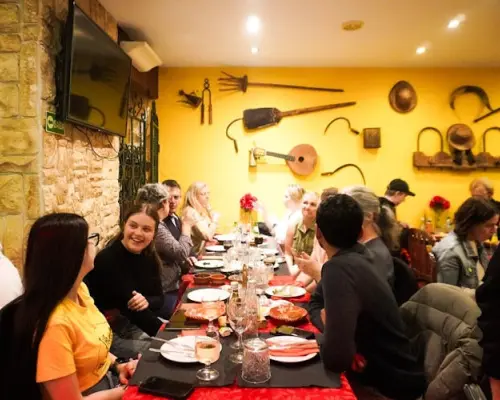
Take a piece of Lisbon back home. CDs and USBs capturing memories of the night will be available for purchase
If you have any food restrictions, please contact the local provider
Remember to bring:Wear comfortable shoes
FAQ
Fado embodies the Portuguese soul, expressing 'saudade,' a deep sense of longing or melancholic yearning. It is a poignant musical genre reflecting love, loss, and fate, deeply woven into Lisbon's identity and recognized as a UNESCO Intangible Cultural Heritage. It's often referred to as the true soulful sound of Lisbon.
Yes, a carefully chosen Fado show offers an authentic glimpse into Portuguese culture. While some venues cater more to tourists, many traditional Fado houses (Casas de Fado) in historic neighborhoods like Alfama or Mouraria are where locals gather, presenting a genuine and deeply emotional experience. Look for places known for their traditional setting and renowned Fadistas.
A Fado show typically features a Fadista (singer), accompanied by a classical Portuguese guitar and a Spanish guitar. The atmosphere is often intimate and somber, with dimmed lights and respectful silence during performances. Shows usually include a break and sometimes dinner or drinks, offering a complete cultural evening. The music evokes strong emotions and tells stories of longing.
Authentic Fado performances are typically found in traditional "Casas de Fado" (Fado Houses) located in Lisbon's historic districts such as Alfama, Mouraria, and Bairro Alto. These venues often combine the Fado show with a traditional Portuguese dinner. Some cultural associations or smaller tavernas also offer more informal Fado experiences, often called "Fado Vadio" or amateur fado.
Fado originated in Lisbon's working-class neighborhoods in the early 19th century. It developed from a blend of African slave rhythms, traditional Portuguese melodies, and seafaring songs, reflecting the city's multicultural history. It quickly became the musical expression of marginality and longing, a distinctively Portuguese art form. Its roots are firmly in Portugal.
Experiencing Fado offers a profound insight into the Portuguese psyche, particularly the concept of 'saudade.' It's a direct connection to the country's emotional landscape and history, showcasing a unique musical tradition. Attending a live show allows visitors to witness this raw, soulful expression firsthand, deepening their understanding of Lisbon's cultural identity beyond typical sightseeing.
The best way to book an authentic Fado show is often through a reputable online travel platform. For example, by using KKday, you can compare various Fado tour options, read reviews, and secure your reservation in advance, ensuring a well-organized and high-quality experience without the hassle of on-the-spot searches. This often includes dinner and a complete evening program.
The core instruments in a Fado performance are the Portuguese guitar (guitarra portuguesa), a pear-shaped, 12-stringed instrument known for its distinctive melodic sound, and the classical guitar (viola de fado), which provides rhythm and harmony. Occasionally, a bass guitar may also be included, but these two guitars are essential for the traditional Fado sound.
Get Help


