
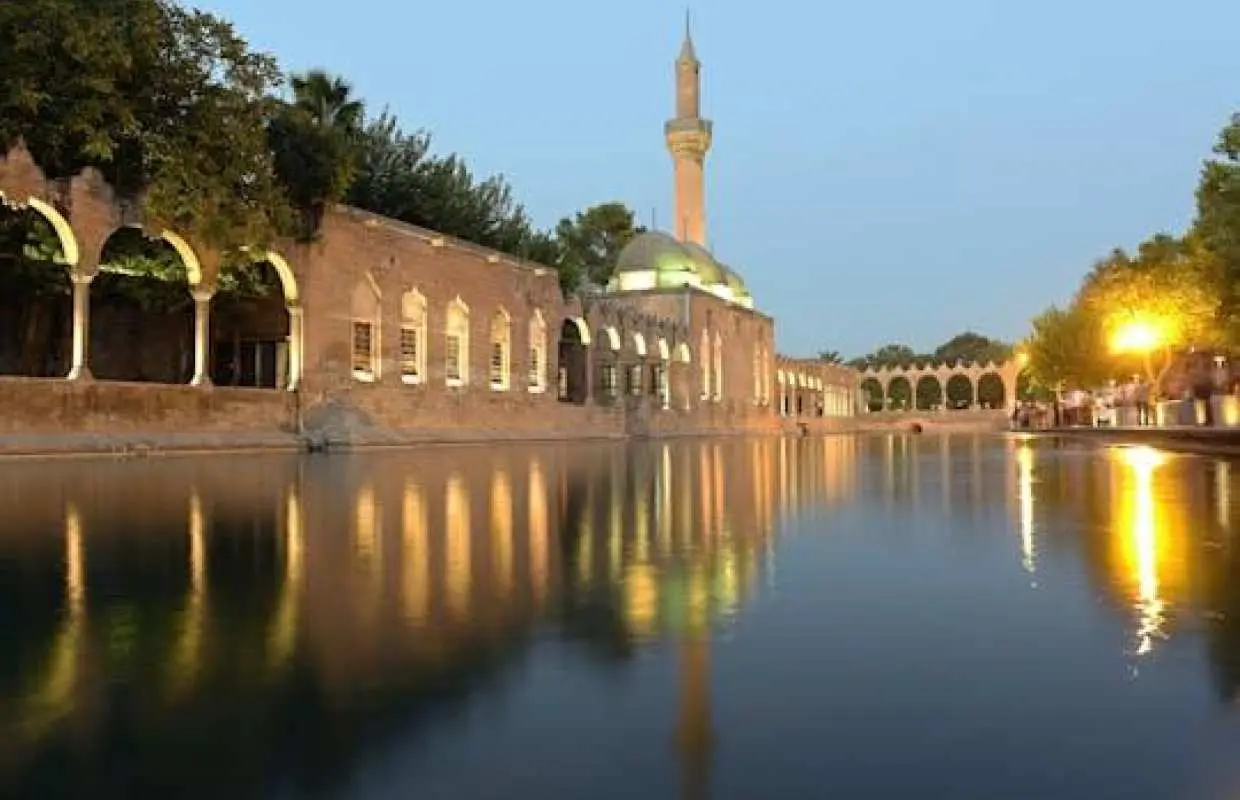


2-Days Göbeklitepe and Sanlıurfa All Inclusive Tour from Istanbul
- Discover the historical sites of Şanlıurfa, including Corinth-style columns, Karahan Tepe's archaeological wonders, and Harran's beehive houses.
Package Options


Product Info
Purchase Notice
Reminders
Please refer to your voucher for final information regarding meeting points, pick-up locations, and pick-up time
Meeting point description: You'll be picked from your chosen hotel or any other location in Istanbul and be transferred to the airport for the fly to Sanliurfa. You'll meet with your guide at the airport upon arrival.
Not suitable for:This experience is not wheelchair or stroller accessible nor suitable for pets
Know in advance:You'll select your pickup location while booking
Domestic Flight tickets and all transfers are included
Your flight tickets will be provided to you via e-mail or WhatsApp
You'll be requested to add your passport details in full, in order to book your included domestic flight tickets
It is advised that you wear comfortable seasonal outgoing dresses and shoes
Infant seats are unavailable and therefore infants must not sit on laps
Remember to bring:You'll be using airlines for transportation; therefore, please ensure that you carry your passports during this trip
Additionally, it is recommended that you carry some local currency for your small needs, such as drinks, etc. in Turkish Lira
FAQ
1. What is the historical significance and estimated age of Göbeklitepe?
Göbeklitepe is an archaeological site in southeastern Turkey, renowned for housing the world's oldest known megalithic structures. It dates back to the Pre-Pottery Neolithic period, approximately 9,500–8,000 BCE, making it over 11,000 years old. This predates Stonehenge by roughly 6,000 years and the pyramids of Egypt by 7,000 years, significantly pushing back the timeline for complex human-made structures and organized religion.
2. How does the age of Göbeklitepe compare with traditional timelines of human civilization?
Göbeklitepe's age profoundly challenges traditional views on the development of human civilization. Its construction predates the invention of pottery, writing, and the widespread practice of agriculture, suggesting that complex social organization and monumental architecture may have emerged before settled agricultural communities. This has led many to reconsider the sequence of human societal evolution, indicating that religious or ceremonial centers might have driven early human settlement.
3. What are the most significant archaeological findings and unique features at Göbeklitepe?
The most significant features at Göbeklitepe are its massive T-shaped megalithic pillars, some weighing up to 60 tons, arranged in circular enclosures. Many pillars are intricately carved with abstract symbols and reliefs of animals like boars, foxes, snakes, and birds, believed to represent spiritual or mythological figures. These sophisticated carvings and the sheer scale of the construction are unprecedented for its era, highlighting advanced craftsmanship for the period.
4. What are some of the enduring mysteries and unanswered questions surrounding Göbeklitepe?
Many mysteries persist about Göbeklitepe, including the exact purpose of its structures, the meaning of its intricate animal carvings and symbols, and how such massive stones were quarried, transported, and erected by communities without metal tools or domesticated animals. Another key enigma is why the site was deliberately buried around 8,000 BCE, leading to theories ranging from ritual closure to preservation.
5. Is the region around Göbeklitepe and Şanlıurfa safe for international visitors?
The Şanlıurfa region, including Göbeklitepe, generally maintains a safe environment for international visitors. Local authorities prioritize the safety of tourists, and visitors typically experience warm hospitality. It is always advisable for travelers to stay informed about current travel advisories from their home countries and exercise standard safety precautions, such as safeguarding personal belongings and being aware of their surroundings, particularly in crowded areas.
6. What are the transportation options for reaching Göbeklitepe from Şanlıurfa city center?
To reach Göbeklitepe from Şanlıurfa city center, you can take a taxi directly to the site, which offers the most convenient option. Alternatively, public minibuses (dolmuş) operate from Şanlıurfa to the vicinity of Göbeklitepe, followed by a shorter taxi ride or walk to the entrance. Many visitors also opt for organized tours from Şanlıurfa or Istanbul that include transportation, providing a hassle-free way to explore the site.
7. Are there any known connections or references to Göbeklitepe in major religious texts or historical records?
There are no direct mentions or specific connections to Göbeklitepe in major religious texts like the Bible or ancient historical records. Its discovery is relatively recent, and the site dates to a period long before the emergence of written history or established religions as we know them. Scholars continue to study its cultural and religious implications, but its significance is primarily understood through archaeological interpretation rather than existing ancient texts.
8. Have any human remains or evidence of permanent settlement been discovered at the Göbeklitepe site?
Archaeological excavations at Göbeklitepe have found very limited evidence of human occupation or permanent settlement, such as residential buildings. Instead, the site appears to have been a purely ceremonial or ritualistic center. While some fragmented human bones have been found, suggesting ritualistic practices or burial, there is no strong evidence of a large permanent population residing directly at the site itself.


