

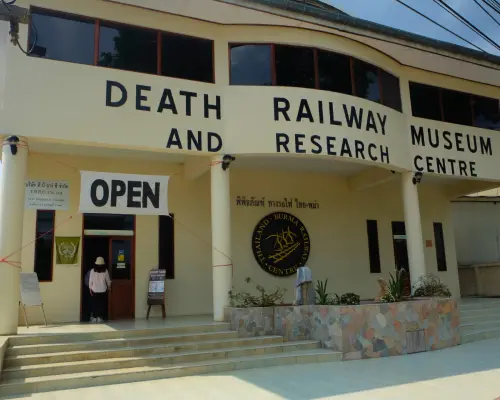


From Bangkok: Death Railway & Hellfire Pass Tour with Lunch | Thailand
- Explore Hellfire Pass memorial that tell the stories of resilience from WWII
- Walk through Hellfire Pass and witness the monumental effort behind it
- Ride the historic "Death Railway," built by Allied POWs in WWII
- Visit the iconic bridge, a symbol of the builders' struggles
- Visit War Cemetery to honor soldiers who died during the railway's construction
Package Options


Product Info
Important Info
Reminders
Pickup times will be between 6:00 AM and 7:00 AM. Our tour guide will contact you by 10:00 PM the evening prior to the tour date to confirm the exact pickup time. Kindly ensure that you check your phone for this information.
Please kindly provide hotel and address for hotel pickup and drop off arrangement.
After the tour ends, there may be instances where our guide does not accompany the clients all the way to their hotel. In these cases, our driver will ensure that you are safely dropped off at your hotel.
Please note that Hellfire Pass will be closed on May from 4 to 24, December 5, 24, 25, 26, 27, and 31, 2026, as well as January 1, 2027. During these closure dates, the alternative attraction will be Chong Kai Mountain (panoramic viewpoint and historical site) in Kanchanaburi.
FAQ
1. Is the historic Death Railway still operating in Thailand?
Yes, a section of the historic Death Railway remains operational in Thailand. Visitors can experience a train ride along this route, passing through scenic landscapes and sections built during WWII. This ride offers a poignant connection to the railway's past, allowing travelers to reflect on its history and significance.
2. Is the story behind the Bridge on the River Kwai historically accurate?
The Bridge on the River Kwai, while a real structure, gained widespread fame through a fictionalized novel and film. The bridge itself was part of the Burma-Thailand Railway and was built by Allied POWs. While the general historical context of its construction by POWs is accurate, specific dramatic elements in the fictional portrayals differ from factual accounts. It serves as a powerful symbol of the struggles faced during its creation.
3. What is the significance of the Hellfire Pass memorial?
The Hellfire Pass memorial stands as a poignant tribute to the Allied Prisoners of War and Asian laborers who suffered and perished during the construction of the Burma-Thailand Railway in WWII. It commemorates their immense sacrifice and resilience, documenting the brutal conditions and monumental human effort involved in carving out the railway through difficult terrain. The memorial aims to educate visitors about this dark chapter of history.
4. How many Allied POWs perished during the construction of the Burma-Thailand Railway (Death Railway)?
During the construction of the Burma-Thailand Railway, tragically, an estimated 12,000 Allied Prisoners of War and around 90,000 Asian laborers perished due to starvation, disease, and brutal treatment. These devastating losses highlight the horrific human cost of building what became known as the Death Railway under severe wartime conditions.
5. What kind of experience can visitors expect during the historic Death Railway train ride?
During the historic Death Railway train ride, visitors can expect a unique journey through lush landscapes, including sections that hug the cliffs overlooking the Kwai River. The ride offers a chance to reflect on the immense human effort and suffering involved in its construction. It's a key part of understanding the railway's legacy and provides a scenic yet somber perspective on this significant historical site.
6. What is involved in walking through Hellfire Pass?
Walking through Hellfire Pass involves traversing a deep rock cutting, where visitors can truly grasp the monumental effort required to build this section of the railway. The path is often lined with interpretive signs and exhibits that share the stories of the POWs and laborers. It offers a somber and reflective experience, allowing a firsthand understanding of the harsh conditions endured during its construction.
7. What is the purpose of visiting the War Cemetery near the Death Railway?
Visiting the War Cemetery near the Death Railway serves as a solemn opportunity to honor and remember the soldiers who died during the railway's construction. It is a place of quiet reflection, dedicated to the thousands of Allied POWs buried there. The cemetery provides a tangible connection to the human cost of the railway and reinforces the historical significance of their sacrifice.
8. What role did the Death Railway play in World War II history?
The Death Railway, officially the Burma-Thailand Railway, played a crucial strategic role for the Japanese during World War II, intended to supply their forces in Burma. It was built under horrific conditions by Allied POWs and Asian laborers, becoming a symbol of wartime brutality and human suffering. Its construction, a monumental feat achieved at immense human cost, is a significant part of WWII history in Southeast Asia.


