


河西走廊(不限国籍) | 深度纯玩5天4晚2~8人拼团丨七彩丹霞+嘉峪关+悬臂长城+鸣沙山月牙泉+阳关+雅丹魔鬼城+敦煌莫高窟
- # 📩 行前通知
- 出行的前两日我们会发送您微信活动群二维码,管家和司机师傅都会进群为您服务;
- # 🕗 集合时间与地点
- * 行程在张掖集合(兰州有高铁直达),敦煌解散 请提前预定好往返大交通 集合日自行到达酒店即可;
- # 🌈简要行程介绍
- * D1张掖市全天集合(西宁或兰州动车直达),住张掖市4钻酒店
- * D2张掖市-张掖市-(50km,约1h)张掖七彩丹霞-(220km,约3h)嘉峪关关城-住嘉峪关市3钻酒店
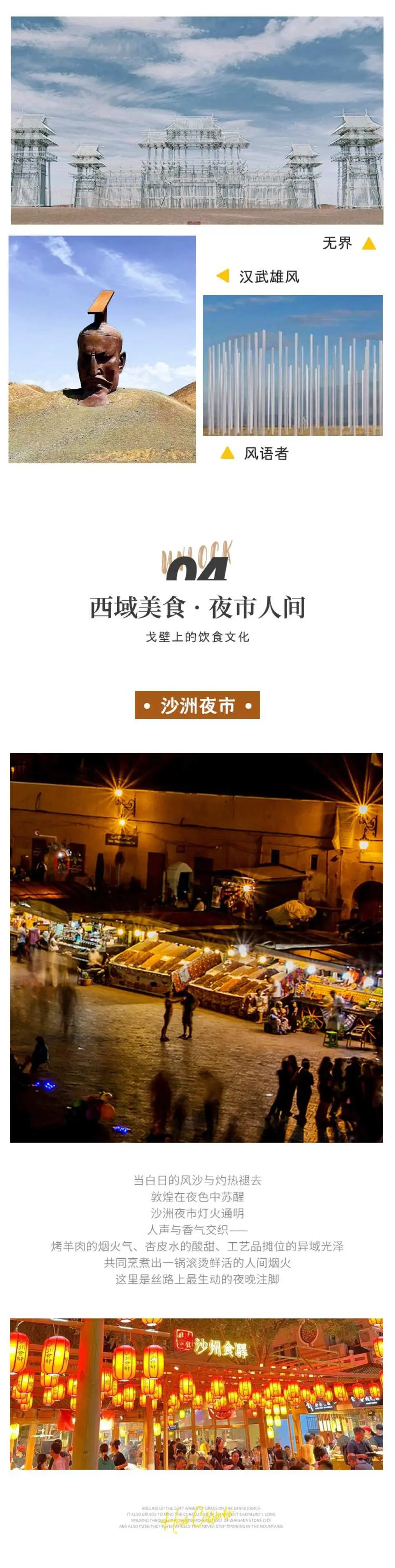
- * D3悬臂长城-天下第一墩-(270km,约3.5h)大地之子/无界/风语者/汉武雄风-(120km,约2h)鸣沙山月牙泉日落-住敦煌市3钻酒店
- * D4敦煌-(80km,约1.5h)阳关-(130km,约2.5h)雅丹魔鬼城-(170km,约3.5h)沙洲夜市-雅丹魔鬼城-沙洲夜市,住敦煌市3钻酒店
- * D5敦煌-莫高窟(自行预约,费用自理)-敦煌解散
- # 📢温馨提示:
- * 🎒行李尺寸建议
- 24 寸及以下行李箱 1 个 + 背包 1 个 (过大的行李箱可能影响您和大家的愉快行程)
- * 🧑🏻🎓身份证及相关证件
- 优惠证件请在报名时主动告知以及行程中主动出示,按照团体优惠票差价现场退您
- * 🎫门票
- 莫高窟门票,票源紧张采取实名提前30天预约制,建议提前一个月报名,提前25日以前报名可以为您代订莫高窟门票,25日及以内可以和客服索要预约攻略自行预约。
* 💎出行方式
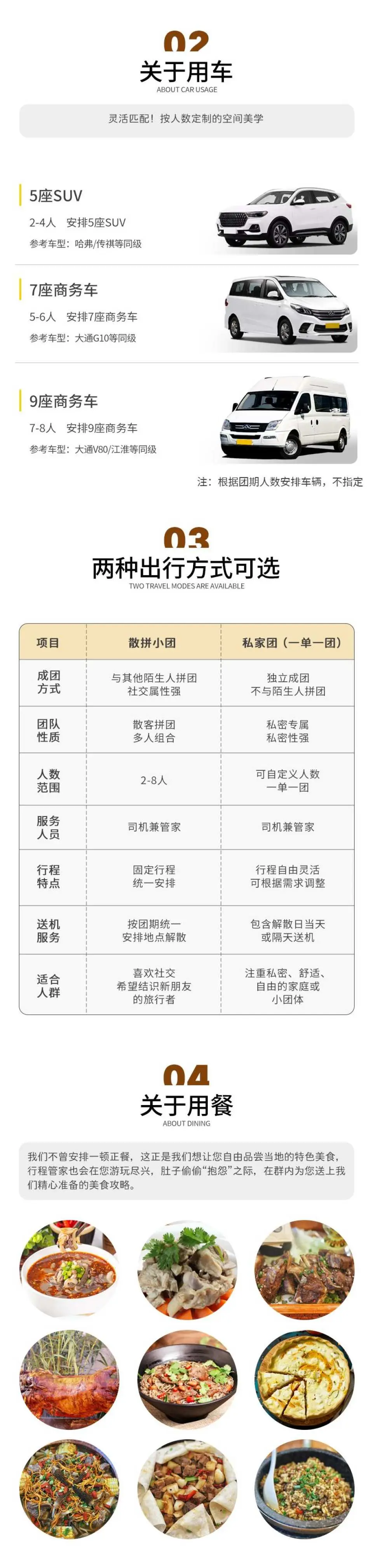
两种方式参团: 1️⃣2-8人拼团--社交属性强;2️⃣私家团独立成团--不与陌生人拼团 行程时间更自由;
Package Options


Product Info
- 【活动亮点】
- 精华美景:东方艺术宝库莫高窟、阳关、嘉峪关景区深度游览,与古人对话。
- 精华美景:集合河西走廊精华景点,黄河以西,沙漠雅丹,古窟人文,不留遗憾!
- 专业团队:多年团队操刀,线路优化,优选当地资源,想您所想,及您所及。
- 品质保障:坚持真纯玩深度游产品,多年操作团队,高标准操作流程,严格的质量监督,绝无隐性消费!
- 全新升级:2026酒店全新迭代,全程甄选3钻舒适酒店住宿,额外升级1晚4钻酒店
- 不限制国籍 外籍放心报名






Purchase Notice
1、本产品不接受以下旅游者报名:传染性疾病、心脑血管疾病、呼吸系统疾病、精神病、严重贫血病、大中型手术的恢复期病患者、75周岁(含)以上老年人、孕妇及行动不便者以及其他不适宜出行者。出于旅游安全考虑,建议旅游者在出行前做一次必要的身体检查,预订人请务必准确、及时转达并核实旅游者的身体状况后再报名,否则由此引发的不良后果和所有费用由预订人和旅游者自行承担。
2、请您在预订时务必提供准确、完整的信息(姓名、性别、证件号码、国籍、联系方式、是否成人或儿童等),以免产生预订错误,影响出行。如因客人提供错误个人信息而造成损失,我社不承担任何责任。
3、港澳台同胞及外国友人可以报名,参加活动默认两人起报,如单人报名需补单房差。
4、18岁以下未成年人不可单独报名,需要至少一名18周岁以上59周岁以下直系亲属全程陪同方可报名。
5、70周岁(含)以上老年人预订出行需确保身体健康适宜旅游,并有18周岁以上59周岁以下直系亲属全程陪同出行。
6、涉及高海拔地区(包括西藏、青海、四川、云南、贵州、新疆、甘肃部分地区等)线路,因地理环境的特殊性,以及个人身体素质条件不同,可能个体会出现不同程度的高原反应,建议根据自身情况做好相关评估和准备。行程中,出现严重的高原反应请及时通知服务人员或旅行社,旅行社将给予必要的协助,但产生额外的救助费用将由个人承担,如决定中途退团的,仅退还未产生的门票费用。
7、请在约定的时间到达集合地点,切勿迟到,以免耽误您和其他游客行程。若因迟到导致无法随团游览,将按照当天解除合同处理,或您也可以与旅行社协商自行前往下一集合地点,但因此增加的费用由您自理,因行程耽误而没有参加的交通、景区、活动、住宿等费用无法退还。
8、本产品行程实际出行中,在不减少景点且征得客人同意的前提下,我司服务人员可能会根据天气、交通等情况,对您的行程进行适当调整(如调整景点游览顺序等),以确保行程顺利进行。
9、出游过程中,如遇不可抗力因素造成景点未能正常游玩,我司服务人员经与客人协商后可根据实际情况取消或更换该景点,或在现场按旅游产品中的门票价退还费用,退费不以景区挂牌价为准,敬请谅解。
10、如遇路况原因等突发情况需要变更各集合时间的,届时以我司服务人员公布为准。
11、行程中的赠送项目,如因交通、天气等不可抗因素导致不能赠送的、或因您个人原因不能参观的,费用不退,敬请谅解。
12、团队行程中,非自由活动期间,未经我司服务人员同意,不得擅自离团或脱团。 如您选择中途离团,经服务人员同意后,应签署书面离团协议,未完成部分将被视为您自行放弃,仅退还未产生的门票费用。因此产生的人身财产安全等问题,游客自负。
13、植物类景观(枫叶、樱花、油菜花等),可能会因天气原因导致观花不佳等情况,敬请谅解
14、为了记录您在旅途中的美好瞬间,服务人员可能会为您以及同行人员拍摄一些照片,这些照片可能会被选中用于本产品活动分享、产品宣传、新媒体运营等,若您不同意授权我司使用的,请您在报名时备注。
15、本产品属于群体性活动,考虑到其他旅游者的健康和安全问题,不得携带宠物上团。
16、持老年证、军官证、军残证、残疾证、学生证、导游证等优惠证件的游客可享受景区门票优惠政策,具体以出行当日景区公布政策为准。请具备条件的游客携带好相关证件,届时由领队或我司工作人员统一安排,按打包行程中客人已享的优惠价格,现场退还差价。
Reminders
A minimum of 2 traveler(s) are required for the tour to depart. If the number of participants does not reach the minimum requirement, the tour will be canceled. An email regarding tour cancellation will be sent 5 day(s) before the departure date
FAQ
1. Where is the Hexi Corridor located, and what key attractions does this tour visit within it?
The Hexi Corridor is a historical and geographical region in Gansu Province, China, stretching west of the Yellow River. It served as a crucial section of the ancient Silk Road. This tour traverses its essence, visiting major attractions like Zhangye's Rainbow Mountains (Qicai Danxia), the historic Jiayuguan Pass and its Hanging Great Wall section, the unique geological formations of Yadan Devil City, the iconic Mingsha Mountain and Crescent Spring, the revered Mogao Grottoes, and the ancient frontier outpost of Yangguan.
2. What is the origin and meaning behind the name 'Hexi Corridor'?
The name 'Hexi Corridor' (河西走廊) literally translates to 'Corridor West of the River.' This refers to its geographical position west of the Yellow River (Huang He), which flows through Gansu Province. Historically, it formed a long, narrow passage or 'corridor' stretching for approximately 1,000 kilometers, flanked by the Qilian Mountains to the south and the Mazong, Heli, and Longshou mountains to the north. This strategic location made it a vital artery for trade, military, and cultural exchange along the Silk Road, connecting central China to the Western Regions.
3. What unique geological features can visitors expect at Zhangye's Rainbow Mountains (Qicai Danxia)?
At Zhangye's Rainbow Mountains (Qicai Danxia), visitors can marvel at a stunning landscape characterized by colorful rock formations. These vibrant patterns are a result of millions of years of mineral deposits, erosion, and tectonic plate movements. The mountains display an array of vivid hues including red, orange, yellow, green, and blue, creating a breathtaking, painted-like panorama. The area features various viewing platforms designed to offer different perspectives of these unique geological formations, especially striking during sunrise or sunset when the colors appear most intense.
4. What is the historical importance of Jiayuguan Pass and the Hanging Great Wall?
Jiayuguan Pass holds immense historical importance as the westernmost outpost of the Great Wall of China during the Ming Dynasty, often called 'The First and Greatest Pass Under Heaven.' It was a crucial military stronghold, protecting the Silk Road and serving as a gateway for trade and cultural exchange. The Hanging Great Wall, a section of the Great Wall near Jiayuguan, dramatically climbs steep ridges, giving the impression of hanging precariously. Both sites symbolize China's ancient frontier defense and offer insights into its military history and the challenges faced by travelers on the Silk Road.
5. What are the environmental challenges affecting Crescent Spring, and how is its preservation managed?
Crescent Spring has historically faced challenges with dwindling water levels, primarily due to factors such as increased agricultural irrigation in the surrounding desert oases and a decrease in groundwater recharge. Climate change and desertification also contribute to the environmental stress. To combat this, significant conservation efforts have been implemented, including strict controls on groundwater extraction, diversion projects to replenish the spring, and reforestation initiatives around the area to stabilize the desert environment. These measures aim to maintain the spring's unique ecosystem and ensure its long-term survival in the arid landscape.
6. What is the historical significance of Mingsha Mountain and Crescent Spring?
Mingsha Mountain, known as the 'Singing Sand Dunes,' and Crescent Spring have been revered for centuries, particularly along the ancient Silk Road. Mingsha Mountain gets its name from the sound produced by the sand when disturbed by wind or movement, which legend attributes to spirits or ancient battles. Crescent Spring, nestled within these dunes, has existed for thousands of years, a miraculous oasis sustaining life and providing respite for travelers and merchants. Its unique perennial nature in such an arid environment made it a sacred site and a vital water source, contributing to Dunhuang's prominence as a hub of Buddhist culture and trade.
7. Besides Mogao Grottoes, what other significant grottoes can be found near Dunhuang?
While the Mogao Grottoes are the most famous, Dunhuang and its surrounding areas are home to several other historically and artistically significant Buddhist cave temples. These include the Yulin Grottoes, located in Guazhou County (southeast of Dunhuang), known for their exquisite murals and sculptures from the Tang to Yuan dynasties. Another notable site is the Western Thousand Buddha Caves (Xi Qianfo Dong), situated along the Dang River, which contains early Northern Wei dynasty art. These grottoes, though smaller than Mogao, offer further insights into the rich Buddhist art and cultural heritage of the Hexi Corridor.
8. What are the important details regarding visiting the Mogao Grottoes, including ticket booking procedures?
Visiting the Mogao Grottoes requires careful planning due to their popularity and the need to protect the fragile artworks. Tickets are highly sought after and operate on a real-name, advance reservation system. It is strongly recommended to book your tickets at least 30 days in advance, as availability is limited. For this tour, if you enroll more than 25 days prior to your travel date, assistance with booking Mogao Grottoes tickets may be provided. If booking within 25 days, you will receive guidance on how to secure your tickets independently, as ticket acquisition is your responsibility and the cost is not included in the tour package.


