


Banteay Srei Beng Mealea and Koh Ker Pyramid Temple Full Day Tour from Siem Reap | Cambodia
- Discover some lesser visited sites of the Siem Reap city
- Learn about the history and architecture of the temples from your guide
- Visit the ruined Prasat Thom Temple with its dramatic architecture
- Explore the Beng Mealea Temple, left to the jungle overgrowth
- Admire the intricately carved Banteay Srei temple
Package Options


Product Info
— What You Can Expect —
Join us for an unforgettable small-group tour that takes you to some of Cambodia's most remarkable historical sites. Your adventure begins with a morning pickup from your Siem Reap hotel. As you travel through rural villages, enjoy stunning landscapes featuring rice paddies and traditional homes.
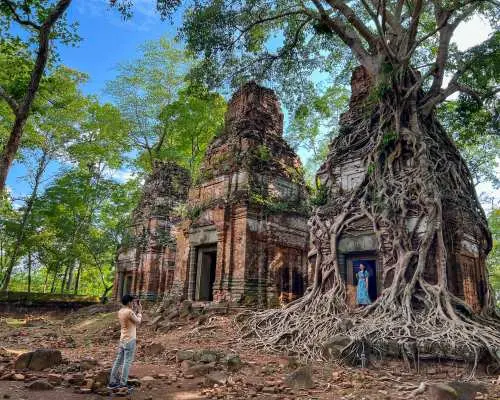
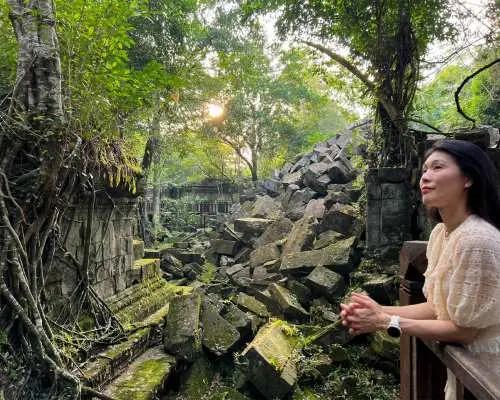
Your first stop is the authentic village of Preah Dak, where you'll witness the local craft of making traditional palm cakes and even get a chance to taste them. Next, explore the 12th-century temple of Beng Melea, nestled deep in the jungle. Marvel at this overgrown and partially ruined temple, where nature has intertwined with ancient architecture.
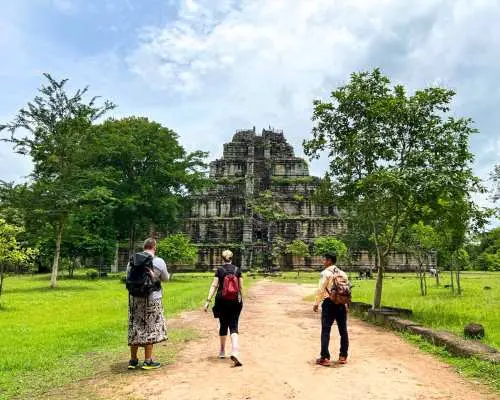
Then, proceed to the Koh Ker Group, a remote archaeological site in northern Cambodia. Visit Prasat Thom, the impressive 7-tiered pyramid temple believed to be the state temple of King Jayavarman IV. Your guide will share fascinating insights into the powerful Khmer Empire as you take in the grandeur of this historic site.
After enjoying a local lunch, continue to the renowned Banteay Srei temple. Known for its intricate carvings and well-preserved sandstone reliefs, this temple is often regarded as one of the finest examples of Khmer artistry.
Finally, you’ll be transported back to your hotel in Siem Reap, concluding a day rich in cultural and historical exploration.
— Important Info —
- What to bring: Sunglasses, Sunscreen, Insect repellent
- Not allowed: Shorts and Sleeveless shirts
- Know before you go: The valid Angkor pass can be used for visiting the Beng Mealea & Banteay temple. If you still have a valid pass of Angkor, please keep it carefully. Otherwise, you have to buy the Angkor pass of 1-day, US$37 per person.

Discover some of the lesser-visited treasures around Siem Reap, including the remarkable Koh Ker Group

Visit the ruined Prasat Thom, renowned for its dramatic architecture and imposing pyramid-like structure
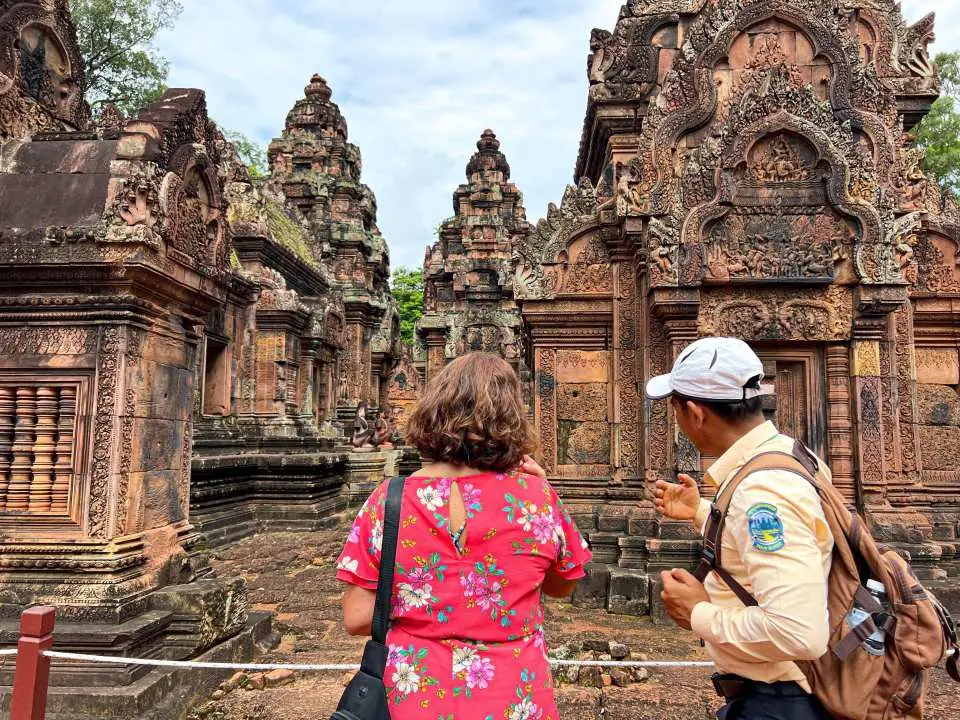
Admire the intricate carvings and exquisite pink sandstone reliefs of Banteay Srei, renowned as one of the finest masterpieces of Khmer art

Enjoy an in-depth exploration of the atmospheric Prasat Beng Mealea, a captivating jungle temple steeped in mystery

Learn how local communities craft traditional palm cake, gaining insight into time-honored techniques passed down through generations

Enjoy a delicious lunch featuring authentic Cambodian cuisine at a welcoming local family restaurant.
Purchase Notice
What to bring:
- Sunglasses, Sunscreen, Insect repellent
Not allowed:
- Shorts, Sleeveless shirts
Know before you go:
- The valid Angkor pass can be used for visiting the Beng Mealea & Banteay temple. If you still have a valid pass of Angkor, please keep it carefully. Otherwise, you have to buy the Angkor pass of 1-day, US$37 per person.
Reminders
A minimum of 1 traveler(s) are required for the tour to depart. If the number of participants does not reach the minimum requirement, the tour will be canceled. An email regarding tour cancellation will be sent 1 day(s) before the departure date
FAQ
1. What are the unique characteristics of Banteay Srei Temple?
Banteay Srei, meaning 'Citadel of Women', stands out due to its exquisite pink sandstone construction and incredibly intricate, miniature-scale carvings. These detailed bas-reliefs depict Hindu myths and celestial dancers, showcasing a level of artistry considered among the finest in Khmer architecture. Its compact size and distinctive reddish hue offer a striking contrast to the larger temples of Angkor, making it a unique artistic treasure.
2. Is Banteay Srei Temple worth visiting for travelers interested in ancient Khmer art and history?
Yes, Banteay Srei Temple is highly recommended for its exceptional artistic value and historical significance. It offers a glimpse into Khmer art at its zenith, featuring some of the most delicate and well-preserved carvings of any Angkorian site. Its unique architecture and smaller, more intimate scale provide a different experience compared to the grander temples, making it a significant stop for those appreciating ancient craftsmanship and historical narratives.
3. Is admission to Banteay Srei Temple included with the Angkor Pass, or does it require a separate ticket?
Admission to Banteay Srei Temple is included as part of the standard Angkor Pass. Visitors who have purchased a valid Angkor Pass (1-day, 3-day, or 7-day) can enter Banteay Srei without needing to buy an additional separate ticket. The pass covers access to most temples within the Angkor Archaeological Park, including this stunning site, allowing for convenient exploration.
4. What makes Koh Ker Temple a valuable destination for visitors to Cambodia?
Koh Ker Temple is highly valuable for its historical importance as a former capital and its distinctive pyramid-style architecture, notably Prasat Thom. Located further afield, it offers a more tranquil and less crowded experience, allowing for deeper immersion into ancient ruins enveloped by the jungle. Its unique structures and remote setting appeal to visitors seeking an adventurous exploration of Cambodia's rich archaeological heritage beyond the main Angkor complex.
5. What are the recommended transportation options for reaching Koh Ker Temple from Siem Reap?
Reaching Koh Ker Temple from Siem Reap typically involves hiring a private car or taxi, which offers comfort and flexibility for the approximately 2.5 to 3-hour journey. Alternatively, joining an organized small-group tour provides the convenience of included transportation and an expert guide who can share insights into the site's history and architecture. Due to its remote location, public transportation options are limited and less practical for a direct trip.
6. What unique experience can visitors expect from exploring Beng Mealea Temple?
Exploring Beng Mealea Temple offers a unique, Indiana Jones-esque experience as it remains largely unrestored, with its stones and structures significantly intertwined with jungle overgrowth. Visitors can wander through collapsed galleries, clamber over massive sandstone blocks, and navigate wooden walkways, immersing themselves in a truly atmospheric and wild archaeological site. It provides an authentic sense of discovery, showcasing the raw power of nature reclaiming ancient structures.
7. What kind of architectural features characterize Prasat Thom Temple at Koh Ker?
Prasat Thom Temple at Koh Ker is primarily characterized by its imposing, seven-tiered pyramid structure, which stands out dramatically in the Cambodian landscape. Unlike many traditional Khmer temples, its design is distinctly pyramidal, reminiscent of a stepped ziggurat. Visitors can ascend to the top for commanding views of the surrounding jungle, and its monumental scale reflects the ambitious architectural style of the Koh Ker period.
8. How do temples like Banteay Srei and Koh Ker offer a different experience compared to the main Angkor Wat complex?
Temples like Banteay Srei and Koh Ker provide a distinct experience from the main Angkor Wat complex by offering more remote, less crowded environments. Banteay Srei is famed for its intricate, well-preserved carvings on pink sandstone, showcasing a unique artistic style. Koh Ker, a former capital, features a monumental pyramid temple, Prasat Thom, offering a sense of discovery amid jungle surroundings. Both sites allow for a deeper, more intimate exploration of Khmer history and architecture beyond the well-trodden paths.


