
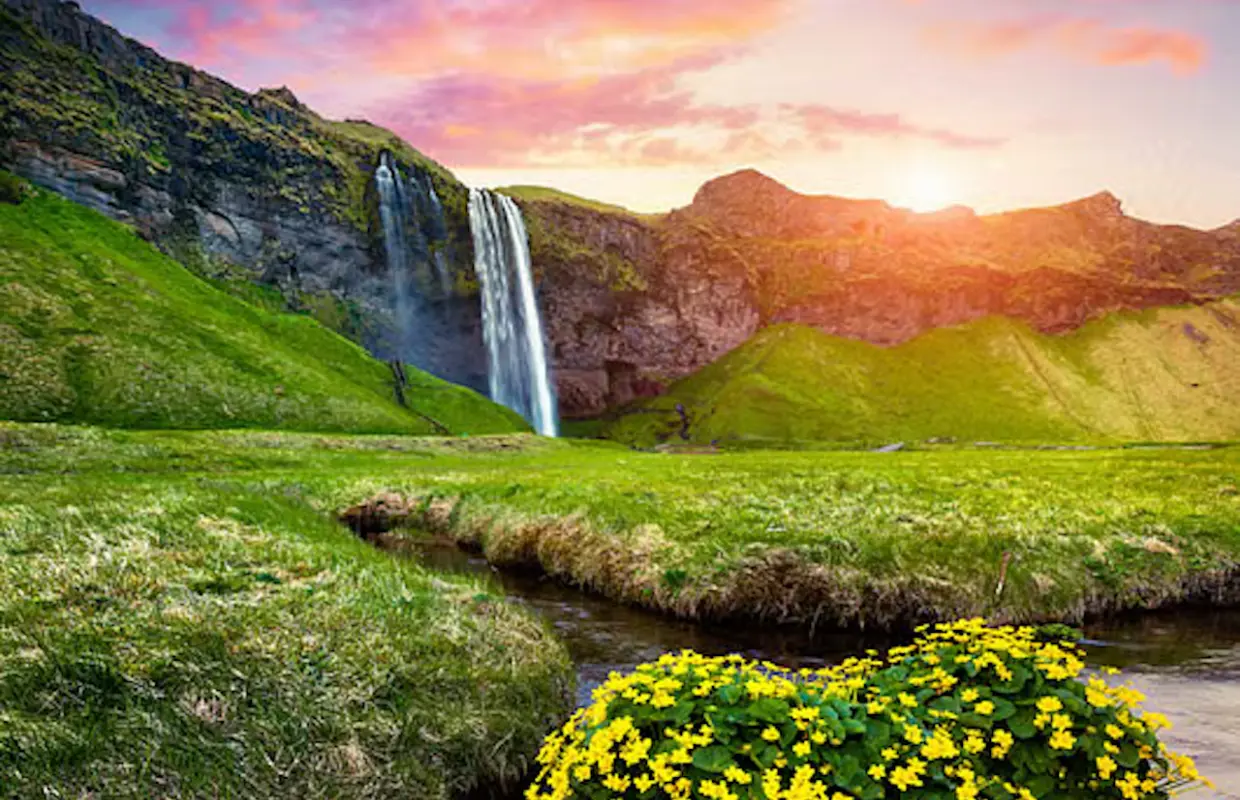


South Coast, Diamond Beach and Jokulsarlon Tour l Iceland
- Visit two of Iceland’s most iconic waterfalls: Seljalandsfoss, where you can walk behind the cascading water, and Skógafoss, known for its dramatic power and sweeping views.
- Explore the charming coastal village of Vík, famous for its black sand beaches, sea stacks, and picturesque hilltop church.
- Witness the breathtaking beauty of Jökulsárlón Glacier Lagoon, where massive icebergs float serenely against the backdrop of Vatnajökull Glacier.
- Stroll along the stunning Diamond Beach, where glistening ice fragments shimmer like jewels on the volcanic black sand.
- During Northern Lights season, enjoy the chance to stop on the return journey for a magical view of the Aurora Borealis (weather permitting).
Sightseeing Tours
| Tour Type | Shared tour |
| Transportation method | Transfer from meeting point |
| Departure Time | Standard Departure (8-9 am) |
| Tour types | Guided tour |
| Meal arrangement | Arrange yourself |
| Additional service & facility | Transfer included |
| Seasonal | Winter Snow Exclusive |
| Sightseeing type | Natural sights, Eco-tourism, Bus tour |
| Transport | Bus tour |
Product Info
- What to Expect -
Embark on the ultimate South Coast adventure and discover some of Iceland’s most breathtaking natural wonders in one unforgettable day. This tour takes you from majestic waterfalls to black sand beaches, charming coastal towns, and the world-famous Jökulsárlón Glacier Lagoon.
Your journey begins along Iceland’s iconic Ring Road, with panoramic views of volcanic landscapes, glaciers, and fertile farmlands. Stop at Seljalandsfoss, a stunning 60-meter-high waterfall where you can walk behind the cascading water for a truly unique experience. Nearby, marvel at the mighty Skógafoss, one of Iceland’s most powerful waterfalls, where rainbows often appear in the mist and a staircase leads to breathtaking views above.
Continue to the picturesque village of Vík, Iceland’s southernmost town, where you’ll spot the dramatic Reynisdrangar sea stacks and enjoy views over the famous black sand beaches.
The highlight of the day awaits at Jökulsárlón Glacier Lagoon, where massive icebergs drift serenely in crystal-blue waters, calved from the Vatnajökull glacier. In summer, you can even take an optional boat ride to get up close to these icy giants and perhaps catch sight of playful seals. Just a short walk away lies the spectacular Diamond Beach, where glittering ice fragments scatter across black volcanic sands like jewels on velvet.
This adventure blends Iceland’s fire and ice landscapes, from roaring waterfalls to glistening glaciers, creating a day filled with extraordinary sights and experiences you’ll never forget. During winter, if conditions are right, your driver may even stop on the return journey for a chance to witness the magical Northern Lights.


Purchase Notice
- Tours depart from the Reykjavik Terminal located at Skógarhlíð 10. Please be sure to arrive 15 minutes prior to departure along with a printed or digital copy of your ticket/voucher.
Reminders
Please arrive at the designated location 15 minute(s) before the scheduled departure time, as the tour will depart on time
Cancellation Policy
- Cancellations 2 day(s) (inclusive) before the selected date are allowed. Unused orders can be canceled for free
- Cancellation is not allowed between 0–1 days from the selected date. Orders cannot be canceled or modified, and refunds will not be granted.
- Due to time zone differences, the confirmed cancellation date is based on the supplier’s local time. Please allow 2–5 business days to process your cancellation request, after which the cancellation fee will be charged according to the product’s cancellation policy. Once the cancellation is confirmed, you will receive your refund within 14 working days.
FAQ
Jökulsárlón Glacier Lagoon is renowned for its surreal beauty, where massive icebergs calved from the Vatnajökull Glacier float in a deep lagoon. The constantly changing shapes and sizes of the ice, reflecting the sky, create a mesmerizing landscape. It's a unique opportunity to witness nature's grandeur, with the possibility of seeing seals swimming among the ice. Its proximity to Diamond Beach adds to its allure, offering a complete glacial experience.
To fully appreciate the unique landscapes of Jökulsárlón Glacier Lagoon and the adjacent Diamond Beach, it's recommended to allocate approximately 1 to 1.5 hours. This allows ample time to stroll along the lagoon's edge, admire the floating icebergs, take photographs, and walk on Diamond Beach to see the ice fragments glistening on the black sand. The duration can vary based on individual interest in photography and exploration.
The primary way to experience Jökulsárlón Glacier Lagoon is by walking along its shore, which offers stunning views of the floating icebergs and the Vatnajökull Glacier in the background. Many visitors enjoy photographing the changing ice formations and the reflections on the water. Observing the ice from different vantage points around the lagoon allows for a comprehensive appreciation of its vastness and beauty.
Jökulsárlón Glacier Lagoon is significantly larger and more famous, often drawing more visitors, while Fjallsárlón is smaller and typically less crowded, offering a more intimate experience. Jökulsárlón features larger, more dramatically shaped icebergs and is directly connected to Diamond Beach. Fjallsárlón, being closer to the glacier's edge, presents a different perspective of the ice calving process with a more direct view of the glacier tongue.
A typical South Coast tour includes visiting the powerful Skógafoss waterfall and the unique Seljalandsfoss, where you can walk behind the water curtain. You'll explore the charming village of Vík, known for its black sand beaches and Reynisdrangar sea stacks. The tour also features the stunning Jökulsárlón Glacier Lagoon with its floating icebergs and the adjacent Diamond Beach, where ice fragments glisten on volcanic sand. Seasonal tours may also offer Northern Lights viewing opportunities.
For visiting attractions like Seljalandsfoss and Skógafoss on Iceland's South Coast, most tourists opt for guided group tours or rent a car. Group tours offer convenient transportation with an itinerary designed to cover major sights efficiently, often including commentary from a guide. Renting a car provides flexibility to explore at your own pace, though navigating conditions and winter driving requires experience. Public transport is very limited in this region.
Iceland's South Coast is highly recommended for its extraordinary concentration of diverse natural wonders. It offers a spectacular journey through landscapes featuring towering waterfalls like Skógafoss, unique black sand beaches at Vík, dramatic sea stacks, and breathtaking glacial lagoons such as Jökulsárlón with its sparkling Diamond Beach. This region provides a comprehensive glimpse into Iceland's geological marvels and photographic opportunities at every turn.
Yes, visitors can walk behind Seljalandsfoss waterfall, which is one of its most unique features. A pathway behind the cascading water allows for an immersive experience and offers a different perspective of the waterfall and the surrounding landscape. It's important to wear waterproof clothing and sturdy footwear, as the path can be wet and slippery, especially during certain times of the year.
Get Help


