


Hue Full Day Tour: Imperial City & Hai Van Pass
- Experience the stunning Hai Van Pass, one of the most scenic coastal roads in the world.
- Walk through the Imperial Citadel, the former palace of the Nguyen Dynasty.
- Explore the Khai Dinh Tomb, an architectural masterpiece blending Eastern and Western styles.
- Explore Hue’s Imperial Citadel, including Ngo Mon Gate, Thai Hoa Palace, and the Nine Dynastic Urns.
- Small-group setting for personalized attention and comfort.
- Scenic drive over Hai Van Pass, with panoramic coastal and mountain views.
Package Options


Product Info
Important Info
Reminders
In case of delays caused by traffic, weather, or other force majeure factors resulting in the cancellation of some itinerary attractions, please contact customer service. We will arrange a partial refund for you
In the event of inclement weather such as typhoons or snowstorms, a decision on whether to cancel the tour will be made 1 day(s) before departure (local time 15:00). Notifications will then be sent via email
Travelers with the following conditions or other health issues that could be worsened by excessive stimulation should not participate in this activity: Pregnant women
Please arrive at the designated location 10 minute(s) before the scheduled departure time, as the tour will depart on time
FAQ
Hue Imperial City served as the imperial capital of Vietnam from 1802 to 1945, under the Nguyen Dynasty, Vietnam's last feudal dynasty. It was the nation's political, cultural, and religious center, and is recognized as a UNESCO World Heritage site for its well-preserved historical monuments.
Within Hue Imperial Citadel, visitors can explore prominent structures such as the Ngo Mon Gate, which is the main entrance, and the magnificent Thai Hoa Palace, where important court ceremonies took place. You can also see the Nine Dynastic Urns, symbolizing the Nguyen emperors, and remnants of the Forbidden Purple City, the former imperial residence.
The Khai Dinh Tomb is renowned for its unique blend of Eastern and Western architectural styles. It incorporates elements of traditional Vietnamese design alongside European influences like Gothic and Roman styles. The tomb features intricate mosaics made from ceramic and glass, elaborate sculptures, and a somber, monumental stone facade, reflecting a fusion of cultures.
Hai Van Pass is celebrated as one of the most scenic coastal roads globally, offering breathtaking panoramic views. As you drive, you'll witness majestic mountains meeting the azure sea. Highlights include stunning coastal vistas, lush green landscapes, and a stop at Lap An Lagoon, which provides mesmerizing views of Lang Co Beach.
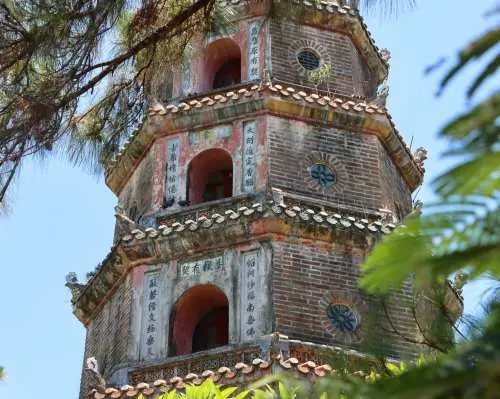
Thien Mu Pagoda is one of Hue's oldest and most iconic pagodas, serving as a significant symbol of Vietnamese Buddhism and cultural heritage. Its prominent seven-story Phuoc Duyen Tower is an emblematic landmark. The pagoda has played a crucial role in the city's spiritual life and has witnessed various historical events, standing as a serene testament to the region's rich past.
For Hue Imperial Citadel, it is recommended to allocate about 2 to 3 hours to thoroughly explore its main gates, palaces, and courtyards, allowing ample time for appreciation and photography. For Khai Dinh Tomb, approximately 1 to 1.5 hours is usually sufficient to admire its intricate architecture and historical details.
During a full-day tour, an authentic Hue-style lunch typically features dishes renowned for their delicate flavors and vibrant presentation, reflecting the city's imperial culinary traditions. You can expect a variety of local specialties, such as fresh spring rolls, savory noodle soups like bún bò Huế, and traditional rice dishes, all prepared with fresh, regional ingredients.
The Hue Imperial Citadel was the fortified administrative and residential heart of the Nguyen Dynasty, which ruled Vietnam for over 140 years. It was the home to 13 Nguyen Kings, serving as their primary seat of power and residence within the Forbidden Purple City. The Citadel is a tangible legacy of this imperial era, showcasing their architectural prowess and political might.
Get Help


