


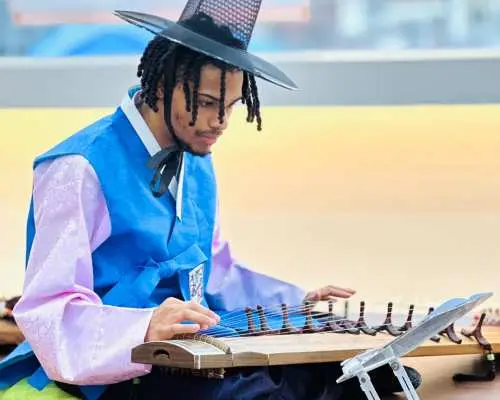


Hanbok& Korea traditional Instrumennt Experience
Learn about the history and cultural significance of the instrument. The gayageum dates back to the 6th century and is a prominent part of Korean classical music, especially in court music and folk traditions.
- A Unique Experience of Traditional Korean Culture: Wear a hanbok and play the gayageum to experience the beauty of both traditional Korean attire and music at the same time.
- Create Your Own Mini Gayageum: Make an unforgettable, special souvenir from your trip to Korea by crafting your own mini gayageum.
- Professional Class Suitable for Beginners: With the careful guidance of a seasoned instructor with 25 years of experience, this will be an easy and enjoyable special time, even for beginners.
Package Options
Cultural Experiences
| Location | Indoor |
| Activity level | Beginner |
| Experience type | DIY Workshop |
| Outfit type | Hanbok |
| Cultural experience type | Traditional culture experience |
Product Info
Apart from music, you might learn about the broader context of Korean traditional arts, including dance and poetry that often accompany gayageum music.
[Gayageum 1-Day Experience Class]
Learn to play the traditional Korean instrument, the gayageum, while wearing a hanbok, Korea's traditional attire. Capture the moment by taking photos of yourself playing the gayageum in the hanbok.
- Hanbok Wearing (20 minutes): Experience Korea's traditional attire and enjoy the special atmosphere it creates.
- Gayageum Lesson (40 minutes): Learn to play the gayageum under the guidance of a professional instructor and play a simple piece of music.
- Photo Time (20 minutes): Capture the moment of you playing the gayageum in hanbok against the traditional backdrop of Bukchon.
[Mini Gayageum Making Class]
- Create your own mini gayageum using high-quality, 20-year-old paulownia wood.
- This 1/5 scale replica of the real gayageum will become a charming and unique souvenir from your trip to Korea
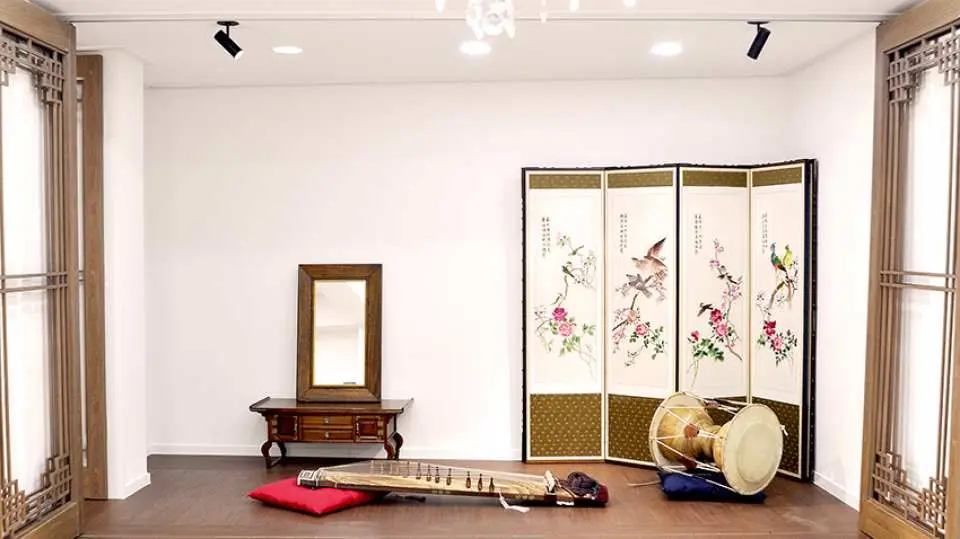


Gayageum one day Class


Miniature Gayageum


Purchase Notice
- Please arrive at the meeting point 10 minutes before your scheduled time slot. Refunds will not be granted due to late arrivals.
- The experience is available for those aged 10 and above. Children aged 1 to 9 can enter for free when accompanied by a parent.
How to Redeem Your Voucher
How to Use Your Voucher
- Please present the e-voucher on-site
Experience Location
Location Name: Beautiful Gayageum
Address: 3FL 43 Bukchon-ro 5ga-gil, Jongno District, SeoulContact
- Tel : 010-4452-6655
- DM: @beautiful_gayageum
- WhatsApp: Beautiful gayageum
- 카카오톡: Beautifulgayageum
- E-mail : [email protected]
Cancellation Policy
- Cancellations 5 day(s) (inclusive) before the selected date are allowed. Unused orders can be canceled for free
- For cancellations made 2 to 4 days prior to selected date, a cancellation fee of 50% will apply
- Cancellation is not allowed between 0–1 days from the selected date. Orders cannot be canceled or modified, and refunds will not be granted.
- Due to time zone differences, the confirmed cancellation date is based on the supplier’s local time. Please allow 2–5 business days to process your cancellation request, after which the cancellation fee will be charged according to the product’s cancellation policy. Once your refund request is confirmed, KKday will initiate the refund to your original payment method within 15 days. The actual refund timing depends on your card-issuing bank’s policy.
FAQ
1. What is the significance of the gayageum in Korean traditional music?
The gayageum is a crucial traditional Korean string instrument, deeply rooted in the country's culture. Dating back to the 6th century, it holds a prominent place in Korean classical music, particularly in court music (jeongak) and various folk traditions (sanjo). Its sound is considered characteristic of Korean traditional aesthetics, conveying a wide range of emotions and often accompanying storytelling or dance. It is central to understanding Korea's musical heritage.
2. Is the Gayageum experience class suitable for beginners with no prior musical knowledge?
Yes, the Gayageum experience class is specifically designed for beginners. It offers professional guidance from an experienced instructor, ensuring that even those without any prior musical background can easily and enjoyably learn the basics. The class focuses on providing an accessible introduction to playing the instrument, making it a comfortable learning environment for everyone.
3. What will participants learn about playing the gayageum during the experience class?
In the Gayageum experience class, participants will receive careful guidance on the fundamental techniques of playing this traditional Korean instrument. The instruction covers how to properly pluck the strings, create different sounds, and understand basic melodies. The goal is to provide an easy and enjoyable introduction to gayageum playing, enabling participants to appreciate its unique sounds and cultural significance.
4. What types of Korean traditional music can be played on the gayageum?
The gayageum is incredibly versatile and features in various forms of Korean traditional music. It is a key instrument in "jeongak," or court music, which is often slow and majestic. It is also central to "sanjo," an instrumental solo form known for its improvisational and virtuosic qualities, evolving from slow to fast tempos. Furthermore, it plays a role in "minsogak," encompassing folk music and various narrative songs.
5. How does the gayageum differ from other similar string instruments like the Guzheng?
While both the gayageum and the Guzheng are zither-like string instruments, they have distinct differences. The gayageum typically has 12 strings, though modern versions can have more, and its soundboard is slightly convex. Players use their right hand to pluck and strum, and their left hand to press strings to create various pitches and vibrato. The Guzheng, originating from China, usually has 21 or more strings and is played with picks on the fingers, offering a different sound and playing technique, though both produce resonant, beautiful tones.
6. What are some prominent styles or genres of Korean traditional music that feature the gayageum?
The gayageum is a central instrument in several prominent Korean traditional music styles. These include "jeongak," which refers to court music and other classical genres, characterized by its formal and refined qualities. Another significant genre is "sanjo," a rapid solo instrumental piece often accompanied by a drum, showcasing the player's virtuosity. It also contributes to "minsogak," a broader category encompassing folk music and traditional performing arts, adding its unique timbre to various regional sounds.
7. What unique cultural elements, besides playing the instrument, are included in the Gayageum experience?
Beyond learning to play the gayageum, this experience offers a unique immersion into traditional Korean culture. Participants have the opportunity to wear a hanbok, the beautiful traditional Korean attire, allowing them to fully embrace the aesthetic of the culture while engaging with its music. This combination provides a holistic and memorable experience of Korea's rich heritage.
8. Can participants create a souvenir during the Gayageum and traditional instrument experience?
Yes, participants can create a special souvenir as part of the Gayageum and traditional instrument experience. The class includes an activity where you can craft your own mini gayageum. This allows you to take home a unique, handmade memento from your trip to Korea, making the cultural experience even more unforgettable.


