



Full-Day best of the Cape, Cape of Good Hope and Stellenbosch Tour
- Don't miss a visit to the historical Stellenbosch and its wine region with a journey to the Cape of Good Hope and Cape Point.
Package Options


Sightseeing Tours
| Tour Type | Small Group |
| Transportation method | Hotel transfer |
| Tour types | Guided tour |
| Additional service & facility | Transfer included |
| Sightseeing type | Natural sights |
Product Info
Purchase Notice
Duration: Lasts up to 10 hours
Reminders
Please refer to your voucher for final information regarding meeting points, pick-up locations, and pick-up time
Meeting point description: At the time of booking, you will be asked to provide the pickup location in Cape Town.(Cape Town, South Africa)
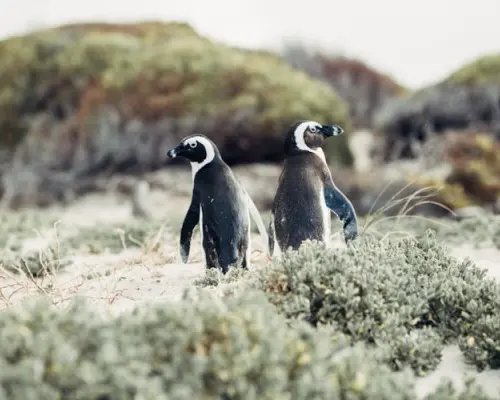
Extra fees to be paid on-site:The Penguin visit fees are optional and can be purchased on site
Know in advance:Please confirm the pick-up place and time directly with the local operator. You'll find the contact information in the voucher after booking
FAQ
The Cape of Good Hope holds immense historical significance as a major landmark for early European navigators. It was first rounded by Bartolomeu Dias in 1488, opening a sea route to the East. Its strategic location at the southwestern tip of the African continent made it a vital maritime waypoint, often associated with challenging sea conditions and powerful currents. The area is also rich in biodiversity, forming part of the Cape Floral Region, a UNESCO World Heritage Site.
At the Cape of Good Hope, visitors can explore a rugged and scenic landscape within Table Mountain National Park. Key features include the iconic Cape Point lighthouse, offering panoramic views of the Atlantic Ocean and False Bay. The area is known for its diverse fynbos vegetation, unique to this region, and wildlife such as baboons, ostriches, and various bird species. There are also walking trails, pristine beaches, and viewpoints for photography.
The Cape was originally named the "Cape of Storms" by Portuguese explorer Bartolomeu Dias due to the treacherous weather conditions he encountered there in 1488. However, King John II of Portugal later renamed it the "Cape of Good Hope" because its successful rounding by Dias represented a promising new sea route to India and the East, fulfilling the long-sought desire for direct trade with Asia.
The Cape of Good Hope's formidable waters, characterized by strong currents, unpredictable storms, and rocky coastlines, have historically made it a perilous passage for ships. Over centuries, countless vessels have succumbed to these conditions, earning it a reputation as a graveyard for ships. While exact numbers vary, it's estimated that hundreds of shipwrecks lie off the coast, contributing to the area's rich and often tragic maritime history. These wrecks attract divers and historians alike.
A full-day tour typically offers a diverse range of experiences. You can expect to explore the dramatic landscapes of the Cape of Good Hope and Cape Point, often including a visit to the iconic lighthouse for breathtaking views. The tour then ventures inland to the historical Stellenbosch wine region, where experiences often involve cellar tours, wine tastings, and exploring the charming town's architecture. Many tours also include scenic coastal drives and stops at other picturesque locations along the way.
For a full-day tour, transportation is usually provided via a comfortable tour vehicle, such as a mini-bus or coach, with a professional driver. This allows visitors to enjoy the scenic routes without the hassle of navigating unfamiliar roads. Tours often include pickup and drop-off from central Cape Town locations or hotels. Self-driving is also an option for independent travelers, but a guided tour simplifies logistics and provides expert commentary.
Yes, there are ample opportunities for walking and exploring. At Cape Point, visitors can walk to the old lighthouse for panoramic views or take the Flying Dutchman Funicular up the slopes. Various trails offer chances to experience the fynbos vegetation. In the Stellenbosch wine region, many wine estates offer guided walks through vineyards, and the historic town of Stellenbosch itself is perfect for leisurely strolls to admire its Cape Dutch architecture, art galleries, and boutiques.
A typical tour covers prominent natural landmarks such as the Cape of Good Hope and Cape Point, both located within the stunning Table Mountain National Park, renowned for its dramatic cliffs and unique flora. Culturally, the tour highlights Stellenbosch, one of South Africa's oldest and most historically significant towns, famous for its beautifully preserved Cape Dutch architecture and world-renowned wine industry, representing a blend of natural beauty and cultural heritage.
Get Help


