

Estonian food, drinks and history tour in Tallinn
- Taste regional dishes and drinks during this food tasting in Tallinn! Learn about the historical events that shaped the culinary habits of Estonians.
Package Options


Product Info
Purchase Notice
Reminders
Please refer to your voucher for final information regarding meeting points, pick-up locations, and pick-up time
Meeting point description: Your guide will be waiting for you under the clock in the Tallinn Town Hall square.(Raekoja plats 1, 10146 Tallinn, Estonia)
Not suitable for:people under 18 years old
Know in advance:this tour is designed for a maximum of 20 participants
FAQ
1. What traditional Estonian dishes can visitors taste in Tallinn?
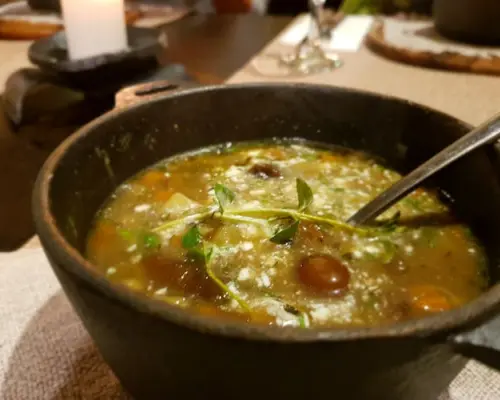
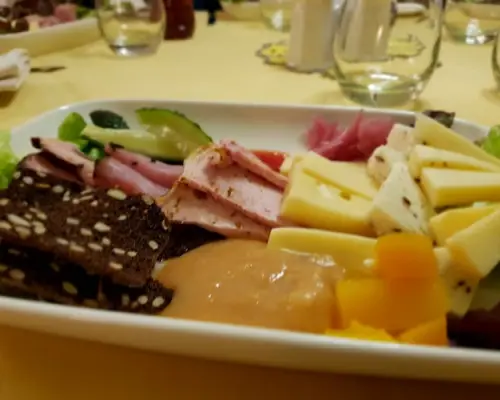
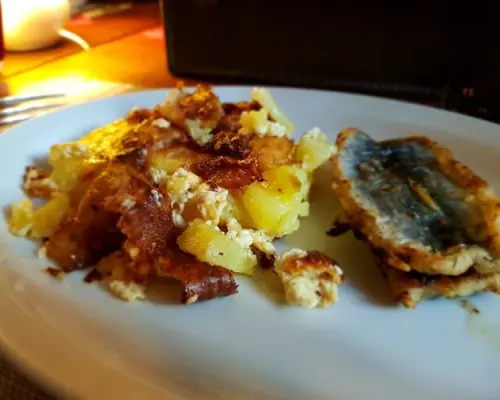
Visitors to Tallinn can savor hearty Estonian dishes such as `verivorst` (blood sausage, especially in winter), `mulgikapsad` (sauerkraut with pork), and `kiluvõileib` (sprat sandwich). `Rye bread` is a fundamental staple, often served with `hernesupp` (pea soup) or `frikadellisupp` (meatball soup). Seasonal variations often feature local `berries`, `mushrooms`, and `fish` from the Baltic Sea. Many dishes reflect historical influences from Germany, Russia, and Scandinavia.
2. What traditional Estonian drinks are commonly enjoyed in Tallinn?
Traditional Estonian drinks in Tallinn include `kali` (a fermented, non-alcoholic kvass-like beverage), `kama` (a refreshing dessert drink made from a mixture of roasted grains, often blended with buttermilk or kefir), and various local `craft beers`. Estonia also has a rich history of producing `berry wines` and `vodka`. Herbal teas, reflecting the country's natural bounty, are also popular. Exploring these drinks offers insight into local culinary traditions and historical consumption patterns.
3. Which key historical landmarks in Tallinn played a role in shaping Estonian culinary habits?
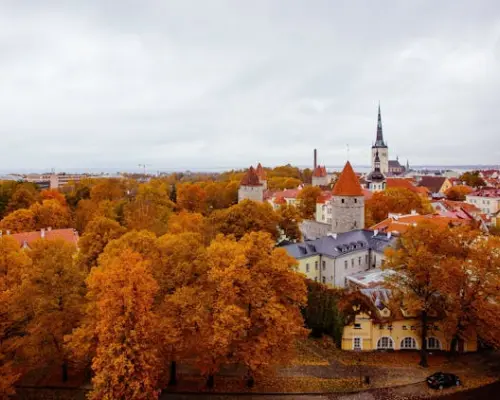
Tallinn's `Old Town`, a UNESCO World Heritage site, is central to understanding Estonian culinary history. Historic marketplaces like `Balti Jaama Turg` (though modernized) or older merchant guild halls once dictated food trade and supply. The `Town Hall Square` historically hosted medieval markets. The numerous `guild houses` throughout the Old Town illustrate the historical importance of trade and foreign influences on local ingredients and cooking styles. Even the `city walls` and `fortifications` hint at times of scarcity and resourceful cooking methods.
4. What is the historical significance of Tallinn's Old Town in relation to Estonian food culture?
Tallinn's `Old Town` has been a bustling trade hub since the medieval era, significantly influencing Estonian food culture. Its strategic location meant exposure to diverse ingredients and cooking techniques from Hanseatic League merchants and various occupiers. This led to a fusion of native Estonian peasant cuisine with influences from German, Russian, and Scandinavian culinary traditions, evident in dishes like sauerkraut and blood sausage. The Old Town's historical layout and architecture also reflect the storage and distribution of food.
5. What unique historical narratives or cultural stories are associated with traditional Estonian cuisine?
Many Estonian dishes tell stories of resilience and resourcefulness, often reflecting periods of scarcity or foreign rule. For example, the importance of `rye bread` stems from its historical role as a primary sustenance during harsh winters. The tradition of foraging for `mushrooms` and `berries` is deeply rooted in the nation's connection to its vast forests. `Kama`, a unique Estonian flour mix, evolved from historical attempts to preserve grains. These narratives highlight a cuisine shaped by nature, necessity, and adaptation.
6. How have past historical events influenced the traditional food and drink practices in Tallinn?
Tallinn's food and drink practices bear the strong imprint of historical events. The `Hanseatic League` introduced spices and new trade goods, expanding local palates. `Swedish and Russian rule` brought new ingredients and preparation methods, blending with local traditions. `German baronial influence` is often seen in some hearty dishes and long-standing brewing traditions. Periods of `Soviet occupation` led to simplified recipes and a reliance on local, easily accessible ingredients. Each era contributed distinct layers to the culinary landscape.
7. Which specific historical periods are best reflected in Tallinn's most iconic Estonian dishes?
Tallinn's most iconic Estonian dishes primarily reflect the `medieval Hanseatic trade era`, `Swedish rule`, and `German cultural influences`, alongside enduring `native peasant traditions`. Dishes like `sauerkraut and pork` strongly show German impact, while the prominence of `fish and rye bread` reflects medieval trade and local resources. The `Soviet era` also left its mark on some dishes, though many traditional recipes predate it. These historical layers are preserved and celebrated in contemporary Estonian cuisine.
8. What aspects of Tallinn's cultural heritage are best understood through its traditional food and drink?
Through its traditional food and drink, Tallinn's cultural heritage reveals profound `resilience`, `resourcefulness`, and a deep `connection to nature`. The cuisine highlights the nation's historical `adaptability` to different rulers and trade influences, integrating foreign elements while maintaining a distinct Estonian character. It also showcases the importance of `seasonal ingredients`, `foraging traditions`, and `communal dining`, offering insights into daily life, social structures, and the enduring spirit of the Estonian people throughout history.
Get Help


