

[20% Off% off] Korean eSIM card | Daily high speed, unlimited use
- A new choice for Internet access, no need to change SIM cards, enjoy 4G Internet access quickly and smoothly without any hassle
- Once you receive the eSIM QR code, you can scan and install it, without having to go back and forth to pick up the physical card or wait for it to be delivered.
- Supports Apple and various Android phones. * Samsung phones purchased in different countries have different versions. Before purchasing, you must confirm whether they support eSIM (Samsung phones purchased in Taiwan do not support eSIM function)
Package Options
Product Info
The content of this product is provided by machine translation and may not reflect the actual information, please take this into consideration before booking.
Please confirm that your phone can use eSIM before purchasing. You cannot cancel or refund the order after ordering.


Before activating eSIM, please update iOS to the latest version and connect to a stable WiFi network. Old iOS versions and unstable networks are common reasons for eSIM activation failure.


Open the camera to scan the eSIM and click "Action Plan".


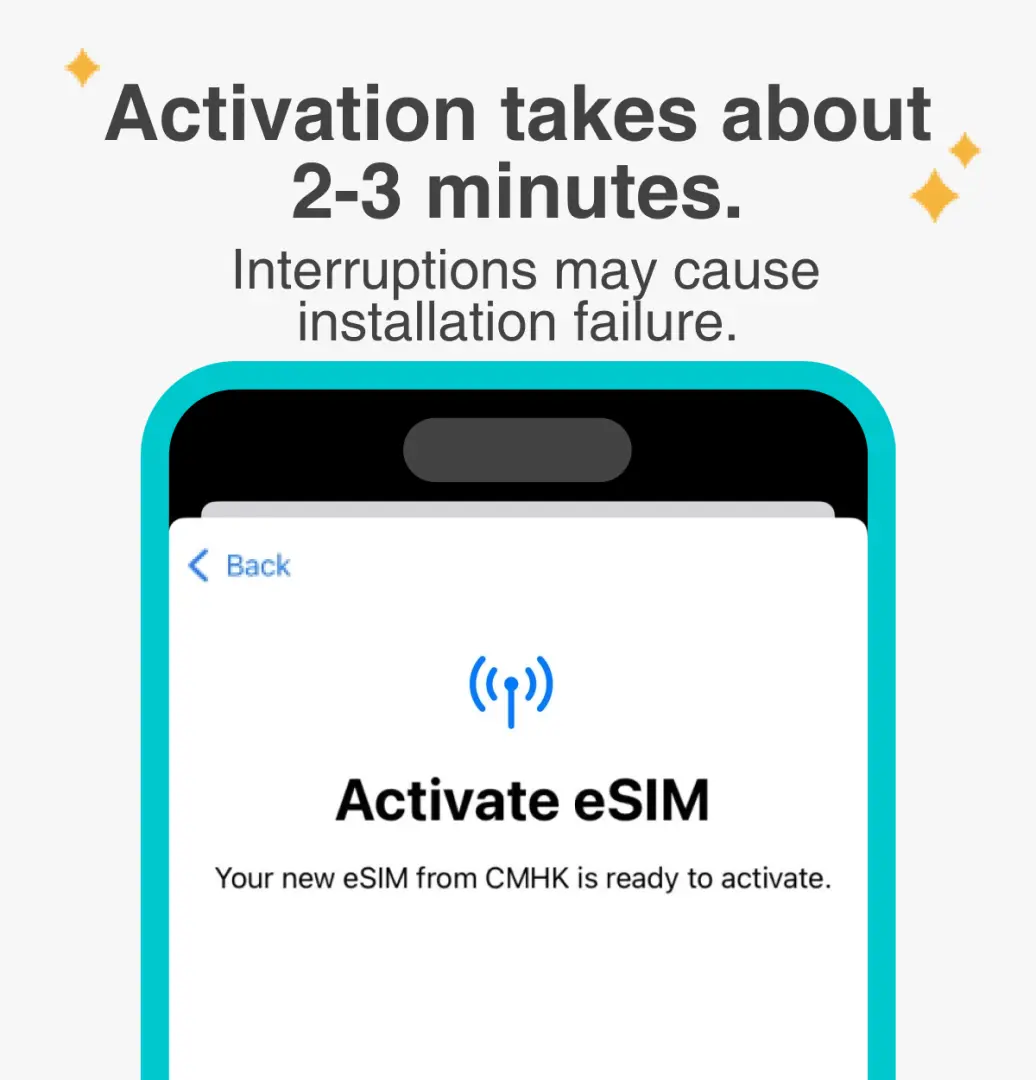
The activation time is about 2-3 minutes, and the installation is likely to fail if the activation screen pops up.

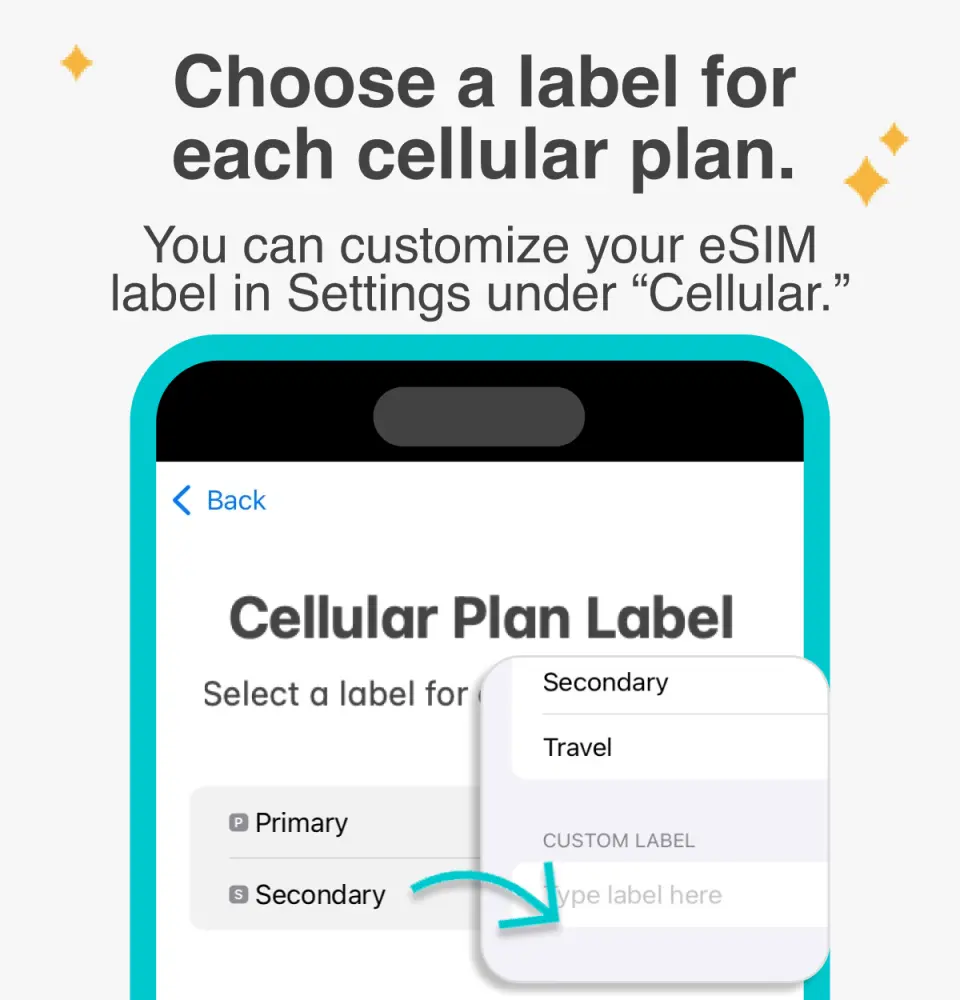
You can customize the eSIM name to facilitate the management of multiple eSIMs

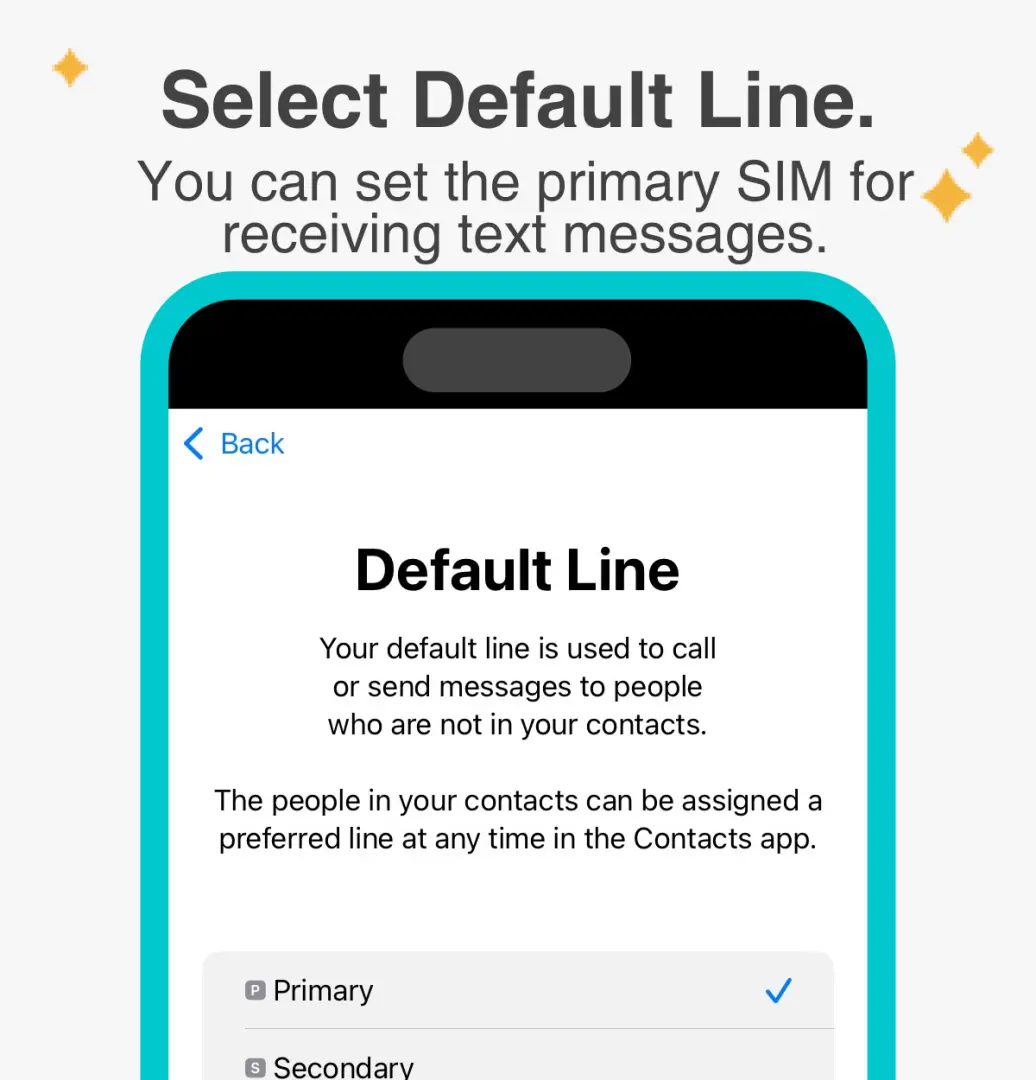
Select the preset number to specify the original main number to receive messages (you need to apply to the original telecommunications operator to activate the international roaming main number before you can receive text messages)

You can specify the primary phone number to use iMessage and Facetime functions


Choose to use eSIM's mobile data. "eSIM's mobile data is not turned on" is a common reason for not being able to access the Internet.


You can also manually add eSIM when you cannot scan the QR Code


After copying the eSIM activation code, please follow the steps to manually add eSIM information.


SIM Card Specifications
| Data Usage Specifications | Unlimited data, 1GB, 2GB |
| Transmission Specifications | 4G |
| Signal Coverage Area | South Korea |
| Mobile Carrier | SKT / KT |
| Supported Sizes | eSIM |
| Hotspot Sharing | Available |
| Supported Frequencies(4G) | B1(2100 MHz) |
| Top-Up Availability | Top-up unavailable |
| Excludes | Voice calls, Texts |
| Not Supported | SIM-locked device, Carrier-customized device, Mobile hotspot, modified phones, 3G phones, translation machines, phones without eSIM function |
| Reminders | ・After the daily high-speed data usage is completed, the speed will be reduced to 128Kbps and the high-speed data usage will be recalculated at 0:00 (GMT+8) every day. ・Validity period calculation method: The calendar day system, the day from when the eSIM is installed and activated to 23:59 (GMT+8) is considered the first day. |
Purchase Notice
- Please make sure your phone and its operating system support the eSIM function before purchasing. If you cancel the order due to device incompatibility, no refund will be given.
- iOS version 12.1 or higher is required; Please note that iPhones sold in mainland China do not support eSIM. In Hong Kong and Macau, only iPhone 13 mini, iPhone 12 mini, iPhone SE 2020 and iPhone XS have eSIM function. (Please visit Apple official website for inquiries)
- Samsung phones vary in different countries. Samsung phones purchased in Taiwan do not support eSIM. Please confirm with Samsung's official website for other regions first.
- Each QR code can only be scanned and installed once. Once bound, you cannot change the device or delete it. Once deleted, you cannot scan and install again and need to purchase it again.
Reminders
The eSIM must be installed and activated at the destination within 30 days of ordering, otherwise it will become invalid and cannot be used.
An Internet connection is required to install the eSIM. Please make sure there is available WiFi or mobile data before installation.
Please remember to turn off data roaming on the original SIM card to avoid using the mobile network of the original SIM card and incurring high roaming charges.
When you finish using the eSIM plan in your phone, click [Remove Action Plan] at the bottom to remove it.
Please be aware that the quality of Internet access may be affected by factors such as location, terrain, building shielding, number of users and weather.
How to Use
- Installation steps:
After scanning the QRCode, follow the instructions to add an eSIM.
(Please do not use your camera or other apps to scan the QR code, it must be done through your phone's "Settings".)
- Usually the APN will be automatically identified. If it cannot be identified automatically, you need to set it manually.
APN: internet
Cancellation Policy
- Once the order has been completed, it cannot be canceled, modified, or refunded
- Due to time zone differences, the confirmed cancellation date is based on the supplier’s local time. Please allow 2–5 business days to process your cancellation request, after which the cancellation fee will be charged according to the product’s cancellation policy. Once the cancellation is confirmed, you will receive your refund within 14 working days.
FAQ
If you experience connectivity issues with your Korean eSIM card, first ensure your device's mobile data is enabled and the eSIM profile is selected for data usage. Try toggling airplane mode on and off, or restarting your phone. Verify that data roaming is activated for your eSIM. If issues persist, manually select the network operator in your phone's settings, choosing a major Korean carrier like SK Telecom, KT, or LG U+.
A Korean eSIM card might experience no network connection due to several common reasons. These include incorrect APN settings, the eSIM profile being disabled or not set as the primary data line, data roaming being turned off, or the device not being eSIM compatible. Additionally, poor signal strength in specific indoor or remote locations, or a temporary network outage, could also be contributing factors.
A Korean eSIM card generally offers excellent 4G performance and wide network coverage throughout South Korea. Users can expect fast and smooth internet access in major cities like Seoul and Busan, as well as popular tourist destinations. While coverage is robust, performance might vary slightly in very remote mountainous regions, underground areas, or inside some older buildings.
When using a Korean eSIM, users should be aware of a few potential challenges. Device compatibility is crucial, as not all smartphones, especially older models or certain regional Samsung versions (like those from Taiwan), support eSIM functionality. Ensuring data roaming is correctly enabled for the eSIM profile is a common oversight. Also, temporary network congestion in very crowded areas might occasionally affect speeds, but this is generally rare.
Activating your Korean eSIM card is straightforward. After receiving your QR code, go to your phone's settings, then to 'Cellular' or 'Mobile Data,' and select 'Add Cellular Plan.' Scan the provided QR code, and follow the on-screen prompts to install the eSIM profile. Once installed, ensure the new eSIM is set as your primary line for mobile data and that data roaming is enabled for it to connect to local networks.
The 4G signal stability of a Korean eSIM card is highly reliable. In urban centers, connectivity is consistently strong, providing fast speeds for all data needs. While generally stable, signal strength might naturally decrease in very isolated rural areas or within deep valleys and tunnels. However, for most travel itineraries covering cities and popular attractions, stable 4G internet access is consistently available.
Korean eSIM cards typically offer a variety of daily high-speed data plans, often with unlimited usage. These plans are designed to provide seamless internet access for various user needs, from navigating with maps and communicating via messaging apps to browsing and streaming. The flexibility of these plans ensures a hassle-free user experience without the worry of running out of data during your trip.
Korean eSIM cards are compatible with most recent Apple iPhones (iPhone XR and newer) and a wide range of Android smartphones. For Android devices, key brands like Google Pixel (Pixel 3 and newer) and many Samsung Galaxy models support eSIM. However, it's crucial to note that Samsung phones purchased in specific regions, such as Taiwan, do not support eSIM functionality, so always confirm your device's compatibility before purchasing.
Get Help


