



Kanchanaburi River Kwai and Erawan Falls Full-Day Tour from Bangkok | Thailand
Spend the day away from the hustle and bustle of Bangkok to connect with another side of Thailand in Kanchanaburi. Visit top sites like the Erawan Falls, the Bridge Over the River Kwai, and more.
- Immerse yourself in nature at Erawan National Park, where you can swim in refreshing natural pools
- Discover the historical significance of the Bridge Over the River Kwai on a guided tour
- Book now with KKday to enjoy this amazing offer!
Package Options


Product Info
— What You Can Expect —
Embark on an extraordinary journey from the vibrant city of Bangkok to the serene paradise of Erawan National Park, where nature's splendor awaits. Immerse yourself in the park's history and culture, guided by an insightful local tour guide.
Explore the evocative JEATH War Museum, where heartbreaking displays and relics explain the difficulties faced during World War II. Then, visit the iconic Bridge Over the River Kwai, a poignant symbol of resilience.
— Itinerary —
- 7:30 am - Pick-up / Meet at the meeting point
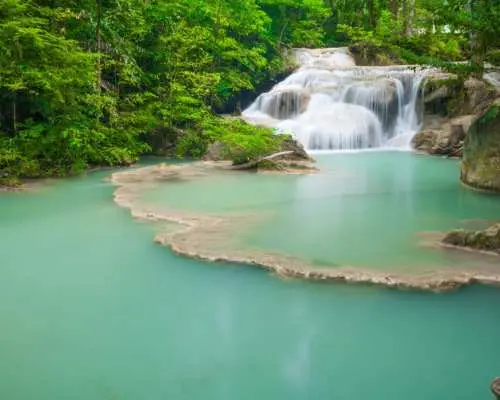
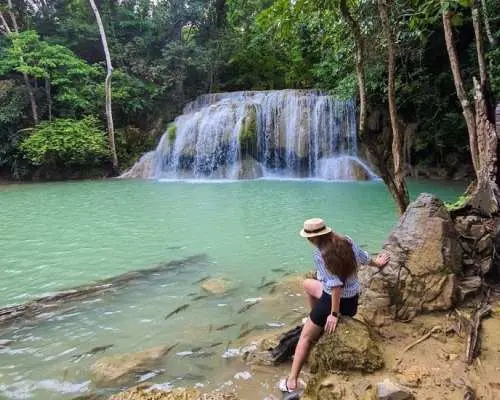
- 10:30 am - Visit the famous 7-tiered Erawan Falls.
- Swim in emerald green pools - 1:30 pm - Visit the JEATH Museum
- 2:30 pm - Visit The Bridge on the River Kwai
- 4:00 pm - Back to Bangkok
- 6:30 pm - Arrive in Bangkok
— Important Info —
- Pick-up and drop-off from hotels are available only within Bangkok regular service area (Khao San Road and Siam Square)
- If your accommodation is outside the regular service area, please meet at WanderSiam's office - Next to Tai Hong Kong Shrine in Chinatown (Link)
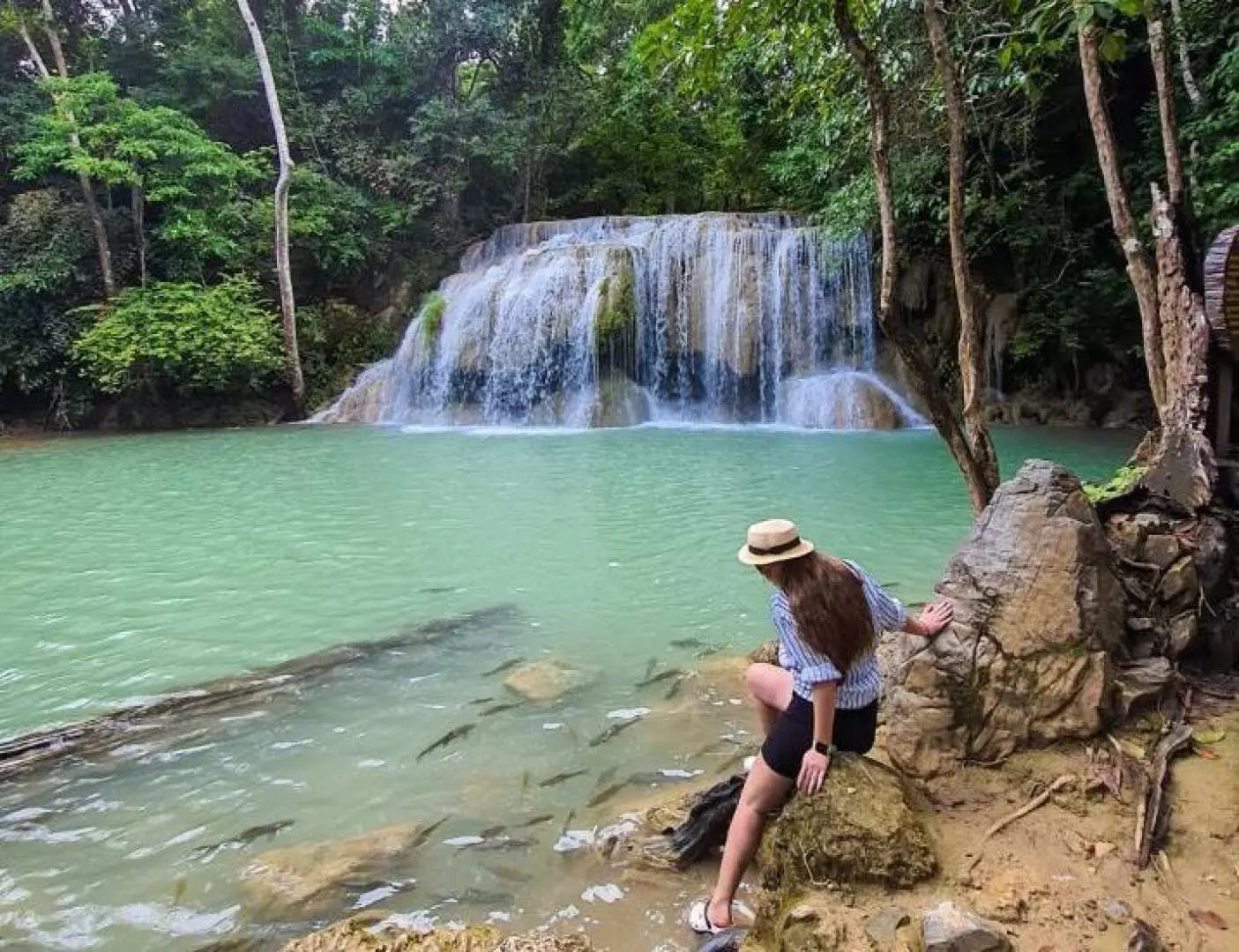
Visit the famous 7-tiered Erawan Falls and fall in love with the surrounding nature

Learn about the history of Thailand at the JEATH War Museum


See the iconic Bridge Over the River Kwai


Important Info
Reminders
Please arrive at the designated location 10 minute(s) before the scheduled departure time, as the tour will depart on time
Cancellation Policy
- Cancellations 2 day(s) (inclusive) before the selected date are allowed. Unused orders can be canceled for free
- Cancellation is not allowed between 0–1 days from the selected date. Orders cannot be canceled or modified, and refunds will not be granted.
- Due to time zone differences, the confirmed cancellation date is based on the supplier’s local time. Please allow 2–5 business days to process your cancellation request, after which the cancellation fee will be charged according to the product’s cancellation policy. Once the cancellation is confirmed, you will receive your refund within 14 working days.
FAQ
The Erawan Falls cascade over seven tiers, with the hike to the top (Tier 7) typically taking about 2 to 3 hours round trip, depending on your pace and how much time you spend swimming at each level. The trail is well-marked but can be uneven in places, especially towards the higher tiers.
Erawan Falls is renowned for its stunning emerald-green pools, crystal-clear waters perfect for swimming, and lush jungle surroundings. Each of its seven tiers offers a unique cascade and natural fish spa experience. Its serene environment and natural beauty provide a refreshing escape from city life, making it a truly immersive nature experience.
For a visit to Erawan Falls, it's highly recommended to bring swimwear and a towel if you plan to swim in the natural pools. Additionally, pack comfortable walking shoes or water shoes for the hike, sun protection (hat, sunscreen), insect repellent, a reusable water bottle, and some snacks. A waterproof bag for electronics can also be very useful.
From Bangkok, you can reach Erawan Falls by first traveling to Kanchanaburi. A convenient way is to book a full-day tour, which often includes round-trip transportation and a guide, ensuring a hassle-free journey. Alternatively, you can take a public bus from Bangkok's Southern Bus Terminal (Sai Tai Mai) to Kanchanaburi, and then a local bus or songthaew from Kanchanaburi Bus Terminal directly to Erawan National Park.
The River Kwai, specifically the Khwae Yai River, is located in Kanchanaburi Province, western Thailand. Its geographical significance stems from its strategic location during World War II, where it became central to the construction of the Thailand-Burma Railway, famously known as the 'Death Railway.' The river itself flows through scenic landscapes, contributing to the region's natural beauty.
Yes, The Bridge on the River Kwai still exists and is a major historical landmark in Kanchanaburi, Thailand. While it was bombed and partially destroyed during World War II, it was later rebuilt and is now fully accessible. Visitors can walk across the bridge, observe the reconstructed sections, and learn about its poignant history as part of the Thailand-Burma Railway.
The story of The Bridge on the River Kwai is loosely based on the historical events surrounding the construction of the Thailand-Burma Railway during World War II. Allied prisoners of war (POWs) were indeed forced by the Japanese to build bridges over the Khwae Yai River. While the novel and film are fictionalized, they draw from the real human suffering and strategic importance of the railway's construction.
Beyond The Bridge on the River Kwai, the region is rich in World War II history, including the Death Railway Museum and Research Centre, and numerous war cemeteries that honor the fallen. Culturally, it offers insights into local Thai life and traditions. Additionally, the area is known for its natural beauty, including national parks, caves, and its role as a gateway to exploring the picturesque landscapes of western Thailand.
Get Help


