


Binh Dinh One-Day Tour: History of Vietnamese National Script Formation
Discover the hidden history of Binh Dinh, a coastal gem boasting clear blue waters and smooth sand that played a crucial role in Quoc Ngu script formation
- Explore Nuoc Man Land to discover the history of the formation of the Vietnamese Script
- Visit Lang Song Minor Seminary, one of the three earliest printing houses in Vietnam
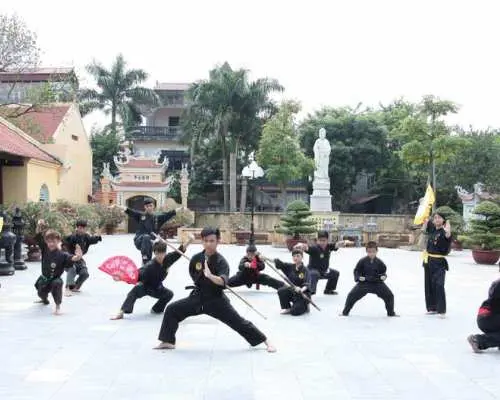
- Experience martial art at one of the most famous dojos in Vietnam
- Check out the highest-sitting Buddha statue in Southeast Asia
Product Info
What You Can Expect
1 Day
- 07:45Begin your tour of Quy Nhon by being picked up at your hotel in the city center by a car and guide, who will then take you to visit:
- The Nuoc Man Historical Relic, a significant destination for those interested in the birthplace of the Vietnamese language. Here, you'll find a striking 16-branched banyan tree, representing the 16 missionary facilities that contributed to the development of the national language
- Chua Ba Nuoc Man Pagoda, a sacred site that holds a special place in the hearts of the locals. This pagoda is associated with the once-famous port town of Nuoc Man, and it's steeped in rich spiritual and cultural significance
- Continue your journey and make your way to Linh Phong Pagoda. Marvel at the awe-inspiring sitting Buddha statue, which stands as the tallest in all of Southeast Asia
- 11:30Take a break and enjoy a delicious lunch at a local restaurant, where you can savor a variety of enticing specialties. Indulge in the flavors of the region and take some time to relax and recharge before continuing your adventure
- 14:00Continue to visit the next destinations in the program:
- The Lòng Sông Minor Seminary, or Lòng Sông Church, a fascinating destination that offers a glimpse into Vietnam's rich cultural heritage. The ancient European-style landscape is a sight to behold, and visitors can explore the first printing house dedicated to printing books in the Vietnamese script, a groundbreaking accomplishment in the nation's history
- A Dojo at Long Phuoc Pagoda, one of the most famous dojos in Binh Dinh You will get chance of experiencing some self-defense martial arts and take pictures here.
- Conclude your tour with a comfortable ride back to the original pick-up point


Important Info
Includes/Excludes
Reminders
Guests should dress neatly with suitable clothes when visiting towers and pagoda, etc.
Sunscreen and jacket are essential
Please provide all required information for insurance registration
Adults should keep a watchful eye on their children while on the tour and follow the guidance of the tour guide
How to Redeem Your Voucher
How to Use Your Voucher
- Please present the e-voucher on-site
Pickup Point
Location Name: Quy Nhon
Address: Centre of Quy Nhon city, Binh Dinh ProvinceExperience Location
Location Name: Chùa Bà Nước Mặn Pagoda
Address: Phuoc Quang, Tuy Phuoc, Binh DinhLocation Name: Linh Phong Pagoda
Address: Phu Cat, Binh DinhLocation Name: Lòng Sông Church
Address: Tuy Phuoc, Binh DinhLocation Name: Phi Long Vịnh Dojo
Address: Long Phuoc Pagoda, Tuy Phuoc, Binh DinhCancellation Policy
- Cancellations 2 day(s) (inclusive) before the selected date are allowed. Unused orders can be canceled for free
- For cancellations made 1 to 1 days prior to selected date, a cancellation fee of 50% will apply
- Cancellation is not allowed between 0–0 days from the selected date. Orders cannot be canceled or modified, and refunds will not be granted.
- Due to time zone differences, the confirmed cancellation date is based on the supplier’s local time. Please allow 2–5 business days to process your cancellation request, after which the cancellation fee will be charged according to the product’s cancellation policy. Once the cancellation is confirmed, you will receive your refund within 14 working days.
FAQ
Before the Quoc Ngu script, Vietnamese people primarily used Classical Chinese (Chữ Hán) for official documents and literature. Later, they developed Chữ Nôm, a demotic script that adapted Chinese characters to represent Vietnamese phonetics. Nuoc Man Land in Binh Dinh holds historical significance as it was a key port where early European missionaries arrived. Their efforts to romanize Vietnamese, primarily for religious texts, laid foundational groundwork for the development and later widespread adoption of the Quoc Ngu script.
Before the advent of Chữ Nôm, Classical Chinese (Chữ Hán) was the dominant written language in Vietnam. Chữ Nôm emerged as an indigenous script designed to phoneticize the Vietnamese spoken language using adapted Chinese characters. Lang Song Minor Seminary, located in Binh Dinh, was pivotal as one of the three earliest printing houses in Vietnam. It served as a center for printing religious texts and educational materials, including some of the first dictionaries and catechisms using romanized Vietnamese script, directly aiding the spread and evolution of the Quoc Ngu writing system.
The Vietnamese language is characterized as a monosyllabic, tonal language with an analytical grammar. This means most words consist of a single syllable, and their meaning can change based on six distinct tones. Grammatical relationships are primarily conveyed through word order and auxiliary words rather than inflection. The Quoc Ngu script, using the Latin alphabet with diacritics for tones, is distinct because it effectively represents these complex tonal variations and monosyllabic structures in a clear, phonetic manner, simplifying learning compared to traditional character-based systems.
The Vietnamese language predominantly follows a Subject-Verb-Object (SVO) grammatical word order. This means that in a typical sentence, the subject comes first, followed by the verb, and then the object. This consistent SVO structure is a key characteristic, contributing to the language's analytical nature where grammatical relations are often determined by word position rather than complex conjugations or declensions.
Nuoc Man Land, historically a vibrant trading port in Binh Dinh, holds profound significance in the formation of the Vietnamese National Script (Quoc Ngu). It was one of the earliest gateways for European missionaries in the 17th century, including key figures instrumental in creating a romanized writing system for Vietnamese. These early efforts, driven by the need to translate religious texts, began at places like Nuoc Man, making it a foundational location for the script's development before its widespread adoption as the national writing system.
The highest-sitting Buddha statue in Southeast Asia is located at Linh Phong Pagoda (also known as Ong Nui Pagoda) in Binh Dinh Province. This majestic statue, featuring the sitting Buddha, is noteworthy for its impressive scale and commanding presence atop a mountain. Visitors can experience a sense of tranquility while enjoying panoramic views of the lush landscape and coastline. It represents a significant spiritual and architectural landmark in the region, offering a serene highlight during the Binh Dinh tour.
Binh Dinh is widely recognized as the birthplace of Vietnamese traditional martial arts, particularly Tay Son Binh Dinh martial arts. At a famous dojo in the region, visitors can typically witness captivating demonstrations by expert martial artists showcasing various forms, weapons, and combat techniques. Some itineraries may also offer interactive sessions or introductory lessons, allowing guests to experience basic movements and gain a deeper appreciation for this integral part of Vietnamese cultural heritage, rooted deeply in Binh Dinh's history.
For exploring the historical sites in Binh Dinh Province, such as Nuoc Man Land and Lang Song Minor Seminary, several transportation options are available. The most convenient way is often through organized tours that include comfortable transportation, ensuring efficient travel between dispersed locations. Alternatively, travelers can hire private cars with drivers or use ride-hailing services for flexibility. For independent exploration, renting a motorbike is a popular choice, allowing visitors to navigate at their own pace. Public bus services exist but may not directly connect all historical sites.
Get Help


