


Split
Split is a beautiful city in Croatia, rich in history, culture and natural beauty. Diocletian's Palace is one of the world cultural heritage sites, and Republic Square is the center of the city. Split also has several beaches, such as Tesnik Beach and Fillure Beach, for tourists to enjoy beach activities.


Split Top 10 Activities


Top things to do in Split


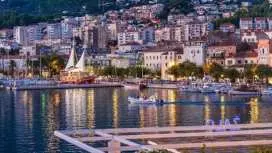

Popular Activities in Split


Recommended travel destinations near Split


Best time to visit Split
Data source: Meteostat・Last updated: 2025-09
Weather in Split throughout the year
Spring (March–May): Average 12–20°C, mild and comfortable climate with abundant sunshine and occasional showers. Wildflowers bloom beautifully from March to April. Common activities: Hiking, exploring ancient cities, enjoying sunbathing by the sea. Recommended clothing: Light jacket, long-sleeved shirts, comfortable shoes.
Summer (June–August): Average 25–29°C, hot and dry with strong sunshine and little rainfall. July and August are the hottest months. Common activities: Swimming, sunbathing, water sports, visiting islands. Recommended clothing: Light and breathable clothing, sun hat, sunglasses, sunscreen.
Autumn (September–November): Average 20–14°C, pleasant climate with gradually decreasing temperatures. November has more rainfall. Common activities: Hiking, visiting cultural sites, tasting local cuisine. Recommended clothing: Comfortable long-sleeved shirts, light jacket, comfortable shoes.
Winter (December–February): Average 9–11°C, mild climate with occasional rainfall. Temperatures are lower, but severe cold weather is rare. Common activities: Visiting museums, enjoying local cuisine, exploring inland areas. Recommended clothing: Warm jacket, sweater, comfortable shoes.
Weather in Split
Annual average temperature: approx. 18°C / Annual rainfall: approx. 742 mm / Summer humidity: 60%–70% / Rainiest month: November
Split weather by month
| Month | January | February | March | April | May | June | July | August | September | October | November | December |
|---|---|---|---|---|---|---|---|---|---|---|---|---|
| Temperature | 9.3°C | 10.5°C | 12°C | 15°C | 20.7°C | 25.9°C | 29°C | 28°C | 22.9°C | 20°C | 13.7°C | 11.1°C |
| Rainfall (mm) | 64.7 | 45 | 72.7 | 46.3 | 56 | 35 | 7.3 | 79.7 | 70.3 | 37 | 132 | 96.3 |
7-day weather forecast for Split
| Date | 11/23Monday | 11/24Tuesday | 11/25Wednesday | 11/26Thursday | 11/27Friday | 11/28Saturday | 11/29Sunday |
|---|---|---|---|---|---|---|---|
| Weather |  Overcast |  Sunny |  Patchy rain nearby |  Light rain shower | Patchy rain nearby |  Cloudy |  Partly Cloudy |
| High | 12.2°C | 10.8°C | 11.2°C | 14.1°C | 13.3°C | 8.6°C | 8.6°C |
| Low | 2.5°C | 1.9°C | 6.3°C | 8.6°C | 7.2°C | 4.8°C | 3.7°C |


