


Gimhae Highlights History & Culture Day Tour from Busan
- Begin your day at the National Gimhae Museum, where you’ll learn about the fascinating history and artifacts of the Gaya civilization
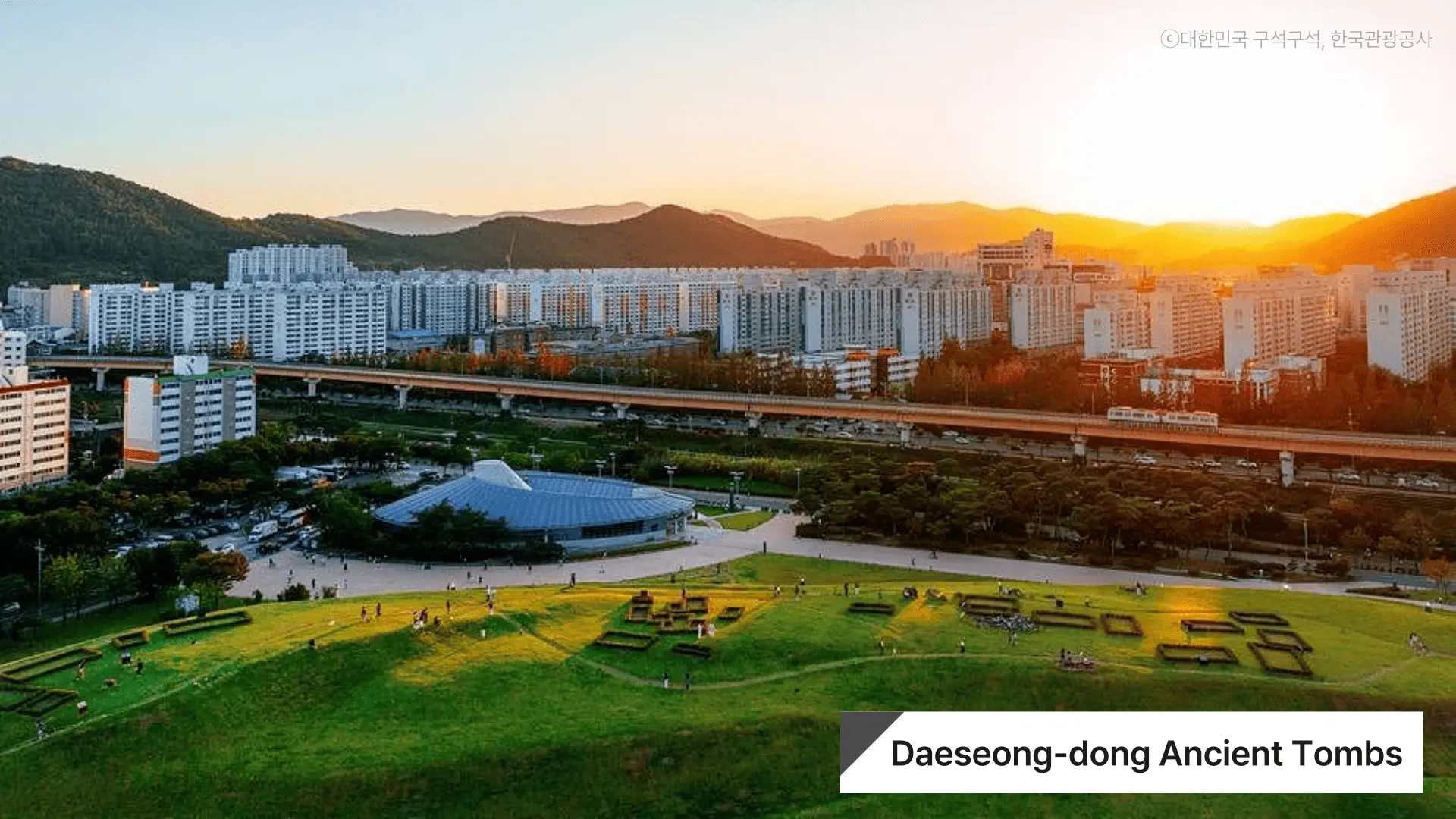
- Visit the Daeseong-dong Ancient Tombs, a UNESCO World Heritage site that offers insight into royal traditions of the Gaya period
- Enjoy lunch at Bongridan-gil Street, a trendy local area filled with charming cafes and restaurants.
- Explore Bunseong Fortress for panoramic views and historical sites
- End your day at Nakdong River Rail Park, where you can relax and enjoy the beautiful scenery and visit the unique Wine Cave 🍷
- Perfect for travelers interested in Korean history, culture, and scenic riverside landscapes
Package Options


Product Info
Step back in time and explore the rich history of Gimhae
Tour Highlights
- Explore Gimhae, the ancient capital of the Gaya Kingdom, on a full-day cultural journey from Busan
- Discover Gaya history and artifacts at the National Gimhae Museum
- Visit the Daeseong-dong Ancient Tombs (UNESCO World Heritage Site) and learn about royal burial traditions
- Enjoy free time for lunch at Bongridan-gil Street, a trendy area with cafes and local restaurants
- Walk through Bunseong Fortress and take in panoramic views of Gimhae
- Explore the Wine Cave combining history and a cool underground atmosphere
- Perfect mix of history, culture, and scenic photo spots in one day


Learn about the history of the Gaya Kingdom and explore its history


A total of 136 tumuli were found in the Daesong-dong area.

Enjoy free time for lunch in this trendy local neighborhood filled with cafes and restaurants.


Walk along the historic fortress and enjoy panoramic views of Gimhae.


Gimhae Nakdonggang River rail bike runs for about 3km in distance and you may enjoy nakdonggang river's beautiful view while riding on the rail bike.


Experience a unique atmosphere as you bypass the vintage railway bridge, and a wine cave can also be found in the vicinity


Important Info
Reminders
A minimum of 10 traveler(s) are required for the tour to depart. If the number of participants does not reach the minimum requirement, the tour will be canceled. An email regarding tour cancellation will be sent 2 day(s) before the departure date
In case of delays caused by traffic, weather, or other force majeure factors resulting in the cancellation of some itinerary attractions, please contact customer service. We will arrange a partial refund for you
Please arrive at the designated location 10 minute(s) before the scheduled departure time, as the tour will depart on time
All the itineraries of our company do not include personal travel insurance. There are certain risks and dangers in outdoor activities. Guests must evaluate their own health or ability. The company will not be responsible for any physical damage or casualty caused by accidents or unpredictable factors.
Please disable message blocking on LINE or any messaging app to ensure smooth communication with your tour guide. (Settings → Privacy → Message Blocking)
The meeting point and time may be subject to change depending on local conditions. Any changes will be notified via email and message
*Due to LINE’s restrictions on adding friends from overseas using an ID or phone number, we kindly ask you to share your LINE QR code link.Please follow the steps below and send us the link when you book the tour:LINE → QR Code icon below your profile photo → “My QR Code” → “Copy Link” (bottom left corner) → Paste the copied link in your booking messag
Please understand that reservation confirmation is not possible on weekends, public holidays, or during customer center closing hours.
FAQ
1. What is the geographical relationship between Gimhae and Busan?
Gimhae City is located in South Gyeongsang Province, South Korea, immediately to the west of Busan. The two areas are not far apart. Gimhae is part of the Busan Metropolitan Area and is home to Gimhae International Airport, the region's main international gateway. Therefore, many travelers heading to Busan also consider Gimhae as an extended destination for a day trip to explore its unique history and culture.
2. What aspects of Gaya civilization does the Gimhae National Museum primarily introduce?
The Gimhae National Museum is a key institution for exploring Gaya civilization. It houses and displays a large collection of artifacts unearthed from the Gimhae region, particularly archaeological finds from the Iron Age to the Gaya Kingdom period. Through these exhibits, visitors can gain a deep understanding of the rise and fall of the Gaya Confederacy, its unique iron-making techniques, trade networks, and its social and cultural landscape, appreciating its significant place in the history of the Korean Peninsula.
3. What is the historical significance of the Daeseong-dong Tombs as a World Heritage site?
The Daeseong-dong Tombs are the burial grounds of the main ruling class of the Gaya Kingdom and are part of the UNESCO World Heritage site 'Gaya Tumuli'. They showcase the unique cultures and political systems of the various states within the Gaya Confederacy, as well as evidence of exchange with neighboring countries. The rich artifacts unearthed from these tombs provide valuable clues for studying the burial customs, social structure, and relations with neighboring countries of the Gaya Kingdom, making it an important archaeological site for understanding ancient East Asian civilizations.
4. Besides historical ruins, what scenic views can be enjoyed at the Bunseongsanseong Fortress?
Bunseongsanseong Fortress is not only a historical mountain fortress with deep historical roots but also an excellent spot for overlooking the cityscape of Gimhae. While exploring the ancient walls and historical structures, visitors can take in panoramic views of Gimhae from an elevated position, including the distant Nakdong River and the surrounding mountains. The views are exceptionally clear on sunny days. This site combines cultural heritage with natural beauty, offering a multi-sensory experience.
5. What is unique about the Red Wine Tunnel at Nakdong River Rail Park?
The Red Wine Tunnel at Nakdong River Rail Park has been converted from an old railway tunnel. It not only provides a comfortable environment, whether escaping the heat or cold, but also serves as a unique cultural space. The interior is artistically decorated and features local wines made from regional agricultural products. Visitors can taste or purchase local wines here and take photos amidst interesting art installations and lighting effects, adding a romantic and unique touch to their journey.
6. What dining experiences or features are recommended on Bonghwangdae Street?
Bonghwangdae Street is a vibrant, modern district in Gimhae that blends history with contemporary style. It is home to a diverse array of trendy cafes, unique restaurants, and boutique shops. Visitors can savor authentic Korean cuisine or enjoy a leisurely coffee break, experiencing the lifestyle of local youth. The street's unique design makes it an ideal spot for photos and for immersing oneself in the pulse of local Gimhae culture.
7. As the ancient capital of the Gaya Kingdom, in what ways does Gimhae's unique historical and cultural tourism value manifest?
Gimhae's unique tourism value as the center of the ancient Gaya Kingdom lies in its ability to offer visitors deep insights into a historically underestimated yet highly influential ancient civilization. Tourists can visit key sites like the Gimhae National Museum and the Daeseong-dong Tombs to personally experience the splendor of Gaya culture. This offers a distinct perspective from the mainstream Silla, Baekje, and Goguryeo histories of Korea, providing a more comprehensive and enriched view of ancient Korean history.
8. When visiting Gimhae's historical and cultural sites, how can one gain a deeper understanding of the traditions and customs of the Gaya Kingdom?
By visiting Gimhae's historical and cultural sites, one can gain a multi-faceted, in-depth understanding of the traditions and customs of the Gaya Kingdom. For instance, at the Gimhae National Museum, visitors can learn about their iron-making techniques and daily life through unearthed artifacts. At the Daeseong-dong Tombs, they can infer the royal burial culture and social hierarchy from tomb structures and grave goods. At Bunseongsanseong Fortress, they can experience its military defense and the daily lives of its people. These sites collectively form a complete historical panorama of Gaya, helping visitors understand its unique culture.
Get Help


