



Viet Nam - Ho Chi Minh City | Saigon - The City I Love | Thiec Market, Di Phat Tea House, Khanh Van Nam Vien Taoist Temple, Tue Thanh Assembly Hall, Museum of Traditional Vietnamese Medicine
The program “Saigon – The City I Love” will bring you an unforgettable experience with:
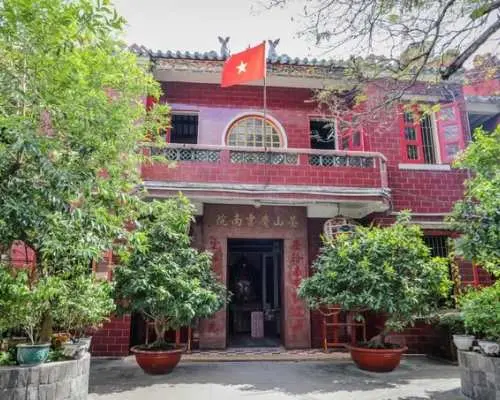
- Exploring the mysteries of Khanh Van Nam Vien, the largest Taoist temple of the Chinese community in Saigon.
- Di Phat Tea House, a 70-year- old establishment preserving the rich flavors of traditional Chinese and Vietnamese teas.
- Enjoying a hands-on experience in making and savoring authentic Chinese dumplings (Sui Cao) for lunch.
- Tue Thanh Assembly Hall (Thien Hau Temple), recognized as a National Cultural Heritage site.
- Visit the Museum of Traditional Vietnamese Medicine, which showcases over 3,000 valuable artifacts related to traditional medicine, spanning from the Stone Age to the present day.
Product Info
Purchase Notice
The program may be subject to change to suit the circumstances, but still ensure that the tourist attractions are retained in the altered schedule.
[Holiday Rate]
The Holiday Surcharge will be applied on these days
- 8 March
- 30 April to 1 May
- 2 September
- 24-25 December
If you wish to reschedule from a normal date to a holiday rate, a surcharge will be applied
[Extra Hours Surcharge]
If you wish to extend the duration of the tour
Surcharge Rate: 50,000VND/pax/hour (Pay directly on site to the operator)
[Rescheduling Policy]
For rescheduling, please inform us 5 days in advance. Rescheduling is only available for non-holiday date
Reminders
A minimum of 2 traveler(s) are required for the tour to depart. If the number of participants does not reach the minimum requirement, the tour will be canceled. An email regarding tour cancellation will be sent 1 day(s) before the departure date
In case of delays caused by traffic, weather, or other force majeure factors resulting in the cancellation of some itinerary attractions, please contact customer service. We will arrange a partial refund for you
In the event of inclement weather such as typhoons or snowstorms, a decision on whether to cancel the tour will be made 1 day(s) before departure (local time 09:00). Notifications will then be sent via email
Please arrive at the designated location 10 minute(s) before the scheduled departure time, as the tour will depart on time
FAQ
Saigon was the original name of the city before 1975. After the reunification of Vietnam, it was officially renamed 'Ho Chi Minh City' to honor revolutionary leader Ho Chi Minh. However, many locals and tourists still affectionately refer to the central districts and general area as 'Saigon,' especially in everyday speech and when referring to its historical and cultural aspects. Both names are commonly used and understood, with 'Ho Chi Minh City' being the official administrative designation.
Khanh Van Nam Vien is recognized as the largest Taoist temple of the Chinese community in Ho Chi Minh City. It serves as an important spiritual and cultural center, showcasing traditional Chinese architectural styles, intricate decorations, and religious artifacts. Visitors can explore its serene courtyards, detailed altars, and observe the spiritual practices of the local community, reflecting a rich blend of Taoist traditions within Vietnam's diverse cultural landscape.
At Di Phat Tea House, a 70-year-old establishment, visitors can immerse themselves in the rich flavors of traditional Chinese and Vietnamese teas. The tea house preserves age-old tea-making customs, offering a serene environment to savor various specialty teas. It's a place to experience a quiet, unhurried aspect of Saigon's cultural depth, learning about tea history and enjoying authentic brews passed down through generations.
Tue Thanh Assembly Hall, also known as Thien Hau Temple, holds significant cultural importance as a National Cultural Heritage site in Vietnam. Dedicated to Mazu, the Chinese sea goddess, it serves as a spiritual hub for the Chinese community. The temple is famed for its elaborate architecture, vibrant ceramic dioramas, and intricate wood carvings, reflecting centuries of rich cultural exchange and the enduring traditions of the Chinese diaspora in Saigon.
The Museum of Traditional Vietnamese Medicine houses an extensive collection of over 3,000 valuable artifacts, tracing the history of Vietnamese traditional medicine from the Stone Age to the present. Visitors can explore ancient tools, herbal remedies, traditional prescriptions, and various medicinal practices. The exhibits provide deep insights into the evolution of Vietnamese healing arts, cultural beliefs, and the holistic approach to health.
The authentic Chinese dumpling (Sui Cao) making experience allows participants to engage in a hands-on culinary activity. Guests will learn the traditional methods of preparing and shaping Sui Cao, from mixing ingredients for the filling to mastering the folding techniques. After crafting their own dumplings, participants enjoy them for lunch, providing a delicious and interactive way to connect with Chinese culinary traditions.
Thiec Market provides a vibrant and authentic local market experience in Ho Chi Minh City. Unlike more tourist-centric markets, Thiec Market is where locals shop for daily necessities, fresh produce, spices, and a wide array of goods. Visitors can immerse themselves in the bustling atmosphere, observe local life, discover unique Vietnamese ingredients, and perhaps sample street food, offering a glimpse into the city's everyday rhythm.
For exploring cultural sites in Ho Chi Minh City, common transportation options include ride-hailing apps like Grab (for cars and motorbikes), which are widely used and convenient. Traditional cyclos offer a unique, slower-paced way to see historical districts. Taxis are also readily available. For longer distances or a more structured experience, booking tours with included transport is often a comfortable option, ensuring easy access to multiple attractions.
Get Help


