
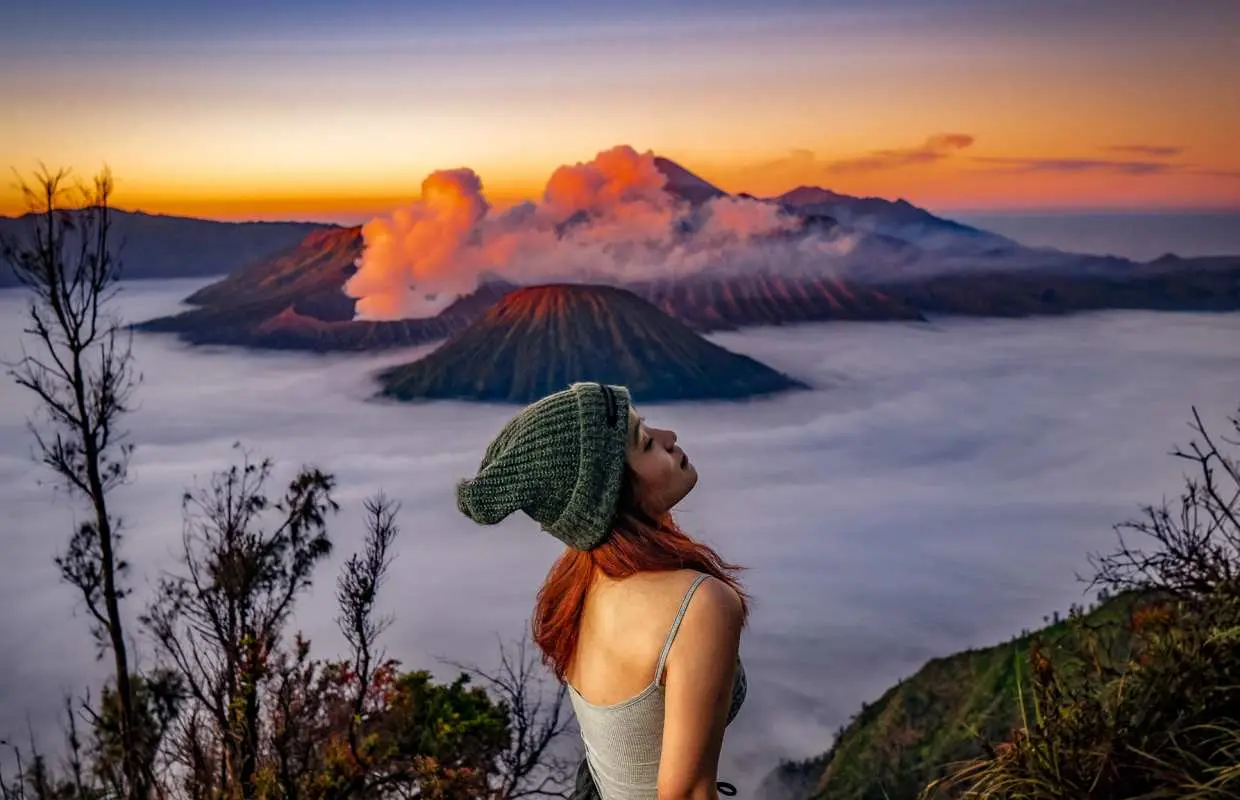


Bali Departure | Mount Bromo Sunrise and Ijen Blue Fire 2-Day Tour | Optional Madakaripura Tour
- Witness Two Iconic Natural Wonders Experience: the unforgettable sunrise over the Mount Bromo crater and trek by torchlight to see the mesmerizing blue flames of the Ijen volcano—two of Indonesia's most legendary phenomena, all in one efficient trip.
- All-Inclusive & Hassle-Free from Bali: Enjoy a seamless adventure with private round-trip transfers from your Bali hotel, including ferry crossings to Java. Everything is arranged: accommodation, 4WD jeep in Bromo, entrance fees, and an expert guide.
- Optional Majestic Waterfall Upgrade: Enhance your journey by adding a visit to the stunning Madakaripura Waterfall, a powerful "curtain" of water cascading down a sheer cliff within a lush canyon.
- Perfect for Travelers with Limited Time: Designed for efficiency, this 2-day itinerary is ideal for those who want to experience the best of East Java's volcanic landscapes without a long time commitment.
- Private Tour for a Personalized Pace Enjoy the flexibility and comfort of a private vehicle and guide, allowing you to explore Bromo's Sea of Sand and Ijen's crater at your own rhythm
Package Options
Product Info
Embark on an epic overnight adventure from Bali to witness the raw power and breathtaking beauty of East Java's most iconic volcanoes. This meticulously planned, private tour begins with your convenient pick-up from your Bali hotel, taking you on a scenic journey to the Ijen Plateau, where a pre-dawn trek unveils a completely different wonder. Guided by the light of your headlamp, you'll hike into the crater to witness the mesmerizing, otherworldly glow of the Ijen blue fire, a rare phenomenon caused by ignited sulfuric gases. As dawn breaks, you'll be rewarded with a stunning view of the turquoise acidic crater lake, the largest of its kind in the world.
The second leg of your journey takes you to the Bromo-Tengger-Semeru National Park. After a rest, you'll be guided in a private 4WD jeep to the legendary Mount Penanjakan viewpoint. Here, under a canopy of stars, you'll await one of Indonesia's most spectacular sights: a magnificent sunrise illuminating the active Mount Bromo and the vast, ethereal Sea of Sand. You will then descend to the crater itself, crossing the volcanic plain and climbing to the rim to peer into the steaming heart of the volcano. For the ultimate East Java experience, you can opt to include a visit to the majestic Madakaripura Waterfall, a powerful cascade hidden within a cylindrical gorge. This all-inclusive tour concludes with comfortable transfers back to Bali, leaving you with unforgettable memories of Java's volcanic majesty.

The stunning of turquoise lake

The majestic of mount bromo sunrise
What You Can Expect
Purchase Notice
- We only provide English speaking tour guide for this tour
- Add Madakaripura Waterfall : After Bromo Sunrise on Day 3, you will continue to the waterfall and explore for 3 hours before driving to your Drop-off location. You will arrive at around 3-4 PM.
- You can take your luggage with you during the trip! No need to worry about leaving it behind or lugging it around separately. Our guide will accompany you as you climb up Bromo while our driver takes care of guarding your luggage safely inside the car When it comes time for drop-off, there are a few options available depending on your plans.
- We can drop off anywhere within Surabaya/Malang/Bali as stated on this tour program If you want to arrive in Bali earlier, we recommend you to take flight from Juanda International Airport in Surabaya to Ngurah Rai International Airport in Denpasar.
- Mount Bromo trekking difficulty : Easy to moderate (30ish-minute walk from the parking area to the crater).
- Mount Ijen trekking difficulty : Moderate to challenging (3 km uphill trek, approx. 1.5–2.5 hours).
- Madakaripura trekking difficulty: Moderate to challenging. (The walking takes about 20-30 minutes.)
Reminders
Travelers with the following conditions or other health issues that could be worsened by excessive stimulation should not participate in this activity: High blood pressure, Pregnant women, Heart disease, Acrophobia, Asthma, Epilepsy
How to Redeem Your Voucher
How to Use Your Voucher
- Please present the e-voucher on-site
Pickup Point
Location Name: Bali
Address: I Gusti Ngurah Rai International AirportFAQ
1. What unique landscapes make Mount Bromo a must-visit destination?
Mount Bromo is renowned for its otherworldly volcanic landscapes. Visitors can witness a vast, ancient caldera known as the "Sea of Sand," an expansive plain surrounding the active Bromo crater. The highlight is often the breathtaking sunrise view from Mount Penanjakan, where the sun emerges over a misty, often dramatic backdrop of volcanic peaks, creating a truly unforgettable spectacle.
2. What is the best way to experience the blue fire phenomenon at Mount Ijen?
To witness Mount Ijen's unique blue fire phenomenon, a pre-dawn trek is essential. Starting the hike in the dark allows you to reach the crater rim and descend towards the lake to see the electric blue flames. Guides typically lead these treks, and gas masks are provided and necessary due to the sulfuric fumes in the crater, ensuring a safer and more immersive experience.
3. What are the main differences between the trekking experiences at Mount Bromo and Mount Ijen?
The trekking experiences at Mount Bromo and Mount Ijen differ significantly. Mount Bromo involves navigating a flat "Sea of Sand" by 4WD jeep, followed by a relatively easy climb up concrete stairs to the crater rim for sunrise. Mount Ijen, however, requires a more challenging and steep trek in the dark to see the blue fire, often on rugged terrain, with sulfuric fumes necessitating the use of a gas mask.
4. Besides the sunrise, what other activities can visitors do at Mount Bromo's crater area?
Beyond the iconic sunrise, visitors to Mount Bromo can explore the vast "Sea of Sand" caldera, which offers unique photographic opportunities. You can also trek up to the active Bromo crater rim to witness the smoking caldera up close and experience its raw power. Local vendors often offer horseback riding across the Sea of Sand, adding another layer to the adventure.
5. What distinctive features can visitors observe at Mount Ijen's crater during daylight?
After experiencing the blue fire, daylight at Mount Ijen reveals its most stunning feature: a large, vivid turquoise acidic crater lake, known as the world's largest. The surrounding landscape is characterized by sulfur deposits, and you can often observe traditional sulfur miners at work, carrying heavy loads of sulfur up from the crater, offering a poignant insight into local life.
6. How are the logistics handled for traveling between Bali and the Mount Bromo and Ijen craters?
Travel logistics for visiting Mount Bromo and Ijen from Bali are comprehensively managed. This includes private round-trip transfers directly from your Bali hotel, a ferry crossing to Java, and comfortable private vehicles for inter-island travel. For the volcanic sites, a private 4WD jeep is used for Mount Bromo, and a private vehicle for Mount Ijen, ensuring a seamless and hassle-free journey with an expert guide and all entrance fees included.
7. When is the ideal season to visit Mount Bromo and Mount Ijen for the best weather conditions?
The ideal time to visit Mount Bromo and Mount Ijen for the best weather conditions is generally during Indonesia's dry season, which spans from May to October. During these months, you can expect clearer skies, minimal rainfall, and better visibility for sunrise views over Bromo and the blue fire phenomenon at Ijen, enhancing your overall experience.
8. What are the physical requirements for trekking to the Mount Bromo crater and witnessing Ijen's blue fire?
Trekking to Mount Bromo's crater involves a moderate walk across sandy terrain and ascending stairs, suitable for most with average fitness. Witnessing Ijen's blue fire requires good physical condition for a challenging pre-dawn hike on steep, uneven, and sometimes slippery terrain. Hikers should be prepared for cold temperatures, significant walking distances in the dark, and the presence of sulfuric fumes, necessitating proper footwear and a gas mask.


