


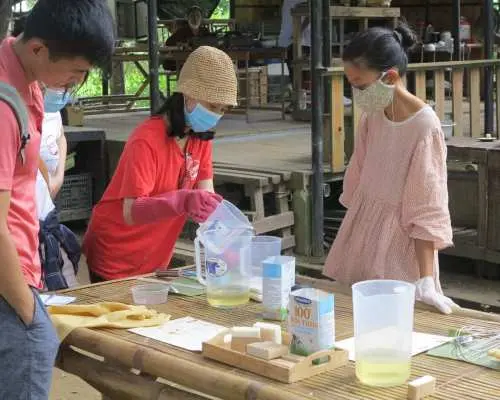
DIY Used Cooking Oil Recycling & Hand Soap Making | from Hoi An, Vietnam
- Participate in a unique, eco-friendly workshop to learn how to recycle used cooking oil into handmade soap.
- Enjoy a scenic 5km bicycle ride through the Hoi An countryside to Thanh Dong village.
- Join a hands-on "Banh Xeo" (local pancake) cooking demonstration and savor a 5-star Vietnamese family-style lunch or dinner.
- Learn about clean, circular agriculture on a guided tour of a local herb garden.
- Includes hotel pick-up (bike) and return (e-car) for hotels in Hoi An's old town and beach areas.
Package Options


Product Info
Purchase Notice
Important Notes & Supplier's Terms
- Refund Processing Fees: Please note, in all cases of tour cancellation and refund, the initial transaction fees (bank fees, payment gateway fees such as Stripe/PayPal) paid by the customer are non-refundable. The refunded amount will be the total paid minus these non-refundable fees.
- No-Show Policy: A "no-show" is defined as your failure to appear at the designated pickup point within 15 minutes of the scheduled departure time without prior notification. No-show cases will be treated as a cancellation within 72 hours and are not eligible for any refund.
- Child Supervision & Responsibility: Parents or guardians are responsible for the direct and constant supervision of their children at all times during the tour. We do not provide babysitting services. To ensure the group's overall experience, our tour guide reserves the right to issue a reminder (and in severe cases, refuse service for the remainder of the tour) if a child’s behavior severely and negatively impacts the safety or experience of the group.
- Equipment for Children: The tour price does not include specialized equipment for children such as: child safety car seats, strollers, or special meals/menus for infants. Guests are responsible for preparing all necessary personal items to ensure their children's comfort.
Reminders
A minimum of 2 traveler(s) are required for the tour to depart. If the number of participants does not reach the minimum requirement, the tour will be canceled. An email regarding tour cancellation will be sent 1 day(s) before the departure date
In case of delays caused by traffic, weather, or other force majeure factors resulting in the cancellation of some itinerary attractions, please contact customer service. We will arrange a partial refund for you
Please arrive at the designated location 15 minute(s) before the scheduled departure time, as the tour will depart on time
You are considered a “no-show” if you do not appear at the pick-up point within 15 minutes of the scheduled departure time without prior notice. No-shows will be considered a cancellation within 72 hours and no refund will be given.
FAQ
The workshop focuses on transforming used cooking oil into quality handmade soap. Participants learn the step-by-step saponification process, including ingredient measurement, mixing techniques, and safe handling practices. The emphasis is on eco-friendly methods to repurpose waste oil, providing practical skills for sustainable living and reducing environmental impact. You will create your own soap bars to take home.
Yes, the workshop highlights the significant value of recycling used cooking oil. Beyond preventing pollution, participants learn how repurposing it into soap provides a practical, eco-friendly alternative for household cleaning. Discussions may cover how communities can benefit from reducing waste and creating useful products, fostering an understanding of circular economy principles and sustainable resource management.
The workshop's primary focus is on teaching the practical skills of soap making from recycled oil for personal or community use. While it emphasizes sustainable practices, it does not specifically delve into the intricate details of licensing, FDA regulations, or establishing business structures like LLCs for commercial soap sales. Participants interested in commercial ventures would need to research local and national regulations independently.
This eco-tour offers a deep dive into local culture and sustainability, moving beyond typical sights. You'll cycle through the tranquil Hoi An countryside to Thanh Dong village, learn practical recycling skills by making soap from used oil, and engage in a hands-on "Banh Xeo" cooking class. The tour also includes a guided visit to a local herb garden to understand circular agriculture, providing an authentic, interactive, and environmentally conscious perspective of Hoi An.
During the "Banh Xeo" cooking demonstration, participants receive hands-on instruction to prepare this iconic Vietnamese savory pancake. You'll learn to select fresh local ingredients, mix the batter to achieve the perfect crispiness, and master the cooking technique using traditional methods. The experience culminates in enjoying your freshly made Banh Xeo as part of a 5-star Vietnamese family-style meal, offering both skill acquisition and a delicious reward.
The guided tour of the local herb garden in Thanh Dong village provides a direct demonstration of clean, circular agriculture principles. You will learn how local farmers cultivate herbs using sustainable methods, minimizing waste and reusing resources within the ecosystem. This hands-on experience highlights practices like composting, natural pest control, and efficient water use, offering insights into how agriculture can be both productive and environmentally responsible.
The tour includes convenient hotel pick-up and return services for guests staying in Hoi An's old town and beach areas. Participants are picked up by bicycle for a scenic 5km ride through the countryside to Thanh Dong village, allowing for an immersive experience. For the return journey, an e-car provides comfortable transport back to your hotel, ensuring a smooth and hassle-free day.
Yes, learning handmade soap making from used cooking oil at the Hoi An workshop is highly viable for personal use or community initiatives. It empowers individuals with a practical skill to reduce waste, create useful household products, and foster self-sufficiency. For community projects, it offers a sustainable way to engage residents in eco-friendly practices and resourcefulness, promoting environmental awareness and practical recycling solutions.
Get Help


