



Ryogoku Walking Tour with Tokyo Grand Sumo Tournament Viewing
JR Ryogoku Station West Gate
Seat Type:
2nd Floor A-Class Chair Seat
Meeting Time: 12:45 PM | Tour Starts: 1:00 PM
The walking tour lasts approximately 2 hours.
2nd Floor B-Class Chair Seat
Meeting Time: 11:45 AM | Tour Starts: 12:00 PM
The walking tour lasts approximately 1.5 hours.
2nd Floor C-Class Chair Seat
Meeting Time: 1:45 PM | Tour Starts: 2:00 PM
The walking tour lasts approximately 1.5 hours.
Please arrive at least 10 minutes before the start time.
If you arrive late, you will not be able to join the tour or receive your ticket.
Tickets can only be picked up at the designated time on your reserved day — no other dates or times are available, and we cannot take responsibility for missed pick-ups.
Please be sure to arrive on time.
Attraction Tickets
| Show type | Sumo watching |
Product Info
What You Can Expect
1 Day
- Meeting Point: Ryogoku Station West Exit A-Class Ticket Plan: Departure Time 1:00 PM B Class Ticket Plan: Depature time 12:00 PM C Class Ticket Plan: Departure time 2:00 PM Please arrive at the meeting point at least 10 minutes before the departure time to check in with our staff. If you arrive after your departure time, you will not be able to join the tour and may not receive your admission ticket.
- Start at Ryogoku Station Immerse yourself in the world of Sumo with this unique tour! You'll start your journey at Ryogoku Station, where your guide will lead you on a fascinating walk through the Ryogoku district.
- Visit Eko-in Temple Visit Eko-in Temple, a historic Buddhist temple deeply connected to sumo. For over a century, these sacred grounds hosted Tokyo’s main sumo tournaments, commemorated by the “Chikara-zuka” (Mound of Strength) — where wrestlers still come to pray for power and success. Founded in 1657, the temple remains a peaceful place that reflects the spiritual heart of Japan’s national sport.
- Explore Edo-Noren Step into Edo-Noren, a lively dining and cultural hall inside Ryogoku Station. At its center stands a full-scale sumo ring (dohyo), identical to those used in real tournaments — offering a rare chance to see the sacred ring up close. Please note: guided explanations are not allowed inside Edo-Noren; guests will explore independently, and the guide will explain afterward.
- Stroll through Kyu-Yasuda Garden Take a peaceful walk through Kyu-Yasuda Garden, a traditional Japanese garden with a pond, teahouse, and lush greenery. Designed in the Edo period, its central pond rises and falls with the tides of the nearby Sumida River — a beautiful reminder of old Tokyo’s harmony with nature.
- Enter Ryogoku Kokugikan Arrive at Ryogoku Kokugikan, the home of sumo wrestling. Your guide will give you your sumo ticket and explain how to find your seat and enjoy the matches.
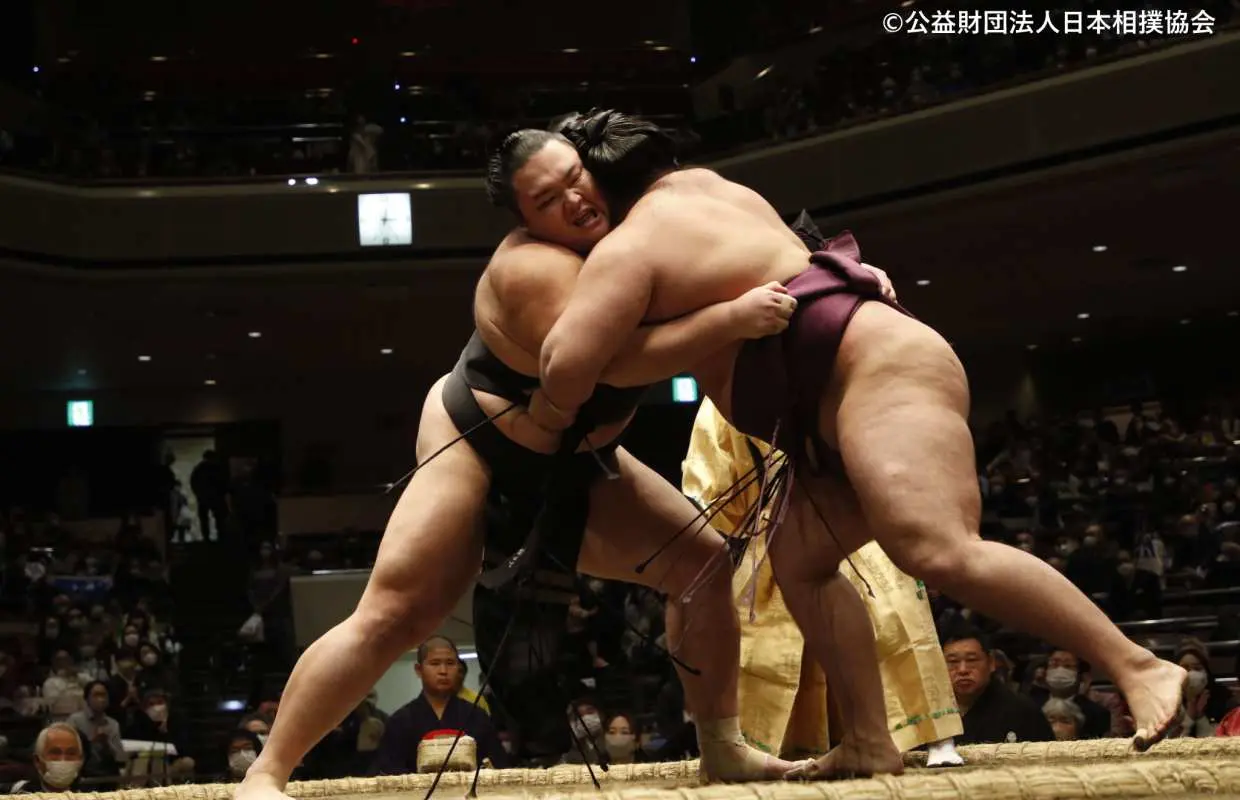
- Watch the May Grand Sumo Tournament Feel the excitement of the May Grand Sumo Tournament from your A, B or C class chair seat. Experience the power, rhythm, and energy of Japan’s national sport as top wrestlers compete in the sacred ring. *Please note: the guide will provide commentary during the matches for only A class seat plan.
- Things to Enjoy Inside Ryogoku Kokugikan Beyond the matches, there’s plenty to enjoy inside Ryogoku Kokugikan. Visit the Sumo Museum, shop for exclusive sumo goods, and take photos at sumo-themed spots. You can also try local favorites like chanko-nabe (sumo hot pot), yakitori, and snacks sold inside the venue — perfect for a full sumo experience.
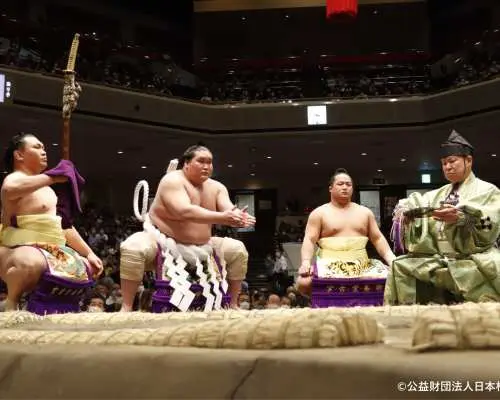
- 16:00The most exciting bouts — including the Makuuchi Dohyo-iri ring-entering ceremony and top division matches — take place from around 3:40 PM to 6:00 PM.
- 18:00The tournament ends around 6:00 PM. Participants are free to leave at their own convenience.


Purchase Notice
Children up to 3 years of age may join but must sit on the lap of a parent or guardian during the event. Visitors 4 years old and up must have an admission ticket.
The specific seat locations or seat numbers cannot be chosen.
An original paper ticket is required for entry. Your guide will hand it to you on the day of the tour — please make sure to receive it before entering the venue.
Re-entry is allowed only once once you entered the venue.
Meeting Time and Check-in:
The tour start time shown in your booking is the actual departure time. Please arrive at the meeting point at least 10 minutes before the start time to check in with our staff.
If you arrive after the tour has started, you will not be able to join the tour, and you may not receive your ticket.
Important Information:
Due to operational constraints, we are unable to accommodate patrons in wheelchairs with this product. If you have special needs, please contact us and although we cannot promise, we will do our best to coordinate with Ryogoku Kokugikan Stadium.
You are free to leave the venue at any time after the match ends.
Eating and drinking are allowed in the seating area and snack selling stalls are found inside the stadium.
If you would like to be seated together as a group, please make a request when booking. While staff will do their best to accommodate seating requests, please note that some requests may not be possible.
Please wear comfortable walking shoes as this tour involves a moderate amount of walking.
In case of heavy rain or other inclement weather, the walking tour portion may be canceled. You will still receive your Sumo Tournament ticket and can explore the museum and stadium on your own.
Please be at the meeting point on time. Late arrivals may miss the tour and forfeit their tickets.
Includes/Excludes
Reminders
Please note that you may need to wait to be seated if one of the following events is underway: a sumo match, a speech by the Sumo Association (on the last tournament day), the ring procession of the Makuuchi division wrestlers (dohyoiri), the ring entering procession of the Yokozuna, or the ritual stomping ceremony (on the last tournament day). In such cases, please wait until the event concludes before proceeding to your spectator seating.
Suitcases and other large pieces of luggage cannot be brought into the seating area. Please store your luggage in advance at another location (e.g., coin lockers) or at your accommodation.
There are no elevators in the Ryogoku Kokugikan. You will need to use steep stairs, and there are no lifts or assistance available for moving around. (*This also applies to wheelchair users.)
Eating and drinking are allowed in the seating area. Popular chanko and yakitori will be sold in the large hall on the first basement floor, but please consume the chanko inside the hall.
Admission
Visitors 4 years old and up must have an admission ticket.
Re-entry is allowed only once (you will receive an ultraviolet stamp on your forearm).
Lost admission tickets or exchange tickets will not be accepted. Re-issuance of tickets is not possible.
Eating and drinking
・Eating and drinking are allowed in the seating area.
・Food and beverages will be sold at the concession stand. Please note that food and beverages, including alcoholic beverages, brought from outside are not allowed in the Kokugikan. Kindly purchase food and beverages at the concession stand inside the arena. You will be happy to know that the prices of the items sold inside are pretty much similar to those found in any place in Tokyo.
Others
・Please refrain from waiting around the venue for rikishi (sumo wrestlers) to enter or exit the arena, as it may cause inconvenience to nearby residents.
・No parking is available.
・Spectators are not allowed to watch the matches from seats other than their assigned ones.
・Please set your cell phone to silent mode and refrain from talking on it while in the audience.
・Please avoid obstructing the view of others when displaying cheering banners or towels.
・Throwing cushions is strictly prohibited as it may cause injury or other issues.
・Guests who arrive late for the meeting time will have their reservations canceled.
How to Redeem Your Voucher
How to Use Your Voucher
- Please present the e-voucher on-site
Meeting Point
Location Name: JR Ryogoku Station (West Gate)
Address: 1 Chome-3 Yokoami, Sumida City, Tokyo 130-0015

Cancellation Policy
- Once the order has been completed, it cannot be canceled, modified, or refunded
- Due to time zone differences, the confirmed cancellation date is based on the supplier’s local time. Please allow 2–5 business days to process your cancellation request, after which the cancellation fee will be charged according to the product’s cancellation policy. Once the cancellation is confirmed, you will receive your refund within 14 working days.
FAQ
Sumo wrestling's origins are deeply rooted in ancient Japanese mythology, notably the Kojiki. One prominent legend describes a divine contest between Takemikazuchi-no-kami, the god of thunder and swords, and Takeminakata-no-kami, the god of strength, for control of the Japanese islands. This mythological battle is often considered the symbolic first sumo match. Beyond legends, sumo also evolved from ancient agricultural rituals for good harvests and military training practices.
Ryogoku district is synonymous with sumo wrestling due to its deep historical ties and contemporary role. It is home to the Ryogoku Kokugikan, the primary venue for three of Japan's six Grand Sumo Tournaments each year. Numerous sumo stables (heya), where wrestlers live and train, are also concentrated here. The area is filled with sumo-themed restaurants serving chanko-nabe, making it the undeniable cultural heart of the sport in Tokyo.
A Ryogoku walking tour typically highlights several significant sumo landmarks. You will explore the exterior of the iconic Ryogoku Kokugikan arena, which hosts grand tournaments. Other notable sites include Ekoin Temple, historically connected to sumo, and various sumo stables (heya), offering a glimpse into the wrestlers' training environment from the outside. The tour provides insights into the district's rich sumo heritage.
Tokyo Grand Sumo Tournaments are rich with ancient rituals. Key traditions include the dohyo-iri (ring entering ceremony) where wrestlers, adorned in ceremonial aprons, are introduced. Before each match, wrestlers perform shiko (leg stomps) to drive away evil spirits and throw salt into the ring for purification. The day often concludes with the yumitori-shiki (bow and arrow dance), a ceremonial performance by a designated wrestler.
Sumo wrestling holds profound cultural significance in Japan, recognized as the nation's national sport. It is deeply intertwined with Shinto rituals, symbolizing purity and the exorcism of evil spirits. Beyond a sport, sumo embodies discipline, respect, and tradition, with wrestlers dedicating their lives to its practice. It serves as a living link to Japan's ancient past, fostering a strong sense of cultural identity and national pride.
The meeting point for the Ryogoku walking tour and sumo viewing experience is outside the JR Ryogoku Station West Gate. Depending on your reserved seat type, there are two distinct meeting times: 11:45 AM for 2nd Floor B-Class Chair Seats (tour starts 12:00 PM), and 1:45 PM for 2nd Floor C-Class Chair Seats (tour starts 2:00 PM). It is essential to arrive at least 10 minutes before your scheduled meeting time.
For viewing the Tokyo Grand Sumo Tournament at Ryogoku Kokugikan, the experience offers 2nd Floor Chair Seats. Specifically, you can choose between 2nd Floor B-Class Chair Seats or 2nd Floor C-Class Chair Seats. These elevated seating options provide a clear and comprehensive view of the entire sumo ring, allowing you to fully appreciate the matches and ceremonies from a comfortable vantage point within the arena.
An English-guided tour enhances your Tokyo Grand Sumo Tournament experience by providing valuable insights. Your guide will delve into the sport's history, explain the rules of the matches, and elaborate on the various rituals and traditions observed. They will share compelling stories about the wrestlers and the sumo world, offering tips to help you better understand and enjoy the intensity of the bouts and overall spectacle.
Get Help


