


Ho Chi Minh City & Cu Chi Tunnels Full-Day Tour | Explore History & Culture
- Visit Saigon’s iconic landmarks and learn about Vietnam’s past.
- Try authentic wartime food.
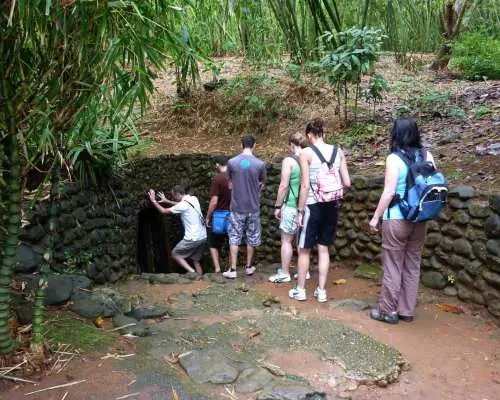
- Step inside the Cu Chi Tunnels, an underground network used during the war.
Package Options


Product Info
Important Info
Reminders
In case of delays caused by traffic, weather, or other force majeure factors resulting in the cancellation of some itinerary attractions, please contact customer service. We will arrange a partial refund for you
In the event of inclement weather such as typhoons or snowstorms, a decision on whether to cancel the tour will be made 1 day(s) before departure (local time 15:00). Notifications will then be sent via email
Travelers with the following conditions or other health issues that could be worsened by excessive stimulation should not participate in this activity: Pregnant women, Heart disease
Please arrive at the designated location 15 minute(s) before the scheduled departure time, as the tour will depart on time
FAQ
Ho Chi Minh City, formerly Saigon, is rich in historical and cultural landmarks. Visitors typically explore sites such as the War Remnants Museum, Reunification Palace, Notre Dame Cathedral, and the Central Post Office. These iconic locations offer insights into Vietnam's French colonial past and significant wartime events, showcasing the city's unique architectural heritage and historical narrative.
During the tour, insights into Ho Chi Minh City's past include its French colonial era, evidenced by grand architecture like the Notre Dame Cathedral and Central Post Office. You'll learn about pivotal moments during the war, the city's resilience, and its evolution into a modern metropolis, providing a comprehensive understanding of Vietnam's complex history through its urban landscape and significant sites.
The Cu Chi Tunnels hold immense historical significance as an extensive underground network used by Vietnamese soldiers during wartime. They served as a strategic base, providing shelter, communication routes, supply lines, and living quarters. This intricate system played a crucial role in enabling forces to operate effectively despite facing overwhelming military power, symbolizing ingenuity and resilience.
Yes, visiting the Cu Chi Tunnels is highly worthwhile for gaining an immersive understanding of Vietnam's wartime history. It offers a unique opportunity to explore the actual underground network where soldiers lived and fought, providing firsthand insight into their survival tactics, daily life, and the strategic ingenuity employed. This direct experience offers a powerful perspective on the conflict and the resilience of the Vietnamese people.
Visitors can learn about the extraordinary human impact and daily life of soldiers who lived in the Cu Chi Tunnels. The experience highlights their resilience, resourcefulness, and adaptability in harsh conditions. You'll see makeshift living quarters, kitchens, hospitals, and command centers, understanding how they sustained themselves, fought, and built a community underground, showcasing remarkable human endurance.
The on-site experience at the Cu Chi Tunnels allows visitors to physically enter and crawl through sections of the tunnel system. While some parts have been widened for accessibility, you'll navigate narrow, dark passages to understand the confined conditions. You can also see various booby traps, meeting areas, and learn about the ingenious construction and functionality of the underground network, offering a tangible sense of wartime reality.
At Ho Chi Minh City's landmarks, visitors can observe prominent French colonial architectural styles, particularly evident in structures like the Notre Dame Cathedral and the Central Post Office. These buildings showcase ornate designs, grand facades, and a distinct European influence. Beyond architecture, the city's vibrant street life and historical sites also highlight the blend of traditional Vietnamese culture with its colonial past.
Yes, during the Cu Chi Tunnels tour, visitors typically have the opportunity to try authentic wartime food. This often includes tapioca, a simple and resilient root vegetable that was a staple food for soldiers living and fighting in the tunnels during the conflict. It offers a small, symbolic taste of the challenging living conditions faced during that period.
Get Help


