



Package Options


Product Info
Purchase Notice
Reminders
Please refer to your voucher for final information regarding meeting points, pick-up locations, and pick-up time
Meeting point description: Pickup is offered from hotels in and around Nuremberg. Please provide your pickup address at checkout.
Please be aware that there is a maximum of 7 people per vehicle. For more than 7 participants, please contact the local operator to arrange a suitable vehicle
Pickup is offered from hotels in and around Nuremberg. Please provide your pickup address at checkout
Infants must not sit on laps. Infant seats available
This tour is available in English, Italian, Spanish and Portugues
The Palace of Justice is closed on Tuesdays
FAQ
1. What are the must-see WWII historical sites in Nuremberg?
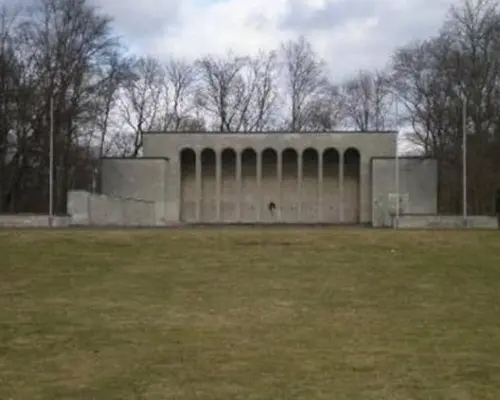
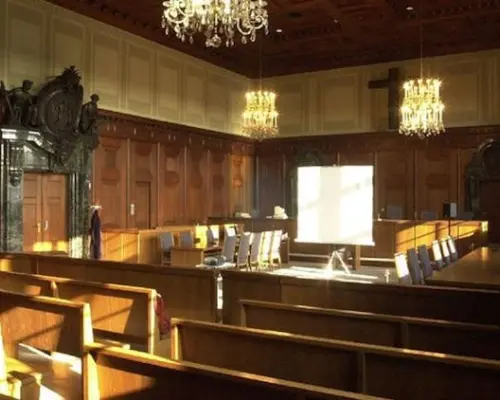
Nuremberg offers crucial WWII historical sites. The former Nazi Party Rally Grounds include the Zeppelin Field, the Great Street, and the unfinished Congress Hall, which now houses the Documentation Center Nazi Party Rally Grounds museum. The Palace of Justice is another pivotal location, specifically Courtroom 600, where the Nuremberg Trials took place. These sites collectively provide a profound understanding of the city's role during this period.
2. Can visitors access the historical Nuremberg Rally Grounds?
Yes, the historical Nuremberg Rally Grounds are accessible to visitors. The former Zeppelin Field and parts of the uncompleted Congress Hall can be explored. The Congress Hall now houses the Documentation Center Nazi Party Rally Grounds, which offers comprehensive exhibitions on the history and significance of the site. Visitors can walk around the expansive grounds, understand the scale of the former rallies, and delve deeper into the historical context at the museum.
3. What is the current status and preservation effort for the Nuremberg Rally Grounds?
The Nuremberg Rally Grounds are largely preserved as a memorial site, with active efforts to reinterpret and educate. The Congress Hall has been repurposed to house the Documentation Center, providing critical historical context. Structures like the Zeppelin Field grandstand are maintained, but not restored, allowing their original intent to stand as a stark historical reminder. Preservation aims to foster awareness of the past, encouraging visitors to reflect on the events that transpired there.
4. Is the historic Nuremberg Trials courthouse open to the public for visits?
Yes, the historic Palace of Justice, where the Nuremberg Trials took place, is open to the public. Courtroom 600, the actual trial chamber, can be visited when court is not in session. There is also a permanent exhibition, "Memorium Nuremberg Trials," located in the Palace of Justice, which provides extensive information about the trials, their background, and their lasting impact. It's advisable to check visiting hours in advance.
5. What key historical events took place at the Nuremberg Rally Grounds?
The Nuremberg Rally Grounds were the setting for the annual mass rallies of the Nazi Party from 1933 to 1938. These propagandistic spectacles showcased the regime's power and ideology. Key events included the promulgation of the Nuremberg Laws in 1935, which stripped Jews of German citizenship, and rallies captured in films like "Triumph of the Will." These gatherings were central to the Nazis' manipulation of public opinion and demonstration of their control.
6. How can one travel between Nuremberg's major World War II historical sites?
To travel between Nuremberg's major WWII historical sites, public transportation is highly efficient. The Documentation Center Nazi Party Rally Grounds is easily reachable by tram (Line 8 or 9 to Doku-Zentrum) or U-Bahn (U1 to Bauernfeindstraße, then a short walk). The Palace of Justice is accessible via U-Bahn (U1 to Bärenschanze). Walking is also an option for exploring the Rally Grounds once you arrive. A combination of walking and public transport offers the most comprehensive way to visit these spread-out locations.
7. What are the most important historical aspects to understand about Nuremberg's role in WWII?
Nuremberg holds critical historical importance in WWII due to several factors. It was chosen by the Nazi Party as the "City of the Party Rallies," hosting their annual propaganda spectacles. The infamous Nuremberg Laws, which institutionalized racial discrimination, were proclaimed here in 1935. Post-war, it became the site of the Nuremberg Trials, where major war criminals were prosecuted, establishing foundational principles of international criminal law. Understanding these aspects reveals Nuremberg's multifaceted role during and after the war.
8. Which specific areas within the Nuremberg Rally Grounds are most significant to visit?
Within the Nuremberg Rally Grounds, several specific areas are particularly significant for visitors. The Zeppelin Field, with its grandstand and former parade ground, offers a chilling sense of scale. The Congress Hall, an unfinished monumental structure, now houses the Documentation Center Nazi Party Rally Grounds, which provides invaluable context and exhibitions. The Große Straße (Great Street), a vast parade avenue, also remains as a stark reminder of the regime's architectural ambitions and use of space for mass spectacle.


