



Nuremberg WWII, Courtroom 600 and 3rd Reich sites private tour
- Visit the infamous places where the Nazi Party held its immense rallies, and also the places where they were brought to justice.
Sightseeing Tours
| Tour Type | Private tour |
| Tour types | Guided tour |
| Sightseeing type | Historic site tour |
Product Info
Purchase Notice
Reminders
Please refer to your voucher for final information regarding meeting points, pick-up locations, and pick-up time
Meeting point description: Pickup is offered from hotels in and around Nuremberg. Please provide your pickup address at checkout.
Please be aware that there is a maximum of 7 people per vehicle. For more than 7 participants, please contact the local operator to arrange a suitable vehicle
Pickup is offered from hotels in and around Nuremberg. Please provide your pickup address at checkout
Infants must not sit on laps. Infant seats available
The Palace of Justice is closed on Tuesdays
FAQ
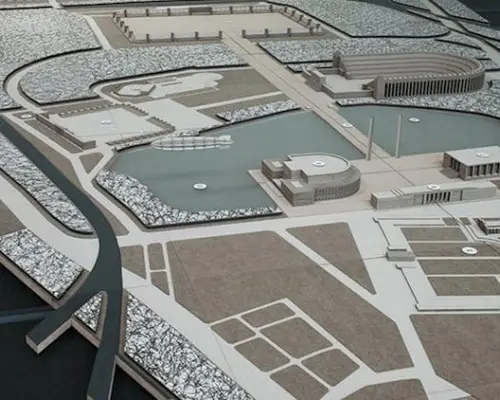
Nuremberg offers several crucial WWII historical sites. The former Nazi Party Rally Grounds, with structures like the Congress Hall and Zeppelin Field, showcase the scale of Nazi propaganda. Courtroom 600 in the Palace of Justice hosted the Nuremberg Trials. The Documentation Centre Nazi Party Rally Grounds provides detailed historical context and exhibits. These sites collectively offer a comprehensive understanding of the city's role in the Third Reich era.
Yes, the former Nazi Party Rally Grounds in Nuremberg are open to visitors. You can explore the vast Zeppelin Field, where mass rallies were held, and see the remnants of the grandstand. The unfinished Congress Hall, intended to be a huge party congress building, is another prominent feature. The adjacent Documentation Centre Nazi Party Rally Grounds offers exhibits that interpret the site's history and significance, providing critical context to the remnants.
Nuremberg holds profound significance due to its dual role in WWII history. It was chosen by the Nazi Party as the "City of the Party Rallies," hosting massive propaganda events and symbolizing their power. Post-war, it became the site of the International Military Tribunal, where Nazi leaders were brought to justice in the historic Courtroom 600. This stark contrast, from a symbol of tyranny to a place of justice, makes Nuremberg a critical destination for historical understanding.
Nuremberg suffered extensive destruction during WWII, particularly from Allied bombing raids in 1945. Approximately 90% of its historic Old Town was devastated. While many German cities experienced significant damage, Nuremberg was among the most heavily hit, alongside cities like Dresden, Hamburg, and Cologne. This was due to its strategic industrial importance and its symbolic status as a Nazi party rally city.
WWII had a catastrophic impact on Nuremberg's historical architecture and infrastructure. The medieval Old Town, including iconic landmarks like the Imperial Castle and St. Lorenz Church, was almost entirely reduced to rubble. Post-war, a careful reconstruction effort blended restoration of historical facades with modern building techniques. While much of the city's infrastructure had to be rebuilt, the core layout of the Old Town was largely preserved, allowing historical sites to be carefully restored.
Courtroom 600 at the Nuremberg Palace of Justice holds immense historical significance as the site of the International Military Tribunal. From 1945 to 1946, major Nazi war criminals were tried there for crimes against humanity, war crimes, and crimes against peace. These trials established precedents for international law, including the principle that individuals can be held accountable for war crimes, regardless of their official position. The courtroom remains preserved, offering a powerful glimpse into this pivotal moment.
The Documentation Centre Nazi Party Rally Grounds serves as a crucial museum and educational institution. Its primary purpose is to provide visitors with comprehensive historical information and critical context about the Nazi Party's use of the rally grounds for propaganda and indoctrination. Through extensive exhibits, photos, and artifacts, it analyzes the causes, contexts, and consequences of the Third Reich, ensuring visitors understand the sites as places of perpetration and not glorification.
When exploring Nuremberg's 3rd Reich sites and Courtroom 600, visitors gain deep insights into the rise and fall of Nazism, the power of propaganda, and the pursuit of justice. You'll understand how the Nazi Party utilized architecture and mass rallies, witness the site where international justice was forged, and learn about the city's wartime destruction and subsequent remembrance. The experience offers a profound historical journey, encouraging reflection on human rights and the rule of law.
Get Help


