
Package Options


Product Info
Purchase Notice
Reminders
Please refer to your voucher for final information regarding meeting points, pick-up locations, and pick-up time
Meeting point description: Please meet your guide in front of the Historic Art Bunker.(Obere Schmiedgasse 52, 90403 Nuremberg, Germany)
Please note that the "reduced" ticket option is valid for pupils, students with ID or severely disabled persons
Free audioguides in English, Spanish, French and Italian available
Unfortunately, this tour is not wheelchair accessible
FAQ
1. Is the WWII art bunker in Nuremberg still preserved and accessible for public visits today?
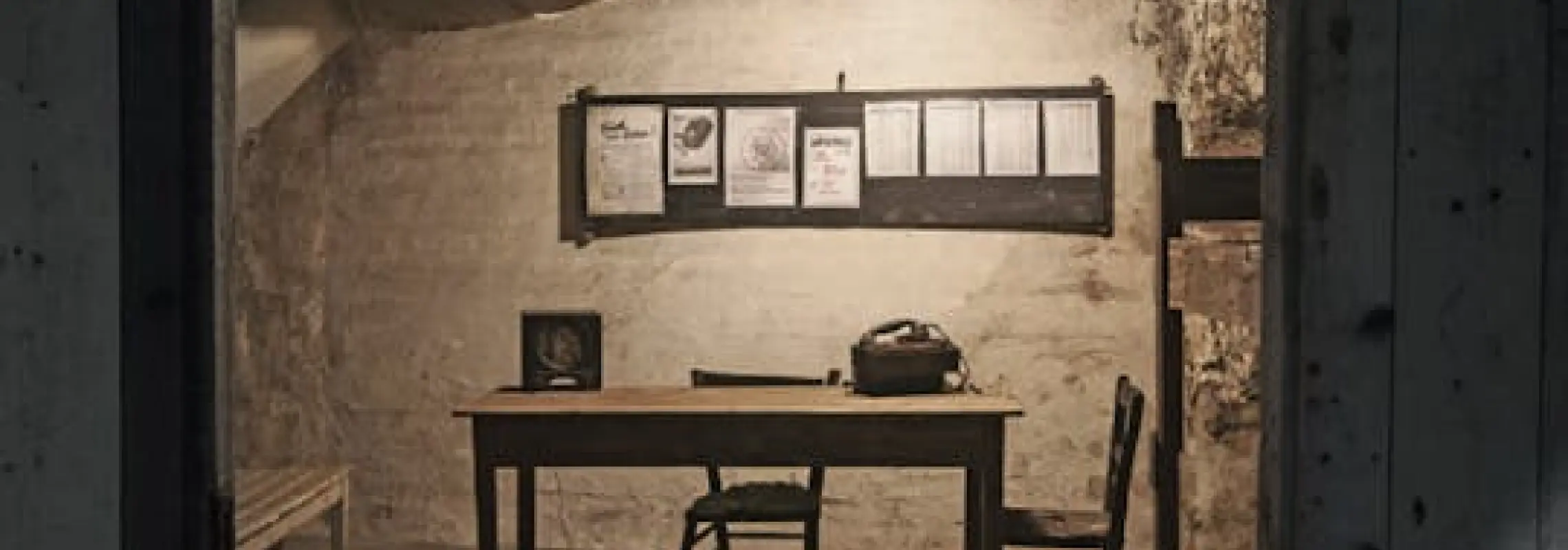
Yes, the historical WWII art bunker in Nuremberg is well-preserved and open to the public through guided tours. This underground facility was originally constructed to protect invaluable artworks from the city's museums and churches against air raids during World War II. Its existence highlights Nuremberg's commitment to safeguarding its cultural heritage during times of conflict.
2. What specific historical details and artworks can visitors expect to see during a guided tour of the Nuremberg WWII art bunker?
During a guided tour of the Nuremberg WWII art bunker, visitors can explore the conditions under which priceless artworks, including pieces by Albrecht Dürer and sculptures by Veit Stoss, were stored. You will learn about the bunker's construction, its unique climate control features that helped preserve the art, and the logistics involved in moving and protecting these treasures. The tour provides insight into a lesser-known aspect of wartime survival and cultural preservation.
3. What is the process for booking a guided tour of the historical WWII art bunker in Nuremberg?
Booking a guided tour for the historical WWII art bunker in Nuremberg is typically done online in advance. You can conveniently reserve your spot through KKday, which offers a streamlined booking process and allows you to secure your preferred date and time. Booking with KKday ensures access to confirmed tours and often provides flexible options, making your planning hassle-free.
4. How does the historical legacy of the Nuremberg Rally Grounds connect with the significance of the WWII art bunker in Nuremberg?
The Nuremberg Rally Grounds and the WWII art bunker represent two contrasting aspects of Nuremberg's wartime history. The Rally Grounds symbolize the propaganda and destructive power of the Nazi regime, hosting massive party rallies. In stark contrast, the art bunker symbolizes the city's efforts to preserve culture and history amidst that destruction. While distinct sites, understanding both provides a comprehensive view of Nuremberg's complex role and experiences during World War II.
5. How does visiting the WWII art bunker contribute to understanding Nuremberg's broader wartime history and significance?
Visiting the WWII art bunker offers a unique perspective on Nuremberg's broader wartime history beyond political events and destruction. It illustrates the city's resilience and dedication to preserving its cultural identity. The bunker tour sheds light on the incredible efforts made to protect artistic masterpieces, providing a human and cultural dimension to the narrative of a city heavily impacted by World War II.
6. What types of artworks were primarily stored and protected within the Nuremberg WWII art bunker during World War II?
The Nuremberg WWII art bunker was specifically designed to protect the most valuable cultural treasures of Nuremberg. It housed a diverse collection of significant artworks, including paintings by renowned artists like Albrecht Dürer, a native of Nuremberg, and exquisite sculptures by Veit Stoss. These pieces were primarily sourced from local museums, churches, and private collections, ensuring their safety from aerial bombings.
7. Are there specific accessibility considerations for visitors taking a guided tour of the WWII art bunker in Nuremberg?
Visitors to the WWII art bunker should be aware that it is an underground historical site. Access typically involves navigating stairs, and some areas may have narrow passages and be dimly lit, reflecting its original wartime purpose. Comfortable footwear is recommended. Individuals with significant mobility challenges or severe claustrophobia may find certain aspects of the tour challenging.
8. What are the recommended times or seasons to visit the WWII art bunker in Nuremberg for the best experience?
As an indoor historical site, the WWII art bunker can be visited comfortably throughout the year, regardless of the season. To ensure the best experience, it is generally recommended to visit during off-peak hours or seasons to avoid larger crowds, allowing for a more intimate engagement with the guide and the exhibits. Guided tours typically have fixed schedules, so checking availability in advance is advisable.


