


Kata Tjuta and Uluru Sunset Tour in Mandarin | Northern Territory
Explore Kata Tjuta’s sacred rocks. Hike Walpa Gorge’s natural wonders. Enjoy Uluru’s spectacular sunset. Learn Anangu’s culture and history.
- Explore the stunning landscapes of Kata Tjuta, a sacred place for the Anangu men
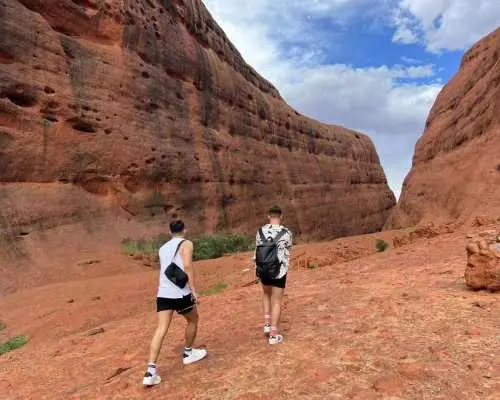
- Hike through Walpa Gorge and discover its ancient history and vibrant plants
- Enjoy the most magnificent sunset over Uluru while sipping champagne snacks
- Learn about the Anangu people, their traditions and beliefs, and their connection to the land
Sightseeing Tours
| Tour types | Guided tour |
| Sightseeing type | Natural sights |
Product Info
The content of this product is provided by machine translation and may not reflect the actual information, please take this into consideration before booking.
— What You Can Expect —
Experience the sacred beauty of Uluru and Kata Tjuta on a one-day tour.
Depart from your hotel and head to Uluru Kata Tjuta National Park, where you will explore the stunning landscapes of Kata Tjuta, a group of 36 domed rocks that cover 40 square kilometers. This is a sacred place for the Anangu men, but forbidden for the Anangu women. Stop at an observation deck to admire the panoramic and close-up views of Kata Tjuta, and then hike through Walpa Gorge for an hour. There, discover the ancient history, the vibrant plants, and the amazing natural sculptures of the gorge.
After that, head to the Uluru Sunset Viewing Area, where you will enjoy the most magnificent sunset over Uluru while sipping champagne snacks. Witness how the sun’s rays create different colors and lights on Uluru Rock, a sight that will stay with you forever.
This tour is a unique opportunity to immerse yourself in the culture and nature of Australia’s Red Centre. Learn about the Anangu people, their traditions and beliefs, and their connection to the land. Marvel at the beauty and diversity of the desert environment, and feel the awe and wonder of seeing Uluru and Kata Tjuta.
Experience one of the most memorable destinations in Australia. Get ready for an unforgettable adventure.
Marvel at the majestic sight of Kata Tjuta’s 36 domed stones as you share this unforgettable experience with your friends. Witness the changing colors and shapes of the rocks as you get closer and admire them from different angles


Purchase Notice
- Due to COVID-19, champagne and snacks are temporarily unavailable, and certain attractions may be closed without prior notice. Please verify the final itinerary with the tour guide upon arrival
Cancellation Policy
- Cancellations 9 day(s) (inclusive) before the selected date are allowed. Unused orders can be canceled for free
- Cancellation is not allowed between 0–8 days from the selected date. Orders cannot be canceled or modified, and refunds will not be granted.
- Due to time zone differences, the confirmed cancellation date is based on the supplier’s local time. Please allow 2–5 business days to process your cancellation request, after which the cancellation fee will be charged according to the product’s cancellation policy. Once the cancellation is confirmed, you will receive your refund within 14 working days.
FAQ
Kata Tjuta, meaning 'many heads' in the Anangu language, is a striking collection of 36 large, domed rock formations. It holds profound sacred significance for the Anangu men, serving as a ceremonial site and a repository of ancestral stories and deep spiritual beliefs. Geologically, its ancient conglomerate rocks and dramatic scale, especially when bathed in the changing light, offer a visually stunning and unique landscape.
The Walpa Gorge walk at Kata Tjuta is a relatively easy return trail, approximately 2.6 kilometers in length. Visitors usually take about 1 to 1.5 hours to complete the walk, allowing time to explore the unique natural features, observe the diverse plant life, and appreciate the towering rock walls that characterize the gorge. It's a journey into an ancient and tranquil environment.
While Uluru is a single massive monolith, Kata Tjuta is a formation of 36 domes covering a broader area, approximately 21 square kilometers. The tallest dome within Kata Tjuta, known as Mount Olga, rises to about 546 meters above the surrounding plain. In contrast, Uluru stands 348 meters high, with a circumference of about 9.4 kilometers. So, Kata Tjuta encompasses a larger overall land area and has taller individual domes, but Uluru is a singular, more voluminous rock formation.
The prohibition of climbing Uluru stems from the deep cultural and spiritual significance the site holds for the Anangu Traditional Owners. For the Anangu, Uluru is a sacred place connected to their Tjukurpa (law and creation stories), rather than a recreational climb. Their request for visitors not to climb is an act of respect for their ancient traditions and beliefs, helping to preserve the site's cultural integrity and sacredness.
If you're not on a guided tour, the primary way to get around Uluru National Park is by renting a car, available from Ayers Rock Resort or Alice Springs. This provides the most flexibility for exploring at your own pace. There is also a limited hop-on hop-off bus service that connects key viewing areas and the Cultural Centre, though its schedule may vary by season. Cycling is permitted on specific designated paths as well.
The most common and convenient way to travel to Kata Tjuta from Ayers Rock Resort is by joining an organized tour, which typically includes comfortable transportation and a knowledgeable guide. Alternatively, for those preferring independent travel, renting a car from the resort is an option, as Kata Tjuta is approximately 50 kilometers west. It is advisable to book rental vehicles in advance due to demand.
Yes, shuttle bus services are available in the Uluru area, primarily connecting Ayers Rock Resort to various Uluru viewing points, such as sunset and sunrise spots, and the Uluru-Kata Tjuta Cultural Centre. These services operate on a scheduled timetable, offering a convenient way for visitors to access different parts of the park without needing a private vehicle. Checking the current timetables upon arrival is recommended.
Due to the remote location of Uluru and Ayers Rock Resort, rideshare services like Uber or similar platforms are generally not available for transport within the area. Visitors typically rely on organized tours, the resort's dedicated shuttle buses, local taxi services, or private rental cars for their transportation needs. Planning your travel arrangements in advance is essential when visiting the Uluru region.
Get Help


