


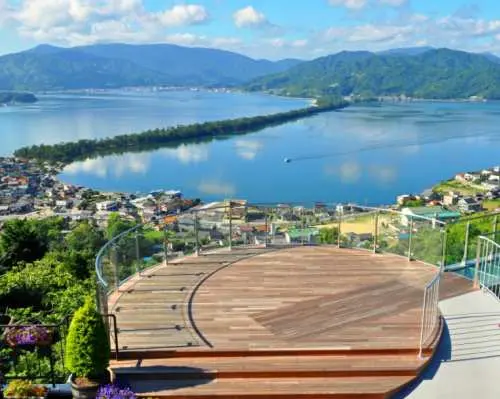
Japan Osaka/Kyoto/Miyama/Amanohashidate/Uji Private Day Tour
- Customized private charter car, with flexible itinerary, attractions, and departure times.
- A variety of car models are available for you to choose from, and reservations can be made for tours ranging from small families to large groups.
- Vehicles with valid licenses in Japan, with drivers fluent in both Chinese, English, and Japanese who all have at least 3 years of driving experience.
Package Options
Private & Shared Cars
| Shared transfer type | Attraction transfer |
| Charter type | 1-day charter |
| Driver language | English, Mandarin, Japanese |
Product Info
Suggested Charter Routes
- Nara Route: Hotel → Nara Park → Kofukuji Temple → Todaiji Temple → Kasuga Taisha Shrine → Hotel
- Kyoto-Osaka Route A: Hotel – Kinkaku-ji(Kiyomizu-dera) – Nishiki Market – Fushimi Inari Shrine – Gion – Hotel
- Kyoto/Osaka Route B: Hotel – Arashiyama – Kinkaku Kinkaku-ji)– Kiyomizu-dera (Kiyomizu-dera) – Hanamikoji Street – Hotel
- Kyoto/Osaka Route C: Hotel – Gion-Shirakawa River – Keage – Ginkaku-ji– Nijo Castle – Hotel
- Kyoto/Osaka Route D: Hotel – Kitano Ijinkan Street – BE KOBE Monument (Meriken Park) – Ikuta Shrine – Kobe Port Tower – atoa Aquarium/Anpanman Museum/Kobe Maritime Museum (Choose one) – Hotel
- Suburban Route E: Hotel – Arashiyama – Miyama Kita Village (thatched-roof houses) – Hotel
- Suburban Route F: Hotel – Amanohashidate – Ine Boat House – Hotel
- Suburban Route G: Hotel – Uji – Lake Biwa – Hotel
- Suburban Route H: Hotel – Omi Shrine – Lake Biwa Observatory – Hachimanbori – MIHO MUSEUM – Hotel
What You Can Expect
1 Day
- Kinkaku-ji
- Kiyomizudera Temple
- Nara
- Hanamikoji
- Fushimi Inari Shrine
- Osaka
- Kobe Port
- Various car models (images for reference only)
- Six-seater interior and exterior


Purchase Notice
- Ensure that the total distance of your chosen route does not exceed 300 kilometers
- If you plan on carrying multiple pieces of luggage, kindly book a larger vehicle that can accommodate all your personal belongings. Travelers who exceed the vehicle's luggage or passenger capacity will incur an additional fee
- According to Japanese law, children under 6 must be secured in a car seat. Please note that car seats take up extra space, and the driver reserves the right to refuse service to groups that exceed the vehicle's passenger capacity. No refunds will be issued in such cases
- When booking, please include your contact information (such as your LINE or WeChat ID) in the "Note" section and ensure that friend requests can be accepted
- If your pick-up and drop-off points are in different cities (e.g., Osaka and Kyoto), there will be an additional fee of JP¥5,000 per one-way vehicle return
- If a driver who speaks your preferred language or a specific car type is available, the supplier will contact you to arrange rescheduling or cancellation
- Please pay the driver tolls incurred from the dispatcher to the hotel. The amount will be based on the ticket provided by the driver
- Per Japan's law, the service time for a 13-/18-seater is 9 hours
- You can choose to depart anytime between 7:00 am and 11:00 am. If you choose the latest departure time (11:00 am), then overtime will not be possible for that day as the driver cannot continue working after 9:00 pm. If the itinerary exceeds the latest service time, a night service fee of ¥3,000/per hour will apply
- Please note that this is a private transfer service and does not encompass tour guide services.
Surcharge(s)
The cost of a second child safety seat
If a child safety seat is required, the first one is provided free of charge. The cost of the second child safety seat is 2000 yen, payable to the driver on-site.
Overtime fee for vehicle use
For trips exceeding 10 hours (9 hours for 13- and 18-seater vehicles), an additional 30 minutes will be charged as one hour. For 6- and 9-seater vehicles, the charge is 5000 yen per hour; for 13-seater vehicles and above, the charge is 10000 yen per hour.
The driver will provide return time suggestions based on map information. If overtime is caused by traffic congestion, the passenger will be responsible for the additional overtime charges.
Service fee for cross-district pick-up and drop-off areas
If your pick-up or drop-off location is in Izumi Ward or the Kansai Airport area, an additional airport transfer fee will apply. Please be aware of this. Also, please be sure to include this information in your order notes so that customer service can confirm your itinerary before providing further details.
Highway toll fees for different types of vehicles
6-seater and 9-seater: Between 8,000 and 10,000 yen
13-seater and 18-seater: Between 10,000 and 16,000 yen
Please note that the price may vary depending on the pick-up and drop-off locations and the use of highways. The above prices are for reference only.
Reminders
The amounts listed for highway tolls, attraction fees, and parking fees are estimates. The actual amount payable will depend on the specific vehicle usage and on-site quote. (Receipts will be provided on the day of purchase.)
Please note that the driver only speaks basic English, but online customer service will be available to assist with English-language support.
According to the regulations of the Japan Land Transport Bureau, the service time for 13-seater and 18-seater vehicles is 9 hours per day.
This service is a private car pick-up and drop-off service and does not include guided tours or other tour information. Thank you for your understanding and cooperation.
If it is found on-site that passengers do not meet the recommended passenger and luggage capacity for the vehicle type, any additional costs incurred will be borne by the passengers themselves.
How to Redeem Your Voucher
How to Use Your Voucher
- Please present the e-voucher on-site
Validity Period
- The voucher must be used on the selected date and within operating hours; Invalid after expiration
Get Help


