
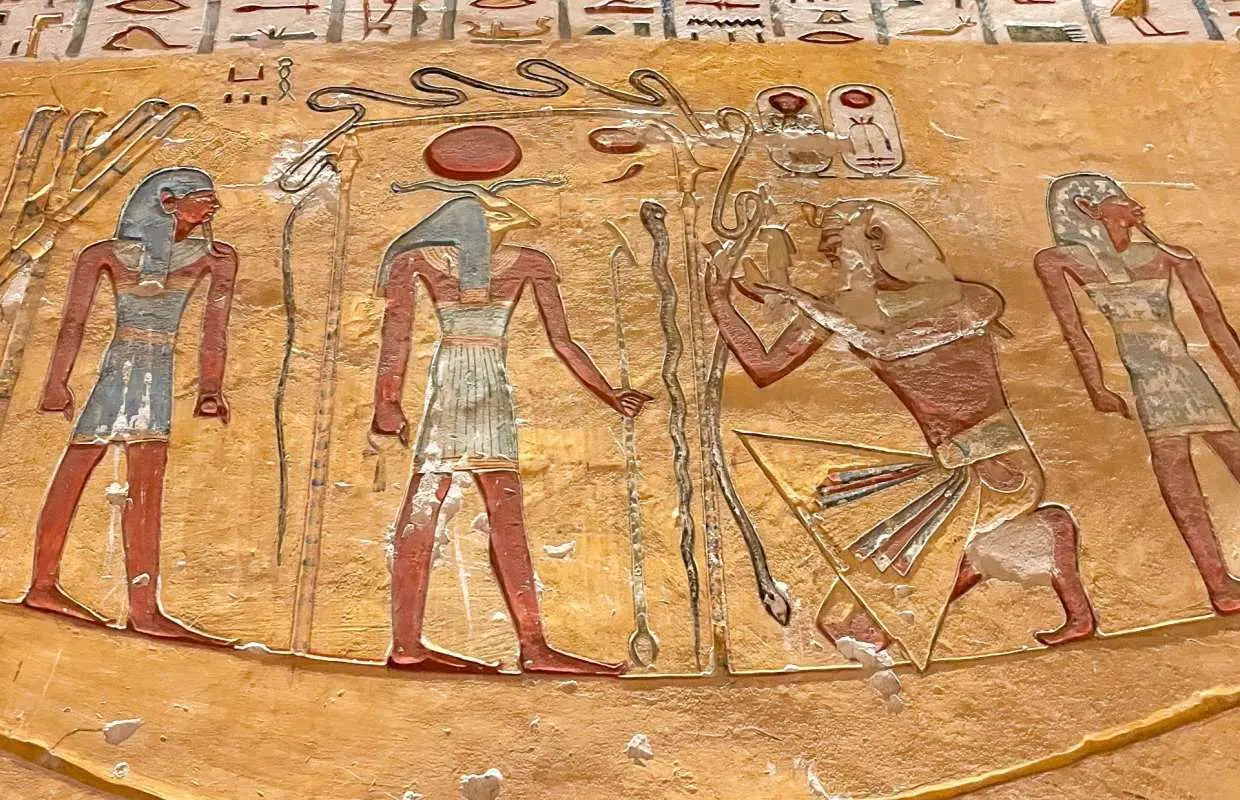
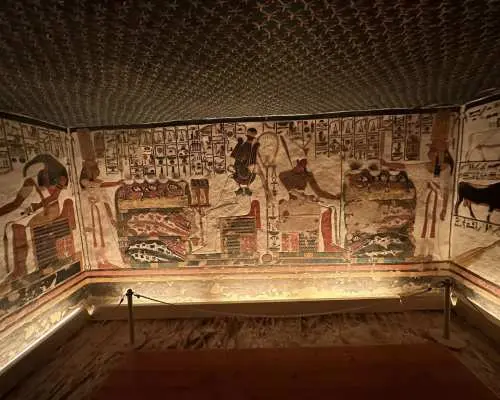


Guided Luxor Royal Tombs Tour at Valley Of The Queens & Kings
- Focus on Valley Of The Queens Tour with a private guide.
- Visit Valley Of The Kings Tour during the same West Bank route.
- Explore royal tomb heritage without extra temple stops.
- Travel privately by air-conditioned vehicle from Luxor.
- Enjoy guided explanations in your selected language.
- Choose one of the focused Luxor Tours for tomb lovers.
- Select English, Italian, German, French, Spanish, or Russian.
- Book privately for 1 to 9 participants in your group.
- Choose tickets and lunch included or exclude both services.
- Pickup details are confirmed one day before your activity date.
Package Options
Product Info
Begin your private Luxor royal tomb experience with pickup from your hotel or selected pickup point, then travel by private air-conditioned vehicle with your guide. This tour is created for travelers who want to spend their time around Luxor’s ancient burial valleys rather than moving between temples, museums, sailing experiences, or many unrelated stops. The route is simple, focused, and clear: Valley Of The Kings Tour followed by Valley Of The Queens Tour. Transfer time may vary depending on your hotel location, and final pickup details will be confirmed one day before your activity.
Your day starts with Valley Of The Kings Tour, one of the main royal tomb areas on Luxor’s West Bank. With your selected guide language, the visit becomes easier to follow and more meaningful. Your guide introduces the valley according to the confirmed package, ticketing process, tomb availability, local access rules, and daily operation. Because access to specific tombs can vary, guests should follow the guide’s instructions and the site rules on the activity day. Extra tomb entries are not included unless clearly confirmed in the selected booking.
After the first valley visit, continue to Valley Of The Queens Tour, the main keyword focus of this product. This second stop gives the experience another royal tomb atmosphere and helps complete the West Bank burial-valley theme. The visit is arranged according to the selected package, ticketing rules, available access, and daily timing. Your guide connects the two valley visits naturally, helping guests understand the difference between the two sites while keeping the experience smooth and easy to follow.
This product is especially suitable for travelers looking for focused Luxor Tours without a long mixed route. It does not include Karnak Temple Tour, Luxor Temple Tour, Avenue Of Sphinxes Tour, Queen Hatshepsut Temple Tour, Colossi Of Memnon Tour, museum visits, felucca rides, or hot air balloon activities unless those services are booked separately through another product. The purpose of this tour is to give guests a clear royal tomb experience with private transport, a selected guide language, and flexible package choices.
Guided Luxor Royal Tombs Tour at Valley Of The Queens & Kings
This main option follows the provided itinerary: Valley Of The Kings Tour and Valley Of The Queens Tour. After selecting the tour, guests can customize the booking through the available sub-options. Tour guide language can be selected from English, Italian, German, French, Spanish, or Russian. Participant number can be selected from 1 to 9 participants. Package type can be selected as with tickets and lunch included or without tickets and lunch.
If the with tickets and lunch package is selected, the listed required entry tickets and lunch are included according to the confirmed booking. Lunch location may vary depending on timing and daily operation, so guests should not expect one fixed restaurant. If the without tickets and lunch package is selected, the tour still includes private transport, guide service, and the guided royal tomb route, but entry tickets and lunch are not included and must be paid separately if needed.
These selections apply only to the selected tour option, so customers should review the guide language, participant number, package type, and confirmed itinerary carefully before purchase. The visit order may change due to traffic, tomb availability, ticketing flow, local operation, or daily timing, but the intended route remains focused on Valley Of The Kings Tour and Valley Of The Queens Tour.
Please ensure the phone number provided during booking is connected to WhatsApp for quick pickup and timing updates. If it is not connected to WhatsApp, kindly share an alternative number in advance.
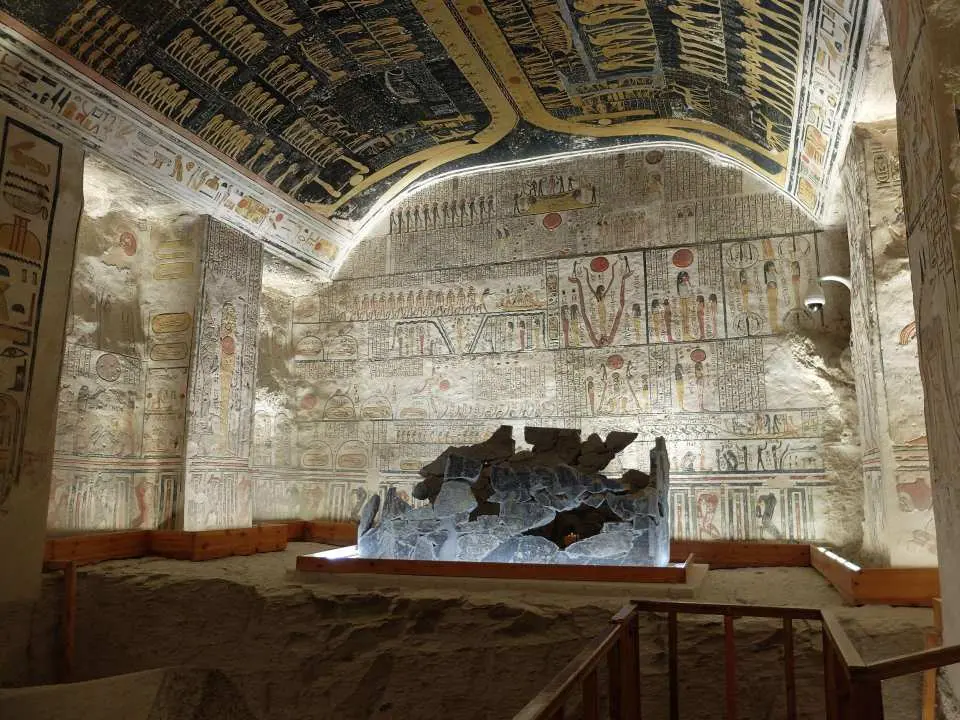
Your tour begins with pickup from your hotel or selected pickup point. Transfer time may vary depending on your hotel location, and final pickup details are confirmed one day before the activity. After meeting your guide and driver, travel by private air-conditioned vehicle to begin the West Bank tomb route. Start with Valley Of The Kings Tour according to the selected guide language, confirmed package, ticketing process, tomb availability, site access, and local operation. Your guide introduces the area and leads the visit according to the day’s confirmed flow. After Valley Of The Kings Tour, continue to Valley Of The Queens Tour. This visit follows the selected package, ticketing conditions, available access, and daily timing. Lunch is included only if the with tickets and lunch package is selected. If the without tickets and lunch package is selected, lunch is not included. Entry tickets are included only when the ticket-included package is selected. At the end of the tour, return by private vehicle for drop-off.
Purchase Notice
- Please check the selected main option carefully before purchase.
- Sub-options apply only to the selected tour option.
- Available guide languages are English, Italian, German, French, Spanish, and Russian.
- Participant selection is available from 1 to 9 participants.
- Package type may be with tickets and lunch or without both.
- With tickets and lunch includes listed required entries and lunch.
- Without tickets and lunch excludes entry fees and lunch.
- Pickup time may vary depending on your hotel location.
- Final pickup details will be confirmed one day before the activity.
- Please provide a WhatsApp-connected phone number for updates.
- If your number has no WhatsApp, share an alternative number early.
- Tomb access may depend on local operation and daily availability.
- Extra tomb entries are not included unless clearly confirmed.
- Lunch location may vary according to daily operation and timing.
- Drinks and personal expenses are not included.
- Temple visits and East Bank sightseeing are not included.
- Museum visits, felucca ride, and balloon ride are not included.
- The visit order may change due to traffic or local operation.
- Comfortable shoes are recommended for tomb valley areas.
- Valley Of The Queens Tour details depend on selected package.
How to Use
How to Use Your Voucher
- Please present the e-voucher on-site
FAQ
1. Who are the notable figures buried in the Valley of the Queens?
The Valley of the Queens served as the burial site for queens, princes, and high-ranking officials from the New Kingdom period. Among the numerous tombs, the Tomb of Queen Nefertari (QV66) is particularly renowned for its exquisitely preserved and vibrant wall paintings, offering a detailed glimpse into ancient Egyptian funerary art and beliefs. Other notable tombs belong to princes and princesses, though many are not always open to the public.
2. Is visiting the Valley of the Queens a worthwhile experience for travelers interested in ancient Egyptian history?
Yes, the Valley of the Queens is highly worthwhile, especially for those interested in royal tomb heritage and ancient Egyptian history. It offers a quieter, more intimate experience compared to the Valley of the Kings. The tombs here, particularly that of Queen Nefertari, feature stunningly well-preserved artwork and hieroglyphs, providing invaluable insights into the lives and beliefs of queens and royal children from the New Kingdom.
3. What are the key differences between the Valley of the Kings and the Valley of the Queens in Luxor?
The primary distinction lies in who was buried there. The Valley of the Kings was the burial ground for pharaohs and powerful nobles, featuring grander tombs. The Valley of the Queens, conversely, was reserved for queens, royal children, and some high officials. While the Kings' tombs are often larger, the Queens' tombs, especially Nefertari's, are celebrated for their exceptional artistic detail and state of preservation, offering a different, often more intimate, historical perspective.
4. Which tomb is considered a must-visit in the Valley of the Queens for its artistic value?
For its exceptional artistic value, the Tomb of Queen Nefertari (QV66) is widely considered a must-visit in the Valley of the Queens. It is famed for its vibrant, incredibly detailed, and well-preserved wall paintings that depict Nefertari's journey through the afterlife, guided by various deities. The vivid colors and intricate scenes make it one of the most stunning ancient Egyptian tombs ever discovered, offering a profound aesthetic and historical experience.
5. Can tourists visit King Tutankhamun's tomb within the Valley of the Kings, and what should they expect?
Yes, tourists can visit King Tutankhamun's tomb (KV62) within the Valley of the Kings. It is usually accessible with a separate, additional ticket beyond the main Valley of the Kings entrance fee. Visitors should expect a smaller tomb compared to others, but it's significant for its historical importance and the preserved mummy of Tutankhamun, visible inside. While modest in decoration, its historical context makes it a popular point of interest for many.
6. What are the recommended royal tombs to visit in the Valley of the Kings beyond the standard entrance ticket?
Beyond the standard entrance ticket, which typically covers access to three tombs, many visitors choose to explore additional, sometimes grander, royal tombs in the Valley of the Kings. Highly recommended options often include the Tomb of Ramses VI (KV9) for its stunning astronomical ceiling and vibrant colors, and the Tomb of Seti I (KV17), though often requiring a higher separate fee, is renowned for its extensive and detailed decorations. King Tutankhamun's tomb (KV62) is another popular choice.
7. How can visitors conveniently travel between the Valley of the Kings and the Valley of the Queens for a focused tour?
For convenient travel between the Valley of the Kings and the Valley of the Queens during a focused tour, it is highly recommended to arrange private, air-conditioned vehicle transport. This ensures comfort and efficiency, allowing you to move directly between sites without needing to navigate local transportation or haggle for taxis. A private vehicle provides flexibility and optimizes your time, ensuring a seamless exploration of both royal burial grounds.
8. What kind of guided explanations are provided when visiting the royal tombs in Luxor's valleys?
When visiting the royal tombs with a private guide, you can expect detailed explanations covering the historical context, the significance of the pharaohs and queens buried there, and interpretations of the hieroglyphs and artwork. Guides typically share insights into ancient Egyptian burial practices, religious beliefs about the afterlife, and the stories behind the discoveries of these remarkable sites, enriching your understanding of each tomb's unique features.


