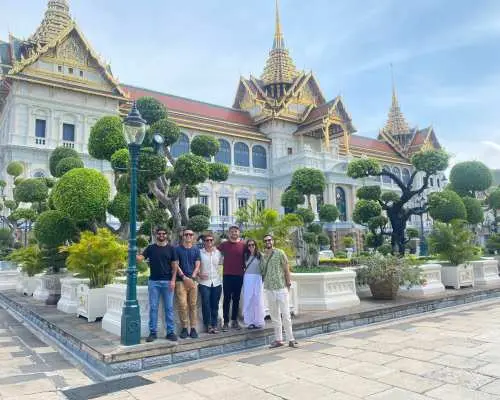
Yes, the Grand Palace is highly recommended for its immense historical and cultural significance as Thailand's former royal residence. It offers a glimpse into Thai artistry with its elaborate golden spires, intricate mosaics, and stunning architecture. Visitors can explore various halls, pavilions, and the revered Temple of the Emerald Buddha (Wat Phra Kaew), making it a truly immersive cultural experience.
The Grand Palace has an official entry fee set by the attraction, which typically includes access to the Temple of the Emerald Buddha (Wat Phra Kaew) and other key areas within the complex. To ensure a smooth visit, you can purchase tickets upon arrival or pre-book through platforms like KKday, which offers convenient online booking and often includes guided tours for a more enriching experience without the hassle of on-site queues.
The Grand Palace complex showcases a blend of traditional Thai and European architectural styles, reflecting its history as the residence of Siamese kings. Key features include the ornate Phra Thinang Chakri Maha Prasat, a fusion of Thai and Italian Renaissance, and the stunning Wat Phra Kaew (Temple of the Emerald Buddha) with its multi-tiered roofs, gilded chedis, and intricate murals depicting the Ramakien epic.
Visitors to the Grand Palace and its temples must adhere to a strict dress code. Shoulders and knees must be fully covered, so wear long pants, long skirts, or dresses. Sleeveless tops, sheer clothing, ripped jeans, and flip-flops are generally not permitted. It's advisable to wear comfortable, respectful attire suitable for walking and showing reverence in sacred spaces.
At Wat Pho, visitors can marvel at the magnificent 46-meter-long Reclining Buddha, adorned with gold leaf and mother-of-pearl inlay on its feet. Beyond this iconic statue, Wat Pho is revered as the birthplace of traditional Thai massage, offering a glimpse into ancient healing practices. The temple complex itself is a peaceful oasis with intricate pagodas and serene courtyards, ideal for cultural exploration.
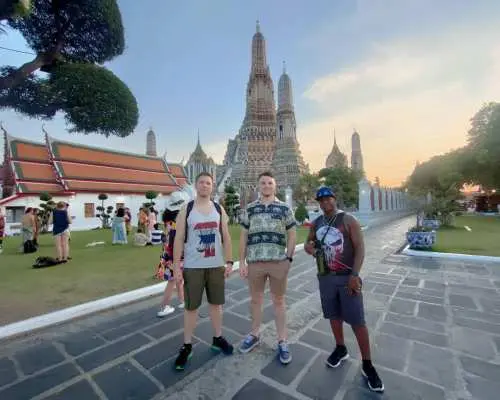
Wat Arun, or the Temple of Dawn, is significant for its distinctive prang (towering spire) adorned with intricate porcelain mosaics, symbolizing Mount Meru, the center of the Buddhist universe. Historically, it briefly housed the Emerald Buddha before it was moved to the Grand Palace. Its riverside location on the Chao Phraya River makes it a prominent landmark and a symbol of Bangkok's artistic and spiritual heritage.
The Grand Palace and Wat Pho are within comfortable walking distance of each other. To reach Wat Arun from these two sites, you can take a short cross-river ferry from the Tha Tien Pier, conveniently located near Wat Pho. Alternatively, taxis or tuk-tuks are readily available throughout Bangkok for direct and flexible transfers between these iconic landmarks.
Yes, beyond the dress code, visitors should observe several rules. Remove your shoes before entering any temple chapel (wihan or bot). Do not point your feet towards Buddha images. Avoid touching any religious artifacts. Speak softly, show respect for monks and the sacred surroundings, and refrain from engaging in loud conversations or disruptive behavior to maintain the serene atmosphere.