
Tokyo Metro Ticket | Unlimited Subway Pass in Tokyo (1–3 Days)
- Enjoy unlimited rides on all Tokyo Metro and Toei Subway lines with this Tokyo Metro ticket.
- Choose from 1-3 day passes for your flexible travel across the capital city of Japan.
- Reach top attractions like Shinjuku, Shibuya, Ueno, and Asakusa with ease.
- Skip ticket queues with fast and convenient QR code redemption at stations.
- Save time and travel smarter with a cost-effective and flexible subway tickets. Book now via KKday!
- For more information regarding Tokyo Subway, click here to read Tokyo Subway Guide.
Experience Tokyo at its fullest extent using Tokyo City Pass + Attraction Pass. Click here to explore more fun right away!
Transport Card & Pass Info
| Ticket type | Pass |
| Ticket format | E-ticket, E-ticket (requires redemption) |
| Ticket area | East Japan Area |
| Usage duration | 1 day , 2 days, 3 days |
Product Info
The content of this product is provided by machine translation and may not reflect the actual information, please take this into consideration before booking.
— What You Can Expect —
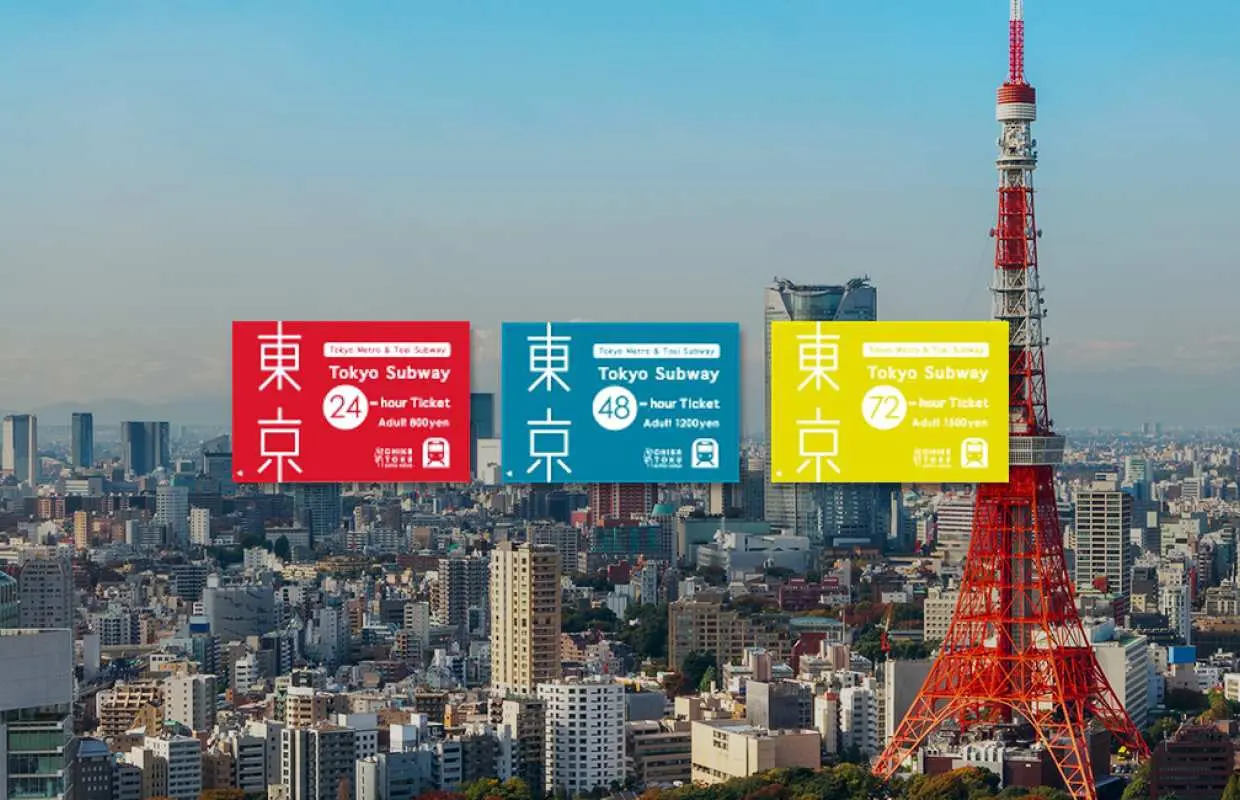
Tokyo Subway Ticket offers 24-, 48-, or 72-hour options, giving you unlimited rides on all Tokyo Metro and Toei Subway lines. With 13 lines and over 250 stations—including popular areas like Shinjuku, Shibuya, Asakusa, Ikebukuro, and Ginza—you can easily access Tokyo’s major attractions and nearby hotspots. Enjoy a convenient and budget-friendly way to explore Tokyo, with daily subway travel starting from as low as 667 JPY.
Please refer to this Tokyo Metro Map


Learn about the different ticket types below


Please follow the instructions below on how to redeem your voucher


How to Use
[How to Exchange]
— Tokyo Subway Ticket —
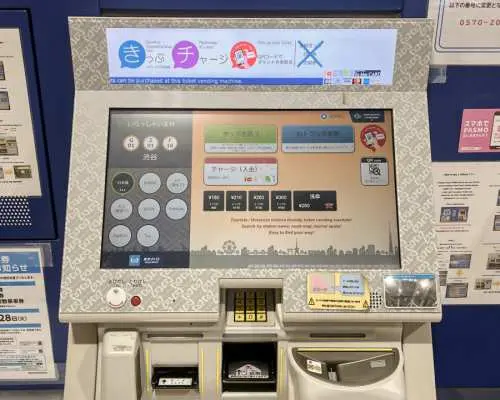
- Please bring the e-voucher to the designated ticket machine window to exchange for a physical ticket
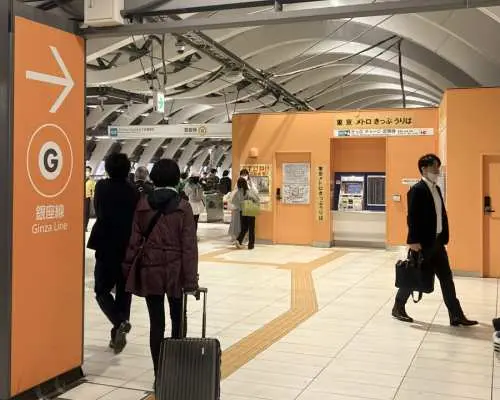
- Go to the nearest ticket machine (marked with a red circle and labeled "Pick up your ticket")
*Not all stations have machines for exchanges. (Please refer to the following links for more information: English) - Click the "QR code" button
- Scan the QR code (Please print the KKday voucher in advance, or show the electronic version on your phone or tablet)
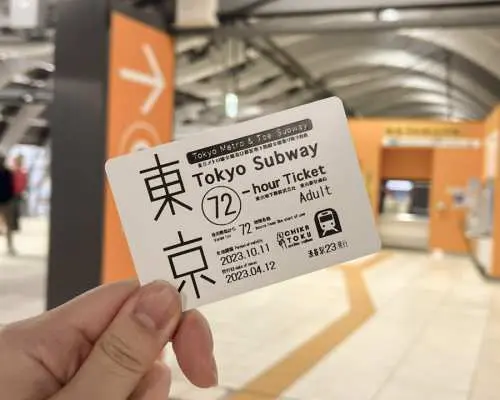
- Done! The ticket will be valid within 24/48/72 hours from your first swipe at the station entrance. The validity period will be printed on the back of the ticket
- You can also exchange your ticket at the office of any Tokyo Metro station with staff assistance (except for stations on the Hibiya Line: Kitasenju, Naka-Meguro, Nakano, Nishi-Funabashi, Yoyogi-Uehara, Wako-shi, Hanzomon Line, and Fuku-Toshin Line: Shibuya and Meguro stations)
- The ticket cannot be exchanged individually. One QR code is issued per order, and all tickets will be exchanged at once when scanned at Tokyo Metro or Toei Subway stations
- If the ticket’s magnetic strip is demagnetized, it may not work at ticket gates. Avoid placing it near strong magnets like phones or electronic devices
- If you are unable to pass through the station gate with your redeemed ticket, please consult a station staff member. After verification, a replacement ticket will be issued
- The validity period will be printed on the ticket after you first use it to pass through the station gate
- If you enter a station within the valid time, you can exit normally even if the validity time has passed during your trip
- If the ticket is not used within the validity period stated on the ticket, it will be considered invalid
- Each adult who has purchased a ticket can carry up to 2 children ages 0–5 for free. For the 3rd child ages 0–5, please buy a child ticket
- This ticket cannot be used for trains operated by companies other than Tokyo Metro or Toei Subway
- Download the Tokyo Metro app for easy access to subway maps and transfer info while using the Tokyo Subway Ticket
- KEISEI Skyliner Ticket -
Exchange Locations:
[For Travel to Narita Airport]
- Keisei Ueno Station: Skyliner ticket vending machine or Skyliner service center (Operating hours: 5:10 am–8:20 pm)
- Nippori Station: Skyliner ticket vending machine or JR transfer ticket gate counter (Operating hours: 5:00 am–11:30 pm)
[For Travel to Keisei Ueno Station]
- Narita Airport Station (Narita Terminal 1): Skyliner ticket vending machine or Skyliner service center (Operating hours: 7:00 am–9:00 pm)
- Terminal 2 Station (Narita Terminals 2 & 3): Skyliner ticket vending machine or Skyliner service center (Operating hours: 7:00 am–9:00 pm)
※ This ticket cannot be exchanged at Aoto Station or Shin-Kamagaya Station
※ Ticket counters only sell tickets for the same day. Please use the automatic ticket vending machines or service center for exchanges
Exchange Process:
- To exchange your ticket, present your QR Code. Prepare a mobile device to display the QR code, or print out the voucher in advance for exchange
*If you cannot display the QR Code, you cannot exchange the ticket
* Round-Trip Ticket Exchange: For round-trip tickets, please exchange before departing at NRT - Outbound Trip: Both outbound and return vouchers will be issued at the time of exchange
- Return Trip: The return voucher must be exchanged at either Ueno or Nippori station's exchange window or ticket vending machine for a ticket with a specified time before boarding
Special Notes:
- When exchanging round-trip tickets at Narita Airport, both outbound and return tickets will be issued. For the return trip, you must use the return voucher at Ueno or Nippori station. Showing the original booking voucher will not grant you a ticket
- Please do not lose your return voucher
- Return tickets are valid within 6 months from the exchange of the outbound ticket
- Outbound and return tickets can be exchanged separately. In the case of multiple tickets, they can be exchanged in parts
- Not valid for use on Keisei Morningliner, Eveningliner, or Cityliner
- Tokyo Tower Observatory Ticket -
- Includes Tokyo Tower Observatory (150m) Admission Ticket
- Children ages 0–3 can enter for free
- Any resold ticket will be considered invalid
- Display the QR code on your mobile device or print out the voucher to exchange for the physical ticket
- You can use the same QR Code to exchange both the Tokyo Tower Observatory ticket and the Tokyo Subway Ticket
- In case of bad weather or unexpected events, facilities may temporarily close or cancel activities. Please check the official websites of each facility for the latest operating status
- Operating hours may change due to factors like the COVID-19 pandemic. Please make sure to check the latest hours on each facility’s website
- Coin Lockers at Tokyo Tower are located on the 1st floor of Foot Town (paid service)
- Spa LaQua Natural Hot Springs Ticket -
- For safety reasons, children aged 0–5 are not allowed
- Visitors ages 6–17 must be accompanied by a guardian and must enter before 6:00 pm (last admission at 3:00 pm)
- Intoxicated individuals, those with skin diseases, or other contagious illnesses are prohibited from entering
- Individuals with tattoos or body paint (including tattoos, paint, or stickers) are not allowed to enter
- At the Spa LaQua front desk, please present your e-voucher on a tablet, smartphone, or other mobile device and press the “Use” button when requested by staff
- The e-voucher requires a stable internet connection for use
- Ensure your device can access the internet before arrival
- The QR Code voucher for Spa LaQua is different from the Tokyo Subway Ticket QR Code voucher
- SKYTREE® ENJOY PACK・Tokyo Skytree: Admission Ticket -
- To redeem tickets or passes, present the mobile barcode voucher sent after your reservation
- Prepare to show the barcode on your mobile device screen or print the voucher in advance
- If you cannot present a valid mobile barcode, you will be unable to redeem your ticket or participate in the activity
- The mobile barcode for the Tokyo Skytree® Observation Deck is different from the one for the Tokyo Subway Ticket. Each has its own separate barcode voucher
- In case of bad weather or unexpected events, the facility may close temporarily or cancel activities. Please check the official websites of each facility for operating status before using your voucher
- SUNSHINE Aquarium / SUNSHINE 60 OBSERVATORY TENBOU-PARK Ticket -
- If the venue becomes crowded, entry may be restricted. We appreciate your understanding
- To redeem tickets or passes, show the QR code voucher sent after booking—either on a mobile device or as a printed copy
- If you are unable to present a valid QR code, you will not be able to redeem tickets or participate in the activity
- The same QR code can be used separately to redeem both the SUNSHINE Aquarium ticket and the Tokyo Subway Ticket
- The National Museum of Modern Art, Tokyo (MOMAT) Ticket -
- This ticket does not include access to special exhibitions
- Opening hours: 10:00 am–5:00 pm (Fridays & Saturdays: 10:30 am–8:00 pm)
- Last admission is 30 minutes before closing time
- Closed days: Every Monday (if Monday is a public holiday or substitute holiday, the closure will shift to the next working day), during exhibition changes, and at the end of the year and New Year holidays (December 29 – January 3 annually)
- Opening hours and closed days may change without notice. Please check the official website for the latest information before your visit
- You can use the same QR code to redeem both your Tokyo National Museum of Modern Art (MOMAT) ticket and Tokyo Subway Ticket
- Student tickets are available for university students. Please present your student ID when visiting the Tokyo National Museum of Modern Art (MOMAT)
- Free admission for: high school students and younger, under 18s, ages 65+, and visitors with a disability certificate plus one caregiver (valid ID required)
- In case of bad weather or unforeseen events, the facility may close or cancel activities. Check the official website for updates before use.
- Please visit on the booked date. The museum may close for extended periods during exhibition changes
How to Use Your Voucher
- Please present your QR code on-site
Experience Location
Location Name: Tokyo Tower
Address: 4 Chome-2-8 Shibakoen, Minato City, Tokyo 105-0011, JapanMonday 09:00–23:00 (Last Entry Time: 22:30)
Tuesday 09:00–23:00 (Last Entry Time: 22:30)
Wednesday 09:00–23:00 (Last Entry Time: 22:30)
Thursday 09:00–23:00 (Last Entry Time: 22:30)
Friday 09:00–23:00 (Last Entry Time: 22:30)
Saturday 09:00–23:00 (Last Entry Time: 22:30)
Sunday 09:00–23:00 (Last Entry Time: 22:30)
See the official website for more info about the Main Deck
FAQ
The Tokyo Metro Ticket offers flexible validity options to suit your travel plans. You can choose from a 1-day ticket (valid for 24 hours), a 2-day ticket (valid for 48 hours), or a 3-day ticket (valid for 72 hours) for unlimited rides within the designated periods. These options provide convenience for exploring Tokyo over various lengths of stay.
Yes, Tokyo Metro Passes are specifically designed for and highly suitable for international tourists. They offer a convenient and cost-effective way for visitors to navigate Tokyo's extensive subway network, making it easier to reach major attractions and explore different areas of the city without the hassle of buying individual tickets for each ride.
The Tokyo Metro Pass provides comprehensive coverage across all Tokyo Metro and Toei Subway lines. This includes 13 Tokyo Metro lines and 250 stations, allowing you to access a vast network throughout the city. You can travel effortlessly to major districts and various points of interest within Tokyo's central areas.
Yes, the Tokyo Metro Pass indeed offers unlimited rides. Once activated, the pass allows you to take as many rides as you need on all Tokyo Metro and Toei Subway lines for the entire duration of your chosen ticket (24, 48, or 72 hours). This feature makes it highly convenient for extensive sightseeing without worrying about individual fares.
The main difference lies in their network coverage. The Tokyo Metro Pass covers Tokyo Metro and Toei Subway lines, which primarily serve central Tokyo and its many popular districts. JR (Japan Railways) lines, like the Yamanote Line, are also extensive but cover different routes and often connect to suburban areas, including major transport hubs and some tourist spots. Many travelers use a combination of both for comprehensive city exploration.
You can easily purchase your Tokyo Metro Pass online before your trip, which saves you time queuing. For instance, booking through KKday allows you to secure your pass in advance, offering convenience and a seamless experience upon arrival. This way, you can start exploring Tokyo immediately without the need to find a physical ticket counter, ensuring a smooth start to your journey.
The validity period of a Tokyo Metro Pass begins from the first time you use it on the subway system. For example, a 24-hour ticket is valid for exactly 24 hours from its initial activation, not just until the end of the calendar day. This continuous hour-based validity offers maximum flexibility for your travel schedule.
The Tokyo Metro Pass provides excellent access to many of Tokyo's popular areas and attractions. You can effortlessly reach major districts like Shinjuku, known for its skyscrapers and entertainment; Shibuya, famous for its crossing and fashion; and Ueno, home to museums and parks. Other accessible areas include Ginza, Asakusa, and Tsukiji, allowing for comprehensive sightseeing.
Get Help


