


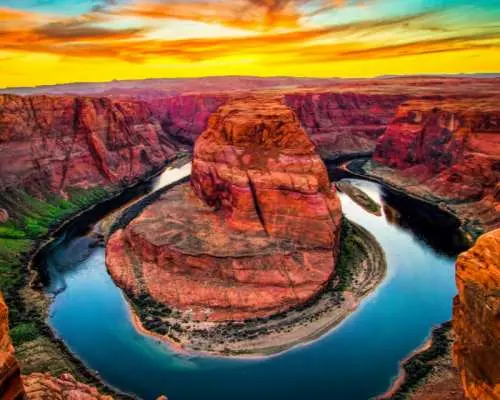
Half-Day Tour from Page, USA to Upper Antelope Canyon/Lower Antelope Canyon and Horseshoe Bend
Sightseeing Tours
| Tour Type | Shared tour |
| Transportation method | Transfer from meeting point |
| Minimum participant requirement | 4 travelers |
| Tour types | Guided tour |
| Meal arrangement | Arrange yourself |
Product Info
Purchase Notice
2. For children weighing 55 pounds or less, please bring your own child seat to the Upper Antelope Canyon.
Reminders
This trip consists of 4 people. If the group is not formed, we will contact you 2 days in advance to cancel the order.
Cancellation Policy
- Cancellations 32 day(s) (inclusive) before the selected date are allowed. Unused orders can be canceled for free
- For cancellations made 17 to 31 days prior to selected date, a cancellation fee of 50% will apply
- For cancellations made 10 to 16 days prior to selected date, a cancellation fee of 70% will apply
- Cancellation is not allowed between 0–9 days from the selected date. Orders cannot be canceled or modified, and refunds will not be granted.
- Due to time zone differences, the confirmed cancellation date is based on the supplier’s local time. Please allow 2–5 business days to process your cancellation request, after which the cancellation fee will be charged according to the product’s cancellation policy. Once the cancellation is confirmed, you will receive your refund within 14 working days.
FAQ
Upper Antelope Canyon is generally wider and easier to navigate, known for its famous sunbeams that pierce through the cracks during specific times of day in warmer months. It usually involves a short 4x4 ride to the entrance. Lower Antelope Canyon is narrower, deeper, and requires climbing down and up several ladders and stairs, offering a more adventurous experience with swirling sandstone formations and vibrant colors. Both require a guided tour.
Visiting Upper Antelope Canyon is generally considered to be of low physical difficulty. The walking path inside the canyon is mostly flat and sandy, making it accessible for most visitors. While there are no strenuous climbs or descents, the sandy ground can be uneven at times. Visitors should be comfortable walking short distances on loose sand.
A typical guided tour for Upper Antelope Canyon usually lasts between 1 to 1.5 hours, which includes the necessary transfers to and from the canyon entrance. The actual time spent exploring inside the canyon is approximately 45-60 minutes. It's advisable to factor in additional time for check-in procedures and waiting before your tour begins.
No, it is not possible to visit Antelope Canyon independently. Antelope Canyon is located on Navajo Nation land, and access is strictly controlled. All visitors are required to enter the canyon as part of a guided tour led by an authorized Navajo guide. Tours must be booked in advance to ensure entry.
To secure your visit to Antelope Canyon and Horseshoe Bend, tours must be booked in advance due to their popularity and limited availability. Many travelers choose to book through online travel platforms like KKday, which offers the convenience of pre-arranged permits and often provides seamless booking with detailed itineraries, simplifying your travel planning and ensuring a smooth experience. Early booking is highly recommended.
The ideal time to visit Antelope Canyon for the best experience is typically during the spring (March to May) and fall (September to November) months, when temperatures are pleasant. For witnessing the famous light beams in Upper Antelope Canyon, late spring to early fall (April to September) around midday (between 10 AM and 2 PM) is best, as the sun is high enough to penetrate the canyon's narrow openings.
For visiting Antelope Canyon, comfortable, loose-fitting clothing is recommended, as temperatures inside can fluctuate. Layers are advisable, especially during cooler months. Closed-toe shoes with good traction are essential due to the sandy and uneven surfaces inside the canyon. A hat and sunglasses can provide sun protection outside, and a bandana might be useful to protect against dust.
Upper Antelope Canyon is renowned for its ethereal light beams, best captured around midday in warmer months, and the intricate, wave-like sandstone formations. Horseshoe Bend offers a dramatic panoramic landscape, perfect for wide-angle shots of the iconic U-shaped bend of the Colorado River. Sunrise or sunset visits at Horseshoe Bend provide stunning vibrant colors across the desert landscape.
Get Help


