


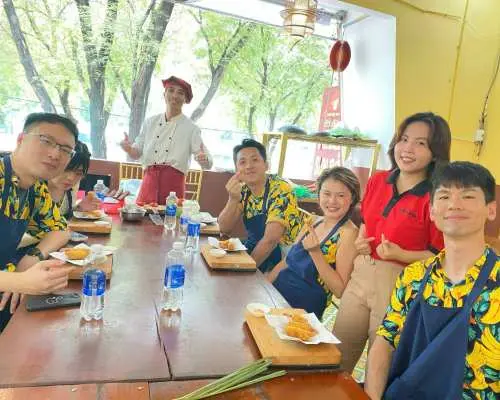
Ho Chi Minh City Vietnamese Cuisine Dish & Egg Coffee Making Experience – Cooking Class + Coffee Workshop | Vietnam
- Experience Vietnamese culinary culture through a hands-on cooking class and traditional egg coffee workshop in one flexible tour.
- Shop for fresh ingredients at Ben Thanh Market and learn to prepare 3 authentic Vietnamese dishes with local chefs.
- Master the art of making silky-smooth Vietnamese egg coffee guided by a professional barista.
- Flexible options: choose cooking class, egg coffee workshop, or both — ideal for food lovers and cultural explorers.
Package Options
Cultural Experiences
| Activity level | Beginner |
| Cuisine type | Vietnamese cuisine |
| Minimum participant requirement | 1 traveler |
Product Info
- What You Can Expect -
Shop for fresh ingredients at Ben Thanh Market and cook authentic Vietnamese dishes guided by local chefs.
Dive into Vietnam’s coffee culture by learning to make silky-smooth egg coffee from scratch.
Choose between cooking class, egg coffee workshop, or both — perfect for food lovers seeking a flexible local experience.
- Important Information -
- Tour information-
- Meeting point at west gate of Ben Thanh Market - Opposite of the address 02 Nguyễn An Ninh, Ben Thanh ward, HCMC
- Tourists have to come and transit from cooking class to Egg Coffee making workshop by themselves
- From Ben Thanh Market to Cooking Class, tourists have to follow local guide's instruction
- Starting Time:
8:30AM at Ben Thanh Market and meet our local guide
Only Egg Coffee making class: Mutiple time slots from 8AM ~ 4PM
- Returning Time:
Only Cooking Class: 12:30 PM
Only Egg Coffee making class: Mutiple time slots from 8AM ~ 4PM
For both class : 1:30 PM
Tour Duration: 1- 5 hours depending on the tour options package
- Experience information
- 3 Vietnamese Cuisine made by you
- Egg Coffee Made by you
- Green Iced-tea/ Jasmine tea
Notes: if you would like to have tour guide/ driver escort you for this tour , you can pay extra $10 / pax for the whole tour
8:30 – 8:45 AM – Arrive at Ben Thanh Market, meet your guide


8:45 – 9:15 AM – Market tour and shop for fresh ingredients


9:15 – 9:30 AM – Move to the cooking class house

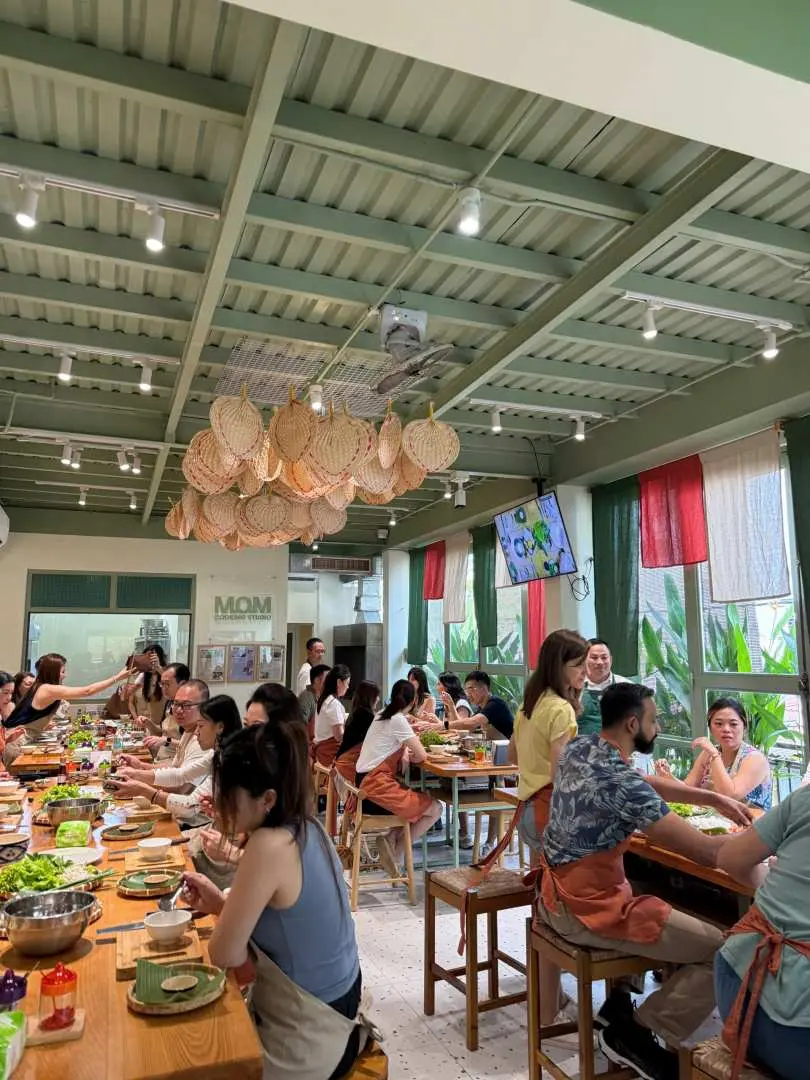
9:30 – 11:30 AM – Hands-on cooking session (prepare 3 dishes)


11:30 – 12:15 PM – Enjoy your own cooking as lunch + dessert


13:00 - 13:15 PM - Move to egg coffee making class and ready to make your own egg coffee ( for combo Cooking class + Egg coffee workshop)


Purchase Notice
- If you choose Egg Coffee Making Workshop, you can contact us via KKday chat to arrange time slot
- Egg Coffee workshop takes place from 8AM ~ 4PM and the workshop duration is 30~45 minutes
- Please note: These services are not available on holidays
Lunar New Year (depends on the year then could be late January or early February)
April 28 - May 2
Sep 2
Dec 31 - Jan 1
—Reminders—
Please provide detailed information about ALL TRAVELERS when booking so that we can contact and give the best support.
The itinerary might be changed without prior notice in case unexpected external factors occur (weather, local authority decision...)
The timing of this itinerary is estimated, and the exact time will be informed before departure time.
All activities are included and optional, please be note and ready when the pickup time is nearby.
Weather in Saigon is hot, humid, and unpredictable. Therefore, tourists should have a check and well prepare some necessary things for the trip such as a hat, sun cream.
Always confirm and discuss with your guides when meeting up about the tour program, food allergies, or any restrictions.
— Cancellation Policy —
No refund when tourists book the service, please take it in consideration when you would like to reserve the service
Reminders
Please provide detailed information about ALL TRAVELERS when booking so that we can contact and give the best support
The itinerary might be changed without prior notice in case unexpected external factors occur (weather, local authority decision...)
The timing of this itinerary is estimated, and the exact time will be informed before departure time.
All activities are included and optional, please be note and ready when the pickup time is nearby
Weather in Saigon is hot, humid, and unpredictable. Therefore, tourists should have a check and well prepare some necessary things for the trip such as a hat, sun cream
Always confirm and discuss with your guides when meeting up about the tour program, food allergies, or any restrictions.
How to Redeem Your Voucher
How to Use Your Voucher
- Please present the e-voucher on-site
Meeting Point
Location Name: Meeting point at west gate of Ben Thanh Market - Opposite of the address 02 Nguyễn An Ninh, Ben Thanh ward, HCMC
Address: West gate of Ben Thanh Market - Opposite of the address 02 Nguyễn An Ninh, Ben Thanh ward, Ho Chi Minh CityFAQ
In a Ho Chi Minh City cooking class, participants typically learn to prepare 3 authentic Vietnamese dishes. Common examples often include popular spring rolls (Gỏi cuốn), flavorful Phở (noodle soup), or savory Bánh xèo (sizzling crepes). The exact dishes may vary but focus on staple local cuisine, providing a hands-on experience with traditional preparation methods using fresh ingredients.
Ho Chi Minh City culinary workshops often explore a range of famous Vietnamese dishes in addition to Banh Mi. You might delve into making classic Phở (noodle soup), Bún chả (grilled pork with noodles), or the aromatic Bún bò Huế (spicy beef noodle soup). These workshops offer insights into the diverse ingredients and regional variations that define Vietnamese gastronomy.
Vietnamese Banh Mi is a celebrated baguette sandwich, known for its crispy crust and savory fillings. In a cooking class, key steps involve preparing the various components: selecting fresh herbs and vegetables, marinating and cooking the meats (such as grilled pork or chicken), crafting quick pickles, and skillfully assembling the sandwich with pâté and mayonnaise. The focus is on balancing the signature sweet, sour, salty, and spicy elements.
Ho Chi Minh City offers diverse culinary experiences for immersing in Vietnamese gastronomy. These include hands-on cooking classes where you learn traditional recipes from local chefs and workshops focused on specific delicacies like Vietnamese Egg Coffee. Many experiences also incorporate exploring vibrant local markets for fresh ingredients, providing a complete cultural journey into the city's rich food scene.
Vietnamese Egg Coffee (Cà Phê Trứng) is a unique, rich beverage made with strong Vietnamese coffee topped with a creamy, airy foam of whisked egg yolks and sweetened condensed milk. In a workshop, participants learn the precise techniques for brewing traditional Vietnamese coffee, perfecting the egg mixture's consistency, and layering the components to achieve its distinctive flavor and texture. A professional barista typically guides this masterclass.
Yes, many Ho Chi Minh City cooking class experiences, including this one, typically begin with a guided visit to Ben Thanh Market. This allows participants to learn about local ingredients, understand their role in Vietnamese cuisine, and experience the bustling atmosphere of a traditional market firsthand. Afterward, you proceed to the kitchen to cook with the fresh produce sourced.
Beyond mastering specific recipes, a Vietnamese cooking class offers deeper culinary knowledge. Participants gain understanding of fundamental Vietnamese cooking techniques, the art of balancing flavors (sweet, sour, salty, spicy), and the crucial role of fresh herbs and spices. It also provides cultural insights into local eating habits, ingredient sourcing, and the communal joy of preparing and enjoying food in Vietnam.
Yes, in Ho Chi Minh City, some culinary experiences offer flexible options. Participants can often choose to attend just the hands-on Vietnamese cooking class, focusing solely on traditional dish preparation, or opt exclusively for the egg coffee making workshop to master this unique beverage. Comprehensive options that combine both experiences are also available, catering to different interests and schedules.
Get Help


