


Tickets for the 1941 Old Opera House in Chongqing
- Exclusive Sichuan Opera skills: face-changing and fire-breathing, instantly igniting the passion of Bashu culture.
- Accompanied by traditional elegance: the melodious sound of the pipa, accompanied by covered bowl tea and special snacks.
- A scene from the Republican era is recreated: an old opera theater, offering an immersive experience of the charm of bygone times.
Attraction Tickets
| Ticket type | E-ticket (requires redemption), Physical ticket (requires redemption) |
| Exhibit type | Traditional culture exhibits |
| Attraction type | History & culture, Traditional house experience |
| Tour types | None |
| Transport convenience | Near city center |
Product Info
The content of this product is provided by machine translation and may not reflect the actual information, please take this into consideration before booking.
The 1941 Teahouse Theater is located in the prosperous Jiefangbei District of Chongqing. Walking into it is like traveling back in time to that era full of changes and customs.
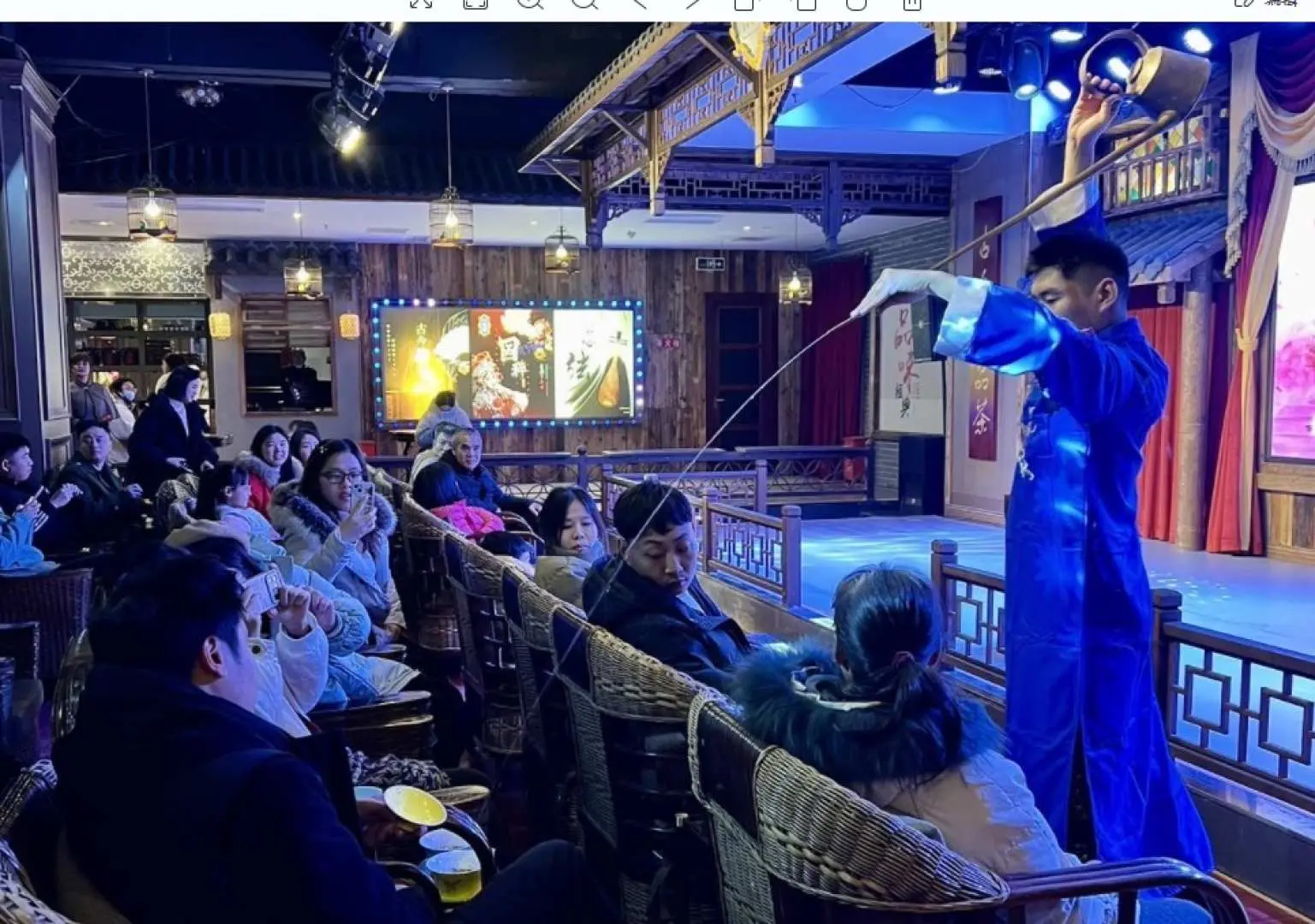
Sit there and enjoy the singing on the stage while tasting Chongqing's authentic covered bowl tea. Tea artists will also present you with exquisite tea art performances. There will also be opera, folk music, magic tricks, folk performances, etc., which will make you intoxicated and appreciate the profoundness of Chinese culture.
Traditional opera performance with one seat per person, including tea bowl and a special snack
Six shows a day, including Sichuan Opera's unique face-changing, fire-breathing, and lantern-rolling performances, as well as Sichuan and Chongqing folk customs such as bamboo harp and money board. Experience the intangible cultural heritage learning, dress up, take photos, and check in
Enjoy the singing on the stage and taste Chongqing's authentic covered tea. Tea masters will also present you with exquisite tea art performances. There are also folk art, folk music, magic, folk performances, etc., which are performed in turn. In particular, the shocking Sichuan Opera fire-breathing performance makes people intoxicated and appreciate the profoundness of Chinese culture.
At that time, ancient traditions and Western civilizations blended and collided here. The old Chinese wooden carved tables and chairs and the Western silk sofas were integrated into one room. The antique stage and the sound, light and electricity stage complemented each other. It was exquisite, elegant, comfortable and spacious, making people feel relaxed and happy physically and mentally.
Program Introduction:
The Sichuan opera "The World is Good" features a Huadan kung fu performance with graceful postures and beautiful artistic conception.
The teapot is 1.2 meters long and can be moved up and down, left and right at will. Pour tea at close range to experience a strong visual impact.
"Pipa Performance" A beautiful woman plays the lute, with gracefulness and rhythm interweaving. You can appreciate the plucking of her fingertips up close.
"Quyi Jinqianban" is an intangible cultural heritage that is on the verge of being lost. It combines singing and fighting in performance.
Sichuan Opera's unique skill "Face Changing and Fire Breathing" is a mysterious skill in Sichuan Opera. It is performed by many people. You can experience the ever-changing facial expressions up close and admire the gushing hot flames.




Purchase Notice
1. The teahouse implements the principle of "one person, one ticket, one seat". Customers sitting at square tables or non-single sofas must cooperate with the staff to arrange shared seats when there are many customers.
2. It is recommended to arrive 30 minutes before the show starts. Tickets must be exchanged for paper tickets. Seats are allocated on a first-come, first-served basis based on arrival order.
3. After the voucher is verified, no refund, exchange or seat change will be accepted. Reservations must be made by calling the merchant in advance.
4. One ticket is valid for one show only
5. [Children's Package] is only applicable to VIP seats and audience seats, and is applicable to children under 1.2 meters in height. Children over 1.2 meters in height must purchase tickets according to adult standards.
6. It is prohibited to make loud noises or do anything that may affect others’ enjoyment of the performance.
7. No outside food, drinks or pets are allowed into the performance.
8. Please take good care of your belongings. If you lose them, you will be responsible for them.
9. This venue is a non-smoking place, please smoke outside the venue!
Note: Some programs are subject to irregular adjustments. Please refer to the performance at the time. Please understand!
Includes/Excludes
Reminders
Please arrive at the designated location 30 minute(s) before the scheduled departure time, as the tour will depart on time
Each group number is a seat (Table F is a multi-person table)
Please arrive at the venue 30 minutes before the show time to redeem your ticket
Exchanged tickets are not transferable
How to Redeem Your Voucher
How to Use Your Voucher
- Please present the e-voucher on-site
Voucher Redemption Period
- The voucher must be redeemed on the selected date and within operating hours; Invalid after expiration
Validity Period
- The voucher must be used on the selected date and within operating hours; Invalid after expiration
Experience Location
Location Name: Chongqing 1941 Old Opera Theater Tickets
Address: Take the Shiguang Elevator next to the garage entrance of Yutian Building, No. 177 Bayi Road, to the 8th floorMonday 10:00–22:00
Tuesday 10:00–22:00
Wednesday 10:00–22:00
Thursday 10:00–22:00
Friday 10:00–22:00
Saturday 10:00–22:00
Sunday 10:00–22:00
Cancellation Policy
- Once the order has been completed, it cannot be canceled, modified, or refunded
- Due to time zone differences, the confirmed cancellation date is based on the supplier’s local time. Please allow 2–5 business days to process your cancellation request, after which the cancellation fee will be charged according to the product’s cancellation policy. Once the cancellation is confirmed, you will receive your refund within 14 working days.
FAQ
Sichuan Opera face-changing, or Bian Lian, relies on highly guarded, intricate techniques passed down through generations. Performers use cleverly designed costumes and makeup layers, often featuring multiple masks or painted faces. With swift, almost imperceptible movements, they can pull or manipulate these layers to reveal a new face in an instant, creating a magical and astonishing transformation right before the audience's eyes. This requires immense skill, speed, and precision from the artists.
In Chongqing, the 1941 Old Opera Theater offers an immersive experience to witness these traditional arts. It is renowned for its authentic Sichuan Opera face-changing, thrilling fire-breathing acts, and other traditional performances like graceful pipa music and folk non-legacy programs. The theater itself is designed with a Republic of China era aesthetic, enhancing the cultural journey and providing a unique venue for these spectacles.
Sichuan Opera face-changing is a profound cultural heritage, symbolizing the dramatic shifts in emotions or character portrayals within the opera. Originating from ancient rituals and magic, it evolved into a theatrical art form. Each face, with its distinct colors and patterns, often represents different personalities or moods, making it a captivating visual narrative technique and a cherished part of Bayu culture, passed down through generations of performers.
The 1941 Old Opera Theater prioritizes performer and audience safety during fire-breathing acts. Highly trained professionals meticulously manage the performance area, ensuring appropriate distances and ventilation. Stringent safety protocols are followed, including regular equipment checks and the presence of safety personnel. Performers undergo extensive training to master the technique safely and minimize any risks associated with handling flames, making the thrilling spectacle as secure as possible.
Becoming a fire-breathing performer requires years of rigorous training under experienced masters. It involves learning precise control over breathing techniques, understanding fuel properties, and mastering the art of projection to create impressive flame effects. Performers practice extensively to ensure consistency, safety, and dramatic effect. This disciplined approach ensures that each breathtaking performance is executed with skill, confidence, and adherence to strict safety standards.
Fire-breathing performers typically use specialized liquid fuels designed for safety and visual effect, which have a high flash point and low toxicity. These are not alcohol-based. Safety considerations include proper storage and handling of fuel, meticulous performer training, and ensuring no flammable materials are near the performance area. Strict adherence to these protocols is crucial to prevent accidents and ensure a stunning yet safe show for all attendees.
The 1941 Old Opera Theater offers a rich tapestry of Bayu culture. Visitors can enjoy melodious pipa performances, where artists showcase intricate melodies with remarkable skill. Additionally, the theater features captivating folk non-legacy programs such as the bamboo harp and money board, which are unique traditional storytelling and musical forms, adding depth to the overall cultural immersion beyond the famous face-changing and fire-breathing acts.
The 1941 Old Opera Theater transports visitors back to the Republic of China era with its meticulously designed retro environment. From the period-specific decor to the overall ambiance, every detail evokes a sense of nostalgia and historical charm. This immersive setting perfectly complements the traditional performances, allowing guests to feel as though they've stepped into a bygone era, creating a truly memorable and culturally rich experience with ample photo opportunities.
Get Help


