



Sumo practice experience/observation reservation (Tokyo/Tokyo suburbs)
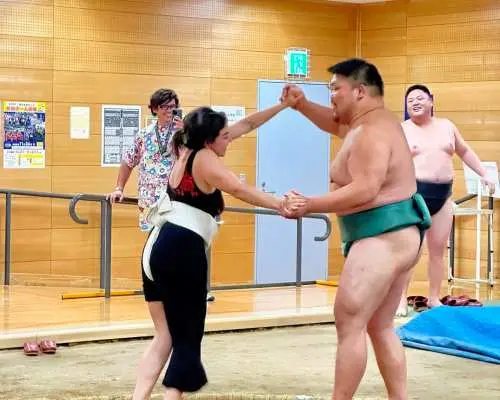
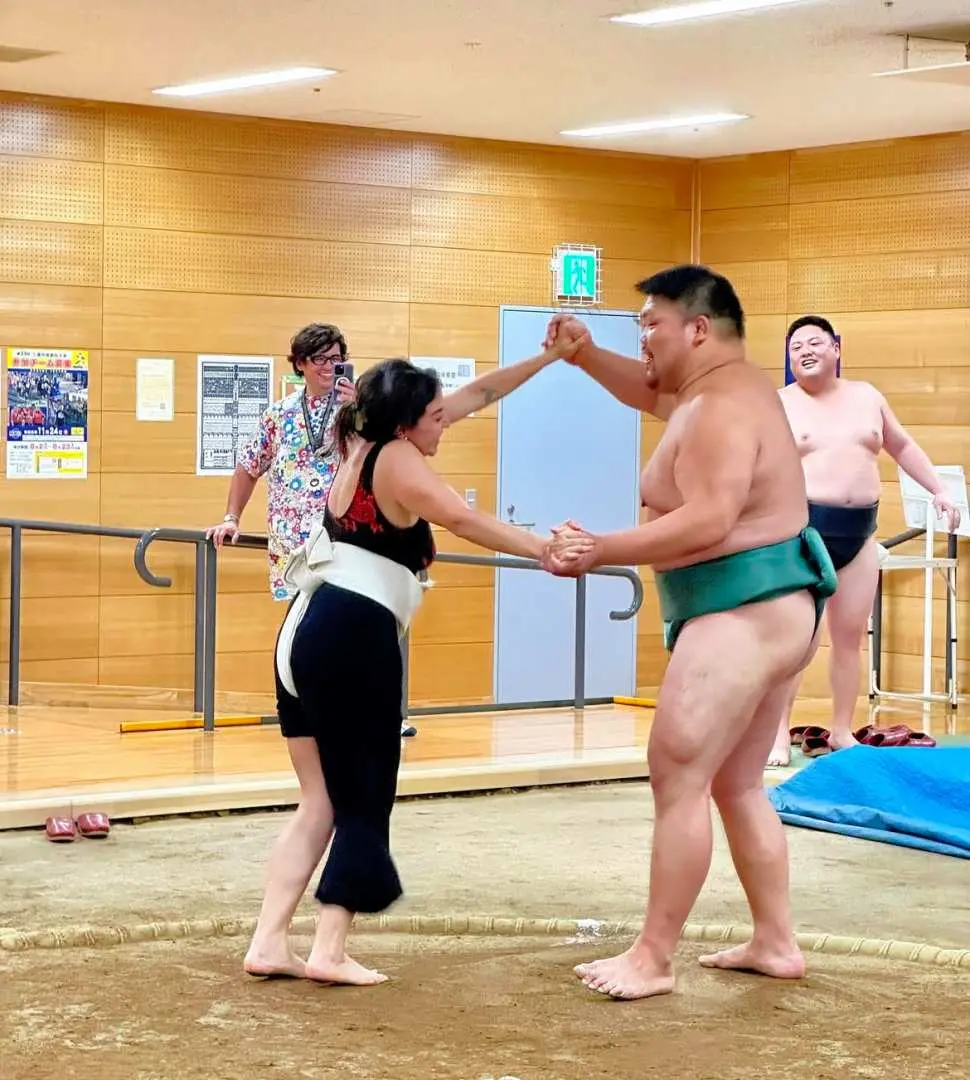
- Put on a mawashi (sumo belt) along with a sumo wrestler and experience sumo in the ring!
- Experience Japanese culture through Japan's national sport, sumo
- You can participate empty-handed with commemorative photos and souvenirs included
- Women and children can participate with peace of mind (experience and observation plans available)
- Held in Tokyo and its suburbs (Saitama, etc.)
Cultural Experiences
| Location | Indoor |
| Minimum participant requirement | 3 travelers |
| Cultural experience type | Sumo experience |
Product Info
What You Can Expect
1 Day
- Meeting time (Morning session: 9:30 / Afternoon session: 13:30)
- After checking in, you will change into your mawashi! *Those who have booked the "observation plan" will only be able to observe.
- Sumo practice experience starts (basic practice, shiko, koshiwari, suriashi) (Morning session: 10:00 / Afternoon session: 14:00)
- Compete against a sumo wrestler! If you win, you'll receive a gift!
- Take a commemorative photo and finish the experience
- After changing clothes, the tour will end. (Morning session: around 12:30 / Afternoon session: around 16:30)



Purchase Notice
[About the venue]
One week before the experience date, we will confirm your reservation from one of the two locations below. We will contact you as soon as it is confirmed.
・Mitaka Central Disaster Prevention Park (Mitaka City, Tokyo)
・Enecle Sports Arena (Soka City, Saitama Prefecture)
*Please note that we may change to other facilities depending on the facility and number of people.
*Please note that cancellation fees will be charged from 10 days prior to the event, regardless of whether the venue has been confirmed or not.
[Minimum number of participants]
If there are less than three participants by one week before the tour, the tour will be cancelled.
Therefore, please note that reservations will only be confirmed once the required number of participants has been reached.
[Sales Target]
If you have health problems such as heart disease, respiratory disease, severe allergies, or exercise restrictions, the sumo experience may not be suitable for you. Please seek medical advice and diagnosis from a doctor before participating.
Please note that we cannot take any responsibility for any injuries or accidents that occur during this experience.
[Number of people we can accommodate]
The number of people that can be accepted may change depending on the capacity of the experience facility. Please note that we may decline your request after you have made a reservation.
Includes/Excludes
Reminders
Please arrive 30 minutes before the start of the session. (Morning session: 9:30 a.m. meeting / Afternoon session: 1:30 p.m. meeting)
If you do not arrive by the meeting time, it will be considered a cancellation without notice and a cancellation fee will be charged.
Please wear comfortable clothes that allow you to move around easily.
Children 4 and under may observe for free, but are not allowed to participate in any activities.
The location will be confirmed one week before the experience date. We will contact you as soon as it is confirmed.
Please note that cancellation fees will be incurred from 10 days prior to the event, regardless of whether the venue has been confirmed or not.
If there are less than three participants by one week before the tour, the tour will be cancelled.
If public transportation is affected by a disaster such as an earthquake, the tour may be canceled at short notice. In that case, no cancellation fee will be charged.
If you have health problems such as heart disease, respiratory disease, severe allergies, or exercise restrictions, the sumo experience may not be suitable for you. Please consult a doctor for advice before participating. Please note that we are not responsible for any injuries or accidents that occur during this experience.
The number of people that can be accepted may change depending on the capacity of the experience facility. Please note that we may decline your request after you have made a reservation.
How to Redeem Your Voucher
How to Use Your Voucher
- Please present the e-voucher on-site
Experience Location
Location Name: Mitaka Central Disaster Prevention Park
Address: 〒181-0004 6-37-1 Shinkawa, Mitaka City, TokyoLocation Name: Enecle Sports Arena
Address: 6-31-1 Sezaki, Soka City, Saitama Prefecture, 340-0022Cancellation Policy
- Cancellations 11 day(s) (inclusive) before the selected date are allowed. Unused orders can be canceled for free
- For cancellations made 8 to 10 days prior to selected date, a cancellation fee of 20% will apply
- For cancellations made 2 to 7 days prior to selected date, a cancellation fee of 30% will apply
- For cancellations made 1 to 1 days prior to selected date, a cancellation fee of 50% will apply
- Cancellation is not allowed between 0–0 days from the selected date. Orders cannot be canceled or modified, and refunds will not be granted.
- Due to time zone differences, the confirmed cancellation date is based on the supplier’s local time. Please allow 2–5 business days to process your cancellation request, after which the cancellation fee will be charged according to the product’s cancellation policy. Once the cancellation is confirmed, you will receive your refund within 14 working days.
FAQ
Participants in the Tokyo sumo practice experience can step onto the sumo ring wearing a mawashi alongside a real sumo wrestler. This unique opportunity allows you to immerse yourself in Japan's national sport. The experience is designed for participation without needing special equipment, as commemorative photos and souvenirs are included to remember your time.
Yes, the sumo practice and observation experience in Tokyo is highly recommended for first-time visitors seeking a unique cultural immersion. It offers a rare chance to engage with Japan's national sport directly, rather than just observing. With provisions for women and children and the inclusion of souvenirs, it provides a memorable and accessible way to enjoy Japanese culture.
Absolutely, the sumo practice experience in Tokyo welcomes international visitors. It is designed to be accessible for a wide range of participants, including women and children, making it a comfortable and engaging activity for diverse guests interested in Japanese culture and sumo.
You can participate in the sumo practice experience empty-handed, as the mawashi (sumo belt) is provided for the in-ring activity. It is recommended to wear comfortable clothing for arrival and departure, as you will change into the mawashi for the core experience. No other specific equipment is required.
Yes, the Tokyo sumo experience is designed with provisions for women and children, ensuring they can participate with peace of mind. Both hands-on experience and observation-only plans are available, allowing families and individuals to choose their preferred level of involvement while safely enjoying Japan's national sport.
As part of the Tokyo sumo practice experience, participants receive commemorative photos to capture their unique moments on the sumo ring. Additionally, a special souvenir is included, allowing you to take home a tangible reminder of your immersion in Japanese sumo culture.
You can easily reserve your spot for the sumo practice experience in Tokyo through KKday. Booking via KKday offers the convenience of managing your reservations in one place, with clear steps for selecting your preferred date and time, ensuring a smooth and straightforward process to secure your participation in this unique cultural activity.
The sumo experience in Tokyo offers profound cultural insights beyond just physical activity. Participants learn about sumo as Japan's national sport, understanding its deep historical roots, rituals, and the spirit of respect and discipline central to its practice. It's an opportunity to connect with an integral part of Japanese heritage.
Get Help


