
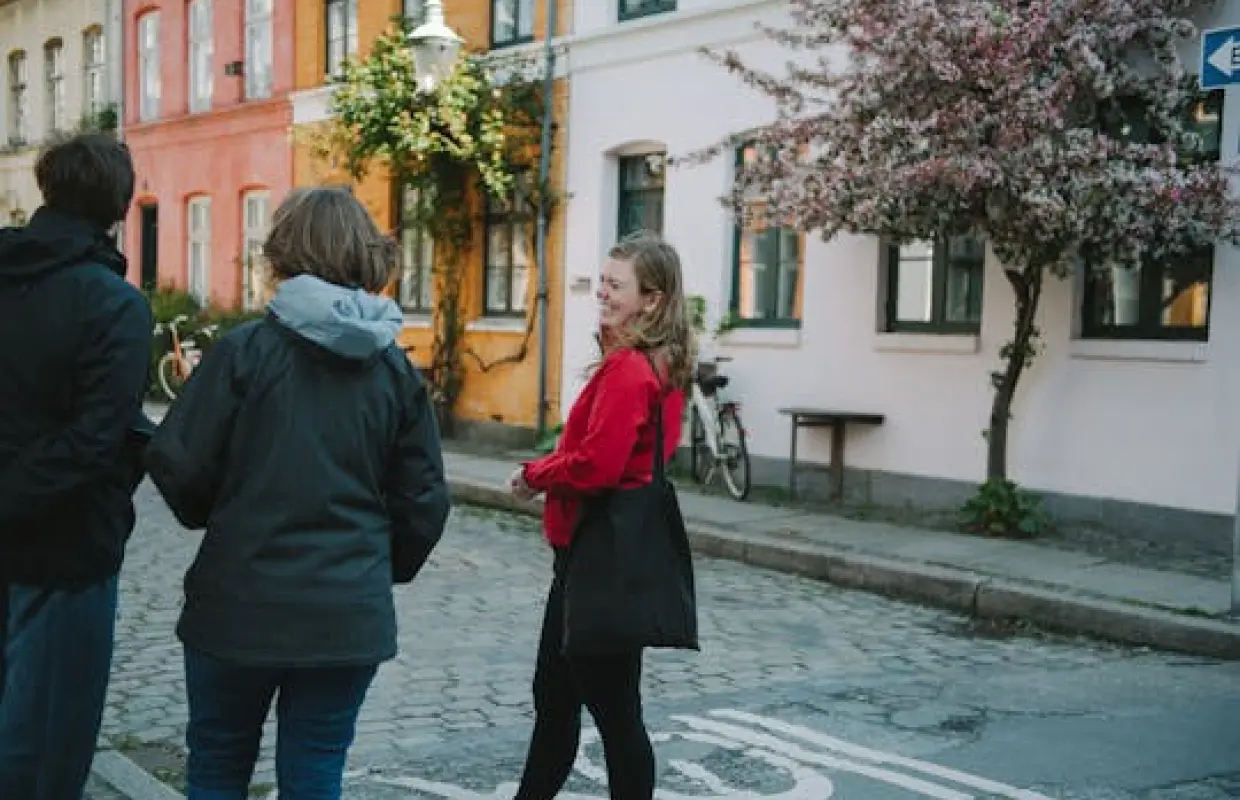


Hygge and happiness morning tour of Copenhagen
- Get a better understanding of Danish culture and the importance of hygge as you visit city sights and savour Danish treats that simply scream hygge.
Package Options


Product Info
Purchase Notice
Duration: Lasts up to 3 hours 30 minutes
Reminders
Please refer to your voucher for final information regarding meeting points, pick-up locations, and pick-up time
Meeting point description: Please meet your guide in front of the statue in Nyboder across from Krokodillegade 21. It is located at the intersection between Øster Voldgade and Kronprinsessegade.(Krokodillegade 21, 1350 Copenhagen, Denmark)
Maximum tour capacity: 10 guests
Please wear comfortable shoes for walking
Bring an umbrella and suitable clothing in case of rain
The tour starts and ends in two different locations, so you are not recommended to arrive by bike. The experience wraps up in the heart of the city right next to the main pedestrian street Strøget
FAQ
1. What iconic landmarks are typically visited on a morning walking tour in Copenhagen?
A morning walking tour in Copenhagen often includes iconic sights such as the colorful houses of Nyhavn, the royal residence of Amalienborg Palace, and the beloved Little Mermaid statue. You may also explore areas around Christiansborg Palace or stroll through historic Strøget, gaining insights into Danish culture and the concept of hygge.
2. Is Copenhagen's city center easily explorable on foot for visitors taking a guided tour?
Copenhagen's city center is exceptionally walkable, making it ideal for guided tours. Most major attractions are concentrated within a compact area, allowing visitors to comfortably navigate between landmarks like Nyhavn, Amalienborg Palace, and Christiansborg Palace on foot. The city's flat terrain and pedestrian-friendly streets enhance the experience, offering an intimate way to discover its charm.
3. What is the customary tipping etiquette for local guides on a walking tour in Copenhagen?
Tipping in Denmark is not as customary or universally expected as in some other countries, but it is always appreciated for excellent service. For a guided walking tour, if you feel your guide has provided a particularly insightful and enjoyable experience, a small token of appreciation is appropriate. The amount is entirely at your discretion and based on your satisfaction.
4. Which cultural highlights and charming neighborhoods are essential to experience during a Copenhagen visit?
Essential cultural highlights in Copenhagen include the vibrant Nyhavn waterfront, the royal grandeur of Amalienborg Palace, and the historical significance of Christiansborg Palace. Exploring the charming cobbled streets of the Latin Quarter or the picturesque area around Rosenborg Castle offers a deeper dive into the city's unique blend of history and contemporary living. These areas often showcase the Danish concept of hygge.
5. Beyond walking, what are convenient local transportation options for exploring Copenhagen's various districts?
Copenhagen boasts an efficient public transportation system. The metro, S-trains, and buses cover the entire city and surrounding areas, providing convenient access to various districts. Cycling is also a popular and eco-friendly way to get around, with numerous bike rental options available throughout the city. Taxis are readily available for direct routes.
6. Are public transportation services, such as Copenhagen's metro and buses, free for tourists?
Public transportation services in Copenhagen, including the metro, S-trains, and buses, are not free for tourists. Visitors need to purchase tickets or a travel pass to use these services. Options include single-ride tickets, multi-day city passes, or the Copenhagen Card, which combines transport with attraction admissions, offering various benefits for travelers.
7. Are international ride-hailing services like Uber or Lyft available for transport in Copenhagen?
International ride-hailing services such as Uber and Lyft are generally not available for passenger transport in Copenhagen. The city's taxi services are regulated, and a robust public transport network serves most needs. For convenient door-to-door service, traditional taxis are the primary option, readily available throughout the city.
8. How extensive and accessible is Copenhagen's public transport network for getting around the city?
Copenhagen's public transport network is highly extensive and very accessible, connecting all major attractions, neighborhoods, and the airport efficiently. The metro operates 24/7, and buses run frequently. Stations are well-marked, and most services are wheelchair-friendly. Digital apps are available for planning routes and purchasing tickets, making city navigation straightforward for visitors.


