
Get Exclusive App Deals
Product #151109
![[Guaranteed Departure for Solo Traveler] One-day trip to Nara, Kyoto, Japan | Nara Park | Todaiji Temple | Kiyomizudera Temple | Fushimi Inari Taisha Shrine | Yasaka Shrine | Hanamakoji | 23-year-old Saka [9-person small group | hotel pick-up]](https://image.kkday.com/v2/image/get/c_fill%2Ch_800%2Cq_55%2Ct_webp%2Cw_1240/s1.kkday.com/product_151109/20241204114143_aeq0C/jpg)
![[Guaranteed Departure for Solo Traveler] One-day trip to Nara, Kyoto, Japan | Nara Park | Todaiji Temple | Kiyomizudera Temple | Fushimi Inari Taisha Shrine | Yasaka Shrine | Hanamakoji | 23-year-old Saka [9-person small group | hotel pick-up]](https://image.kkday.com/v2/image/get/c_fill%2Ch_400%2Cq_55%2Ct_webp%2Cw_500/s1.kkday.com/product_151109/20241105120629_EvV3l/jpg)
![[Guaranteed Departure for Solo Traveler] One-day trip to Nara, Kyoto, Japan | Nara Park | Todaiji Temple | Kiyomizudera Temple | Fushimi Inari Taisha Shrine | Yasaka Shrine | Hanamakoji | 23-year-old Saka [9-person small group | hotel pick-up]](https://image.kkday.com/v2/image/get/c_fill%2Ch_400%2Cq_55%2Ct_webp%2Cw_500/s1.kkday.com/product_151109/20241105120625_7fliR/jpg)
![[Guaranteed Departure for Solo Traveler] One-day trip to Nara, Kyoto, Japan | Nara Park | Todaiji Temple | Kiyomizudera Temple | Fushimi Inari Taisha Shrine | Yasaka Shrine | Hanamakoji | 23-year-old Saka [9-person small group | hotel pick-up]](https://image.kkday.com/v2/image/get/c_fill%2Ch_400%2Cq_55%2Ct_webp%2Cw_500/s1.kkday.com/product_151109/20241105120626_fnvm9/jpg)
![[Guaranteed Departure for Solo Traveler] One-day trip to Nara, Kyoto, Japan | Nara Park | Todaiji Temple | Kiyomizudera Temple | Fushimi Inari Taisha Shrine | Yasaka Shrine | Hanamakoji | 23-year-old Saka [9-person small group | hotel pick-up]](https://image.kkday.com/v2/image/get/c_fill%2Ch_400%2Cq_55%2Ct_webp%2Cw_500/s1.kkday.com/product_151109/20250206104649_Zsgix/jpg)
KKday Marketplace
[Guaranteed Departure for Solo Traveler] One-day trip to Nara, Kyoto, Japan | Nara Park | Todaiji Temple | Kiyomizudera Temple | Fushimi Inari Taisha Shrine | Yasaka Shrine | Hanamakoji | 23-year-old Saka [9-person small group | hotel pick-up]
4.8Excellent
Booking confirmed within 2 working day(s)
Duration:10 hour(s)
Guided language: English / 日本語 / 中文
Free cancellation 4 day(s) prior to experience date
Please present the e-voucher on-site
【Itinerary Introduction】
Note: Starting from April 1st, due to relevant government laws and regulations, drivers must strictly abide by restrictions on working hours and rest times. The duration of each attraction has been adjusted, so please pay attention!
・07:30-08:30 Door-to-door pick-up service is not provided for hotels/B&Bs within the Osaka Circle Line that exceed the designated area.
①Reference for door-to-door pick-up areas [Naniwa Ward, Chuo Ward, Nishi Ward, Tennoji Ward, Umeda Area]
②The pick-up order and time will be arranged by the driver based on the distance of the ride and other circumstances. Please understand and cooperate with each other and follow the driver's arrangements.
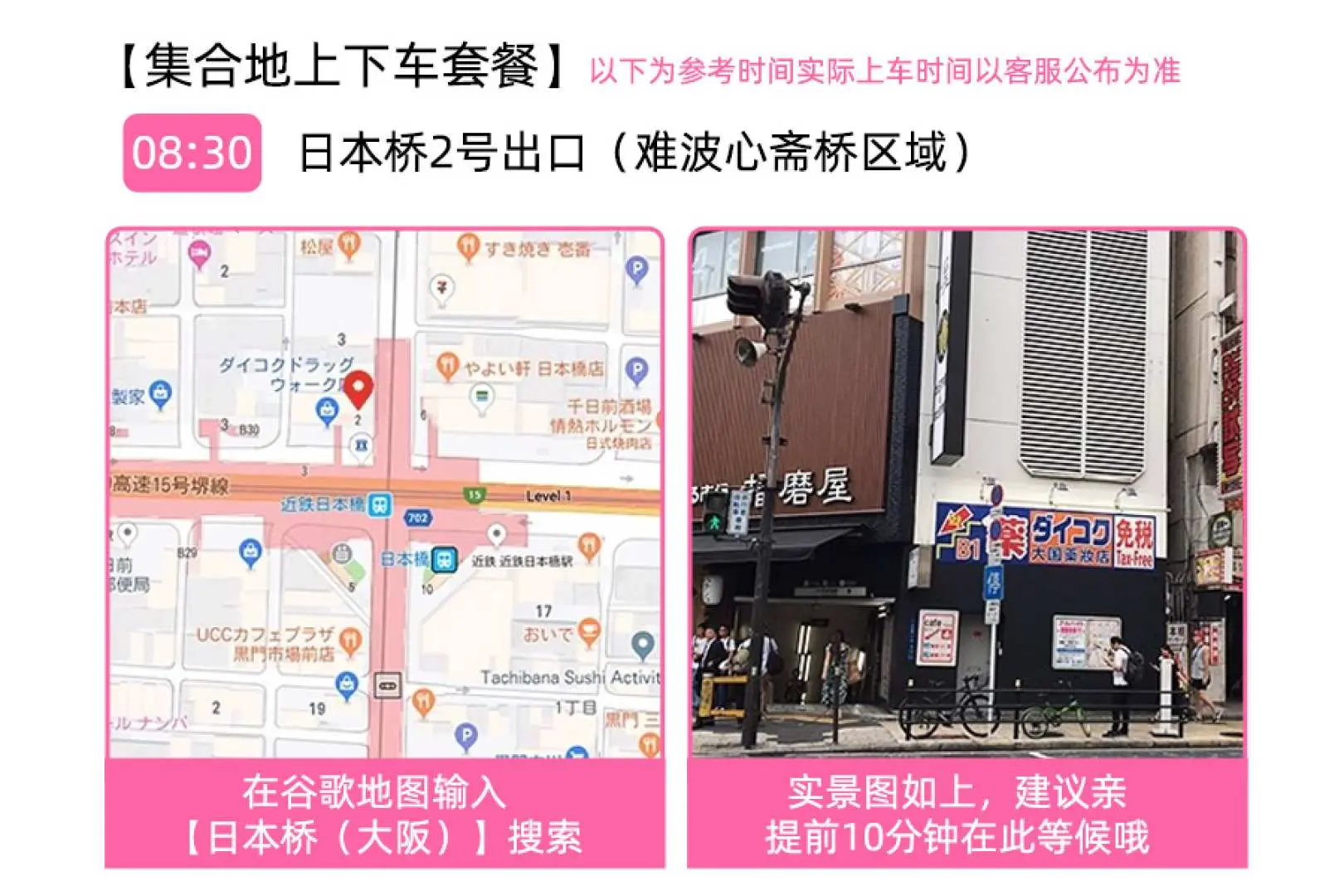
・08:30 Meet at Nihonbashi Exit 2 (Namba Shinsaibashi area) (Note: A departure notice will be sent to the email address in the order notes the night before departure, please check it and arrive at the meeting place 10 minutes before the meeting time)
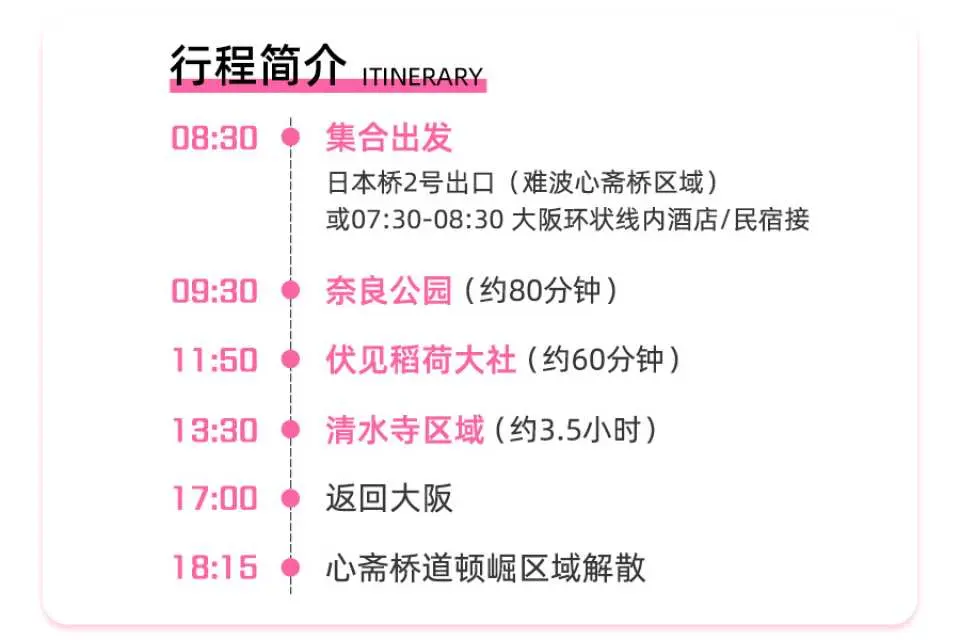
・09:30 Nara Park + Todaiji Temple ・12:00 Fushimi Inari Taisha Shrine ・13:30 Kiyomizudera Temple + Sannenzaka Ninnezaka + Ishibakakoji + Gion + Hanamikoji + Yasaka Shrine ・17:00 Return to Osaka・The tour ends in Osaka at 18:00
Note: Starting from April 1st, due to relevant government laws and regulations, drivers must strictly abide by restrictions on working hours and rest times. The duration of each attraction has been adjusted, so please pay attention!
・07:30-08:30 Door-to-door pick-up service is not provided for hotels/B&Bs within the Osaka Circle Line that exceed the designated area.
①Reference for door-to-door pick-up areas [Naniwa Ward, Chuo Ward, Nishi Ward, Tennoji Ward, Umeda Area]
②The pick-up order and time will be arranged by the driver based on the distance of the ride and other circumstances. Please understand and cooperate with each other and follow the driver's arrangements.
・08:30 Meet at Nihonbashi Exit 2 (Namba Shinsaibashi area) (Note: A departure notice will be sent to the email address in the order notes the night before departure, please check it and arrive at the meeting place 10 minutes before the meeting time)
・09:30 Nara Park + Todaiji Temple ・12:00 Fushimi Inari Taisha Shrine ・13:30 Kiyomizudera Temple + Sannenzaka Ninnezaka + Ishibakakoji + Gion + Hanamikoji + Yasaka Shrine ・17:00 Return to Osaka・The tour ends in Osaka at 18:00
Product Info
What You Can Expect
Duration: 10 hour(s)
1 Day
- .
- 07:30-08:30 Door-to-door pick-up at hotels/B&Bs within the Osaka Circle Line
- 08:30 Meet at Nihonbashi Exit 2 (Namba Shinsaibashi area)
- .
- Nara Park + Todaiji Temple
- .
- .
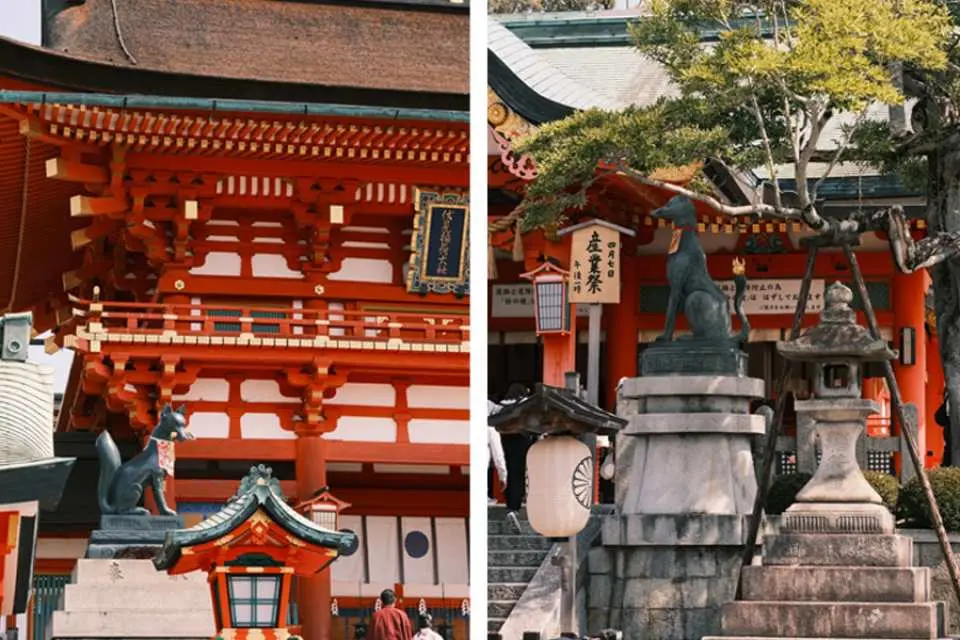
- Fushimi Inari Taisha Shrine
- .
- Kiyomizudera Temple + Sannenzaka Ninnezaka + Ishibekojido + Gion + Hanamikoji + Yasaka Shrine
- .
- .
- .
- .
- 17:00 Return to Osaka
- 18:00 Disband in Osaka








Purchase Notice
・The minimum number of people in a group is 4. If the number of participants does not reach the minimum number of people in the group specified above, the tour will be canceled and an email notification of cancellation will be sent 2-3 days before the departure date.
・In the event of adverse weather conditions such as typhoons or snowstorms, a decision will be made one day before departure (18:00 local time) whether the tour will be canceled or not, and will be notified by email at any time.
・Please be sure to arrive at the designated location 10 minutes before. To avoid delaying your subsequent itinerary, no latecomers will be accommodated.
・After the order is confirmed, the date cannot be changed arbitrarily, and you will be responsible for any losses incurred.
・During the trip, please carry your passport and valuables with you and keep them safe. If they are lost, stolen, damaged, etc., you are responsible for your own responsibility.
・The elderly, patients with cardiovascular diseases such as high blood pressure and heart disease, pregnant women, etc. are recommended to be accompanied by relatives.
・This trip does not accept solo registration from customers under the age of 18. If you want to register, please have your guardian sign up for this trip together.
・This itinerary is a fixed itinerary for carpooling. Customers who are also participating in this itinerary must abide by the stay time at each attraction and follow the driver's arrangements.
・If you fail to participate or cancel the trip due to personal problems, lateness, etc., no refund will be given. Please note that.
・If you leave the group on your own during the trip, the transaction will be deemed invalid and no fees will be refunded. And if this results in personal or property safety, you must bear the consequences yourself.
・The arrival time of each trip may change due to traffic conditions, weather, festivals, and crowds on the day. If the trip is delayed or canceled due to the aforementioned or other force majeure factors, please forgive me. We will not request a refund for this reason.
・Please wear light, travel-friendly clothing and shoes to participate in this tour.
・Please be sure to abide by local Japanese laws and regulations, and do not carry items prohibited by Japanese law to avoid violating the law and affecting your own rights and interests.
・When moving freely, you should pay attention to your own personal and property safety. If you fail to listen to advice and an accident occurs or causes losses, you will be responsible for the consequences.
・Pregnant women, people with heart disease, fear of heights and other special groups are not suitable to participate in this tour. There is a risk of being rejected, so please book with caution.
・Senior citizens aged 70 years and above (inclusive) must be in good health and suitable to travel, and must be accompanied by family members or friends over the age of 22 throughout the trip.
・In the event of adverse weather conditions such as typhoons or snowstorms, a decision will be made one day before departure (18:00 local time) whether the tour will be canceled or not, and will be notified by email at any time.
・Please be sure to arrive at the designated location 10 minutes before. To avoid delaying your subsequent itinerary, no latecomers will be accommodated.
・After the order is confirmed, the date cannot be changed arbitrarily, and you will be responsible for any losses incurred.
・During the trip, please carry your passport and valuables with you and keep them safe. If they are lost, stolen, damaged, etc., you are responsible for your own responsibility.
・The elderly, patients with cardiovascular diseases such as high blood pressure and heart disease, pregnant women, etc. are recommended to be accompanied by relatives.
・This trip does not accept solo registration from customers under the age of 18. If you want to register, please have your guardian sign up for this trip together.
・This itinerary is a fixed itinerary for carpooling. Customers who are also participating in this itinerary must abide by the stay time at each attraction and follow the driver's arrangements.
・If you fail to participate or cancel the trip due to personal problems, lateness, etc., no refund will be given. Please note that.
・If you leave the group on your own during the trip, the transaction will be deemed invalid and no fees will be refunded. And if this results in personal or property safety, you must bear the consequences yourself.
・The arrival time of each trip may change due to traffic conditions, weather, festivals, and crowds on the day. If the trip is delayed or canceled due to the aforementioned or other force majeure factors, please forgive me. We will not request a refund for this reason.
・Please wear light, travel-friendly clothing and shoes to participate in this tour.
・Please be sure to abide by local Japanese laws and regulations, and do not carry items prohibited by Japanese law to avoid violating the law and affecting your own rights and interests.
・When moving freely, you should pay attention to your own personal and property safety. If you fail to listen to advice and an accident occurs or causes losses, you will be responsible for the consequences.
・Pregnant women, people with heart disease, fear of heights and other special groups are not suitable to participate in this tour. There is a risk of being rejected, so please book with caution.
・Senior citizens aged 70 years and above (inclusive) must be in good health and suitable to travel, and must be accompanied by family members or friends over the age of 22 throughout the trip.
Includes/Excludes
- Vehicle service fees listed in the itinerary
- vehicle fuel costs
- Tolls
- Parking Fee
- Driver service fee
- Lunch
- Attraction tickets
- Other personal expenses
- Other costs not mentioned above
How to Redeem Your Voucher
How to Use Your Voucher
- Please present the e-voucher on-site
Meeting Point
Location Name: Nihonbashi Exit 2 (Namba Shinsaibashi area)
Address: Nihonbashi 1-3-6, Chuo-ku, Osaka-shi, Osaka PrefectureCancellation Policy
- Cancellations 4 day(s) (inclusive) before the selected date are allowed. Unused orders can be canceled for free
- For cancellations made 2 to 3 days prior to selected date, a cancellation fee of 50% will apply
- Cancellation is not allowed between 0–1 days from the selected date. Orders cannot be canceled or modified, and refunds will not be granted.
NOTE
- Due to time zone differences, the confirmed cancellation date is based on the supplier’s local time. Please allow 2–5 business days to process your cancellation request, after which the cancellation fee will be charged according to the product’s cancellation policy. Once the cancellation is confirmed, you will receive your refund within 14 working days.
Get Help


Contact Merchant


