


Da Nang Family Cooking Class | Vietnam
Get the opportunity to learn about Vietnamese cuisine and culture when you attend this fun cooking class on your trip to Da Nang!
- Receive step-by-step instructions on how to cook simple yet delicious authentic Vietnamese cuisine from your friendly local family host
- Take a hands-on approach to your lesson, then sample your own creations during lunch or dinner
- Gain insight into local life, culture, and stories from your host, who's also fluent in English and Chinese
Package Options
Cultural Experiences
| Location | Indoor |
| Cuisine type | Vietnamese cuisine |
Product Info
What You Can Expect
1 Day
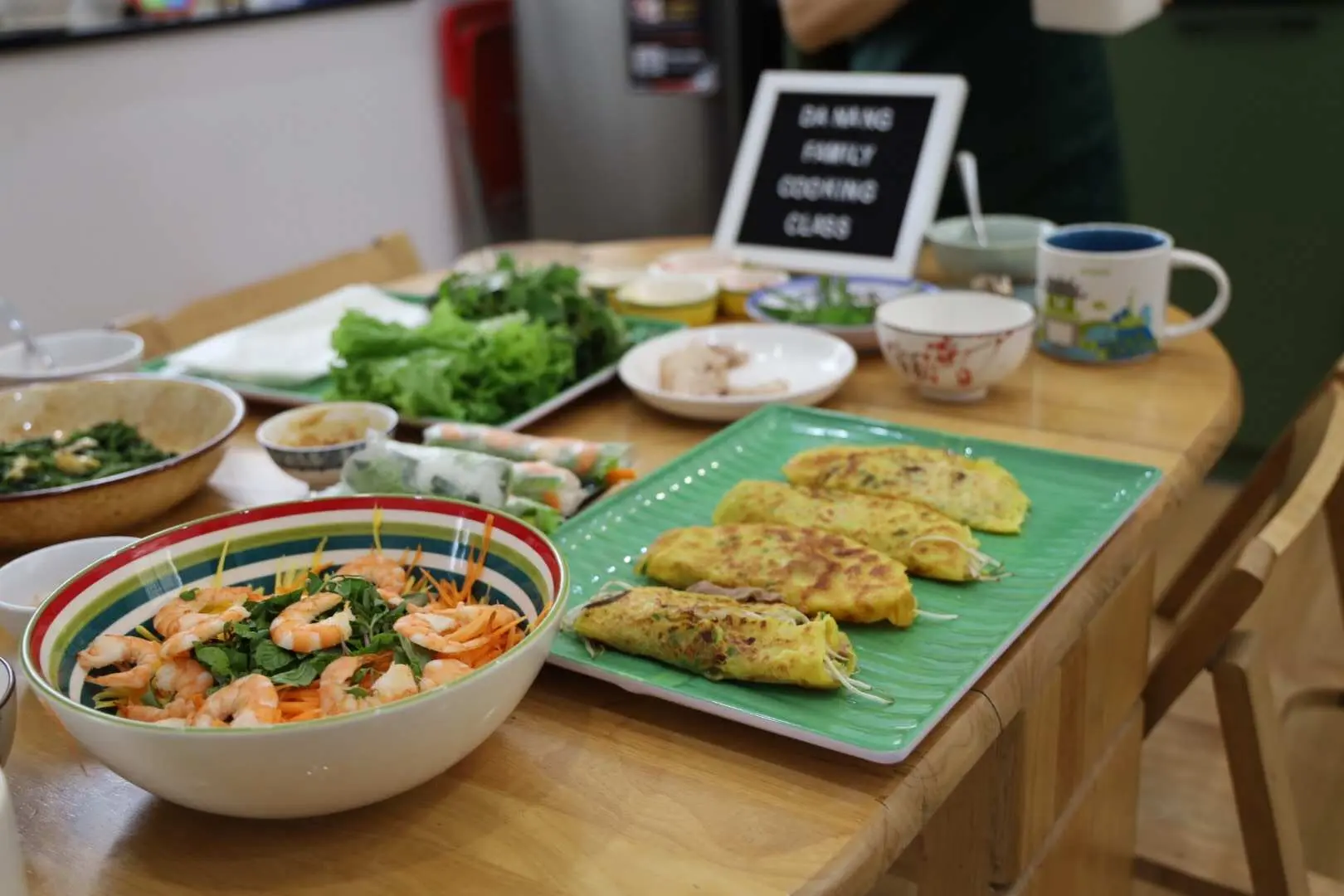
- Learn to cook simple yet delicious dishes from around Vietnam, like seasonal vegetable salad from Saigon, pho spring rolls from Ha Noi, and Vietnamese pancakes or fried morning glory from Hoi An with a local family
- Gain insights and stories about local life, family, culture from your host who will be able to communicate with you in English and Mandarin
- The cooking class takes around 2 and a half hours. After dining on your delicious lunch or dinner, head over to the nearby night market, Asia Park, or Lotte Mart. Or call for a taxi to take you from the local family home straight to your accommodation




Important Info
Reminders
A minimum of 2 traveler(s) are required for the tour to depart. If the number of participants does not reach the minimum requirement, the tour will be canceled. An email regarding tour cancellation will be sent 1 day(s) before the departure date
Please check your email or WhatsApp for the operator’s confirmation message
No refunds will be given for no-shows
How to Redeem Your Voucher
How to Use Your Voucher
- Please present the e-voucher on-site
Meeting Point
Location Name: Sala Coffee
Address: 61 Hàn Thuyên, Hòa Cường, Đà Nẵng, Việt NamLocation Name: Sala Coffee
Address: 61 Hàn Thuyên, Hòa Cường, Đà Nẵng, Việt NamFAQ
Da Nang is celebrated for its fresh seafood and central Vietnamese specialties. Travelers often learn to prepare iconic dishes like My Quang (Quang noodles), Banh Xeo (sizzling savory pancakes), Nem Lui (lemongrass pork skewers), and fresh spring rolls (Goi Cuon). These classes emphasize local ingredients and the distinctive balance of sweet, sour, salty, and spicy flavors, offering a deep dive into Da Nang's rich culinary heritage.
A family host in a Da Nang cooking class offers personal insights into Vietnamese traditions, family customs, and daily life. They share stories behind specific dishes, local ingredients, and the cultural significance of food in Vietnamese society. This direct interaction provides a deeper understanding beyond just recipes, often enhancing the overall cultural immersion and giving participants a genuine taste of local life and hospitality.
Da Nang family cooking classes frequently teach popular Vietnamese dishes that are accessible and delicious for various skill levels. Common examples include spring rolls (both fresh and fried), Banh Xeo (Vietnamese savory pancakes), Bun Cha (grilled pork with noodles), and various stir-fried preparations. These selections allow participants to learn fundamental techniques applicable to many Vietnamese recipes, enabling them to recreate authentic flavors at home.
A typical Da Nang family cooking class, including the hands-on cooking session and the subsequent meal where you sample your creations, usually lasts between 2.5 to 3.5 hours. This duration allows ample time for ingredient preparation, receiving step-by-step instruction, cooking multiple dishes, and enjoying the freshly prepared meal together in a relaxed, family-like setting.
The hands-on approach in a Da Nang family cooking class is highly beneficial because it allows participants to directly engage with ingredients and techniques, fostering practical culinary skills. This direct experience builds confidence in cooking new dishes and provides a deeper sensory understanding of Vietnamese flavors, textures, and aromas. It transforms theoretical learning into tangible, memorable culinary expertise.
Yes, Da Nang family cooking classes are generally designed to accommodate participants with varying levels of cooking experience, from absolute beginners to more seasoned cooks. Instructors provide clear, step-by-step guidance, making traditional Vietnamese dishes approachable. The focus is on learning fundamental techniques in a supportive environment, ensuring everyone can participate effectively and enjoy the process of creating authentic cuisine.
In a Da Nang Vietnamese cooking class, participants learn essential cooking methods such as stir-frying, deep-frying (for dishes like spring rolls), and steaming. Traditional techniques often demonstrated include precise knife skills for preparing fresh vegetables and herbs, balancing the complex flavor profiles unique to Vietnamese cuisine, and mastering the art of making crucial dipping sauces like Nuoc Cham from scratch, which enhances many dishes.
Da Nang family cooking classes extensively use fresh, locally sourced ingredients to highlight authentic flavors. Common items explored include a wide array of aromatic herbs like basil, mint, and cilantro, various seasonal local vegetables, rice noodles, fresh seafood, and different cuts of pork or chicken. Participants also learn about specific Vietnamese spices and essential condiments such as fish sauce and shrimp paste, integral to the local diet.
Get Help


