

An Irish Famine Story, the Jeanie Johnston Entrance and Tour
- Take a journey back in time with your entrance to the Jeanie Johnston Tall ship and discover the grip trip, listening to the crew and passengers stories.
Package Options
Product Info
Purchase Notice
Reminders
Please refer to your voucher for final information regarding meeting points, pick-up locations, and pick-up time
Meeting point description: The Jeanie Johnston: An Irish Famine Story.(The Jeanie Johnston: An Irish Famine Story, Custom House Quay, North Dock, Dublin 1, Ireland)
Not suitable for:People with limited mobility
How to Redeem Your Voucher
How to Use Your Voucher
- Please present the e-voucher on-site
Validity Period
- The voucher must be used on the selected date and within operating hours; Invalid after expiration
FAQ
1. Where is the Jeanie Johnston Famine Ship currently docked and open for tours?
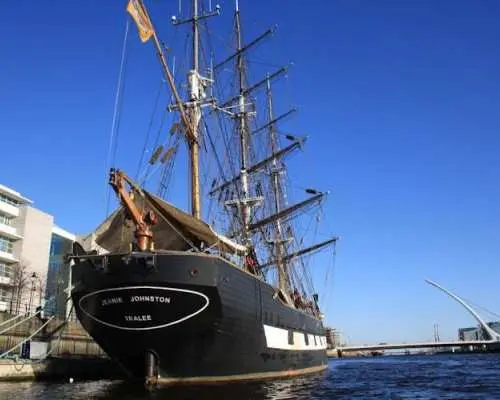
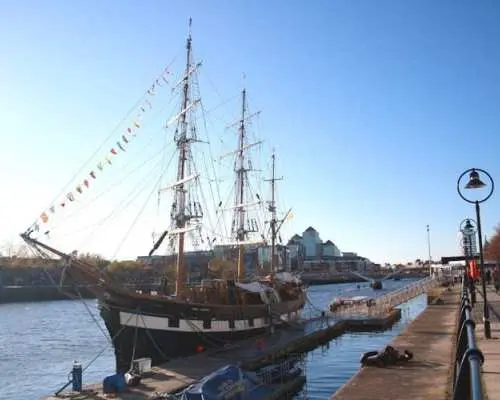
The Jeanie Johnston Famine Ship is permanently docked on the Custom House Quay in Dublin City Centre, Ireland. It is situated on the River Liffey, close to the Samuel Beckett Bridge, making it easily accessible for visitors exploring the city's historical sites and maritime heritage.
2. How long does the guided tour of the Jeanie Johnston Famine Ship typically last?
The guided tour of the Jeanie Johnston Famine Ship typically lasts approximately 50 to 60 minutes. This duration allows visitors ample time to explore the ship's decks and interior, learning about its history and the stories of its passengers and crew from knowledgeable guides.
3. What key experiences or insights can visitors gain from touring the Jeanie Johnston Famine Ship?
Visitors touring the Jeanie Johnston gain a poignant understanding of the Irish Famine era and the transatlantic voyages. Through expert narration, they experience the living conditions, challenges, and hopes of the emigrants and crew. The tour offers insights into historical maritime life and the resilience of those seeking a new life, making history tangible and emotionally resonant.
4. What is the historical fate of the original Jeanie Johnston Famine Ship?
The original Jeanie Johnston did not sink during its famine voyages, making it unique among many emigrant ships of the era. After its service transporting emigrants, it was eventually converted into a cargo ship. The vessel was ultimately lost in the North Atlantic in 1858 due to waterlogging while en route from Quebec to Limerick with a cargo of timber, not during its passenger service.
5. How did the Jeanie Johnston's passenger journey compare to other 'coffin ships' during the Irish Famine?
The Jeanie Johnston stands out significantly from the notorious "coffin ships" of the Irish Famine era. Remarkably, it completed 16 voyages to North America between 1847 and 1855, carrying over 2,500 emigrants, without a single death among its passengers. This was largely due to the ship's stringent hygiene practices, dedicated medical care provided by its doctor, and the captain's commitment to passenger welfare, a stark contrast to the high mortality rates on other vessels.
6. What are the notable design features or unique aspects of the Jeanie Johnston Famine Ship?
The Jeanie Johnston is a replica of a three-masted barque, characterized by its traditional tall ship design, including towering masts and intricate rigging. Its design was optimized for transatlantic voyages, providing sturdy construction capable of enduring harsh ocean conditions. Inside, visitors can observe the cramped but meticulously recreated living quarters, reflecting the conditions endured by emigrants and contrasting with the more spacious crew areas.
7. What stories about the crew and passengers are highlighted during the Jeanie Johnston Famine Ship tour?
The tour vividly brings to life the individual stories of both the crew and the emigrant passengers who sought a new life across the Atlantic. Guides share personal anecdotes, challenges faced during the voyage, and hopes for the future, drawing from historical records and letters. These narratives emphasize the human dimension of the Famine and emigration, offering a powerful and empathetic perspective on this significant period of Irish history.
8. What was the primary purpose of the Jeanie Johnston Famine Ship's voyages to North America?
The primary purpose of the Jeanie Johnston's voyages was to transport Irish emigrants fleeing the Great Famine to North America, primarily Quebec, Canada, and later Baltimore, USA. It served as a vital, though often arduous, link for thousands seeking escape from poverty and starvation, offering passage to a new beginning across the Atlantic during a critical period in Irish history.


