


A Day Trip to Kyoto and Nara, Japan, to Discover Hidden Cherry Blossom Viewing Spots (English Guided Tour) | Cherry Blossom Tour + Healthy Local Vegetable Buffet - Departing from Kyoto
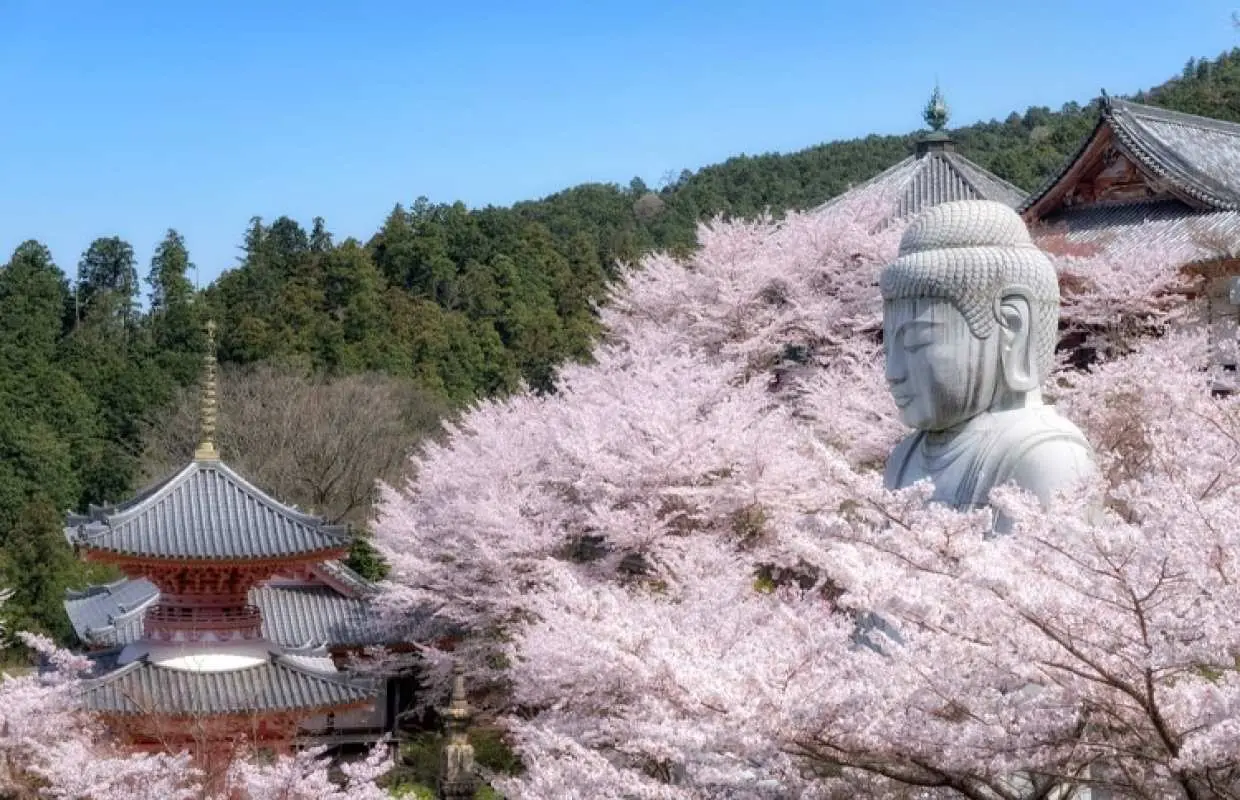
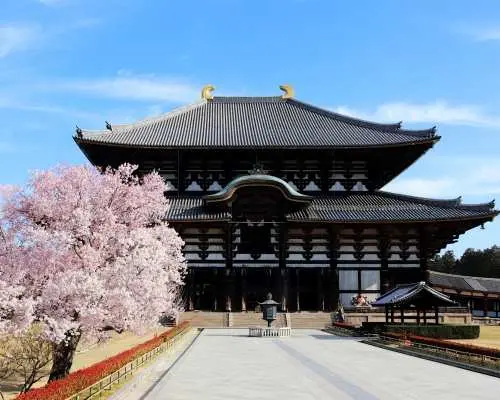
- The spring-limited cherry blossom viewing route includes visits to the Great Buddha of Tsubosaka-ji Temple, surrounded by cherry blossoms, and the historically significant Great Buddha of Todai-ji Temple.
- Back-cut Embankment is a 1.4-kilometer-long stretch of Somei Yoshino cherry blossom forest, which has been repeatedly rated as one of the must-visit cherry blossom viewing spots in the Kansai region, and is a spectacular sight limited to spring.
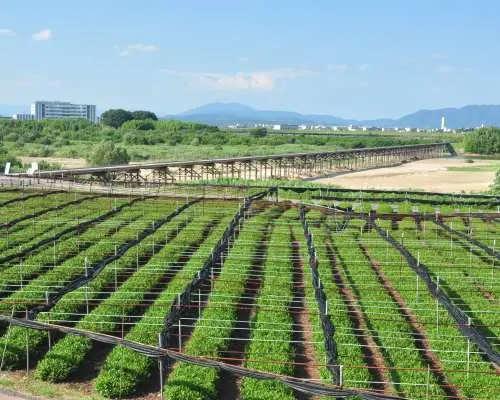
- The tour will take you to visit the traditional "Nagashibashi" (flowing bridge), a symbol of wisdom in disaster prevention and mitigation, which was also featured in the Japan Pavilion at the Osaka-Kansai Expo.
- Nara Park, adjacent to the Great Buddha of Todai-ji Temple, boasts approximately 1,700 cherry blossom trees in full bloom, offering a unique landscape where deer, cherry blossoms, and historical buildings intertwine to create Nara's distinctive scenery.
Sightseeing Tours
| Tour Type | Shared tour |
| Transportation method | Transfer from meeting point |
| Departure Time | Standard Departure (8-9 am) |
| Minimum participant requirement | 25 travelers |
| Tour types | Guided tour |
| Meal arrangement | Lunch included |
| Family-friendly | Free for children under 6 (no seat) |
| Seasonal | Spring Cherry Blossom |
| Sightseeing type | Natural sights, Temples & shrines, Historic site tour, Bus tour |
| Transport | Bus tour |
Product Info
The content of this product is provided by machine translation and may not reflect the actual information, please take this into consideration before booking.


The Somei Yoshino cherry blossom forest stretches for about 1.4 kilometers and is one of the must-visit cherry blossom viewing spots in the Kansai region. Please enjoy the beautiful scenery, which is only available in spring.


At the Japan Pavilion during the Osaka-Kansai Expo, the "Flowing Bridge" will be introduced as a smart solution for disaster prevention and mitigation. This bridge's planks float with the rising water levels to reduce damage and can be recycled and repaired.


This restaurant uses plenty of fresh, safe vegetables from local farmers, specializing in healthy and delicious home-style cooking (obanzai). Their shabu-shabu with domestically produced pork is also excellent! Lunch is served buffet style, allowing you to enjoy your favorite dishes to your heart's content.

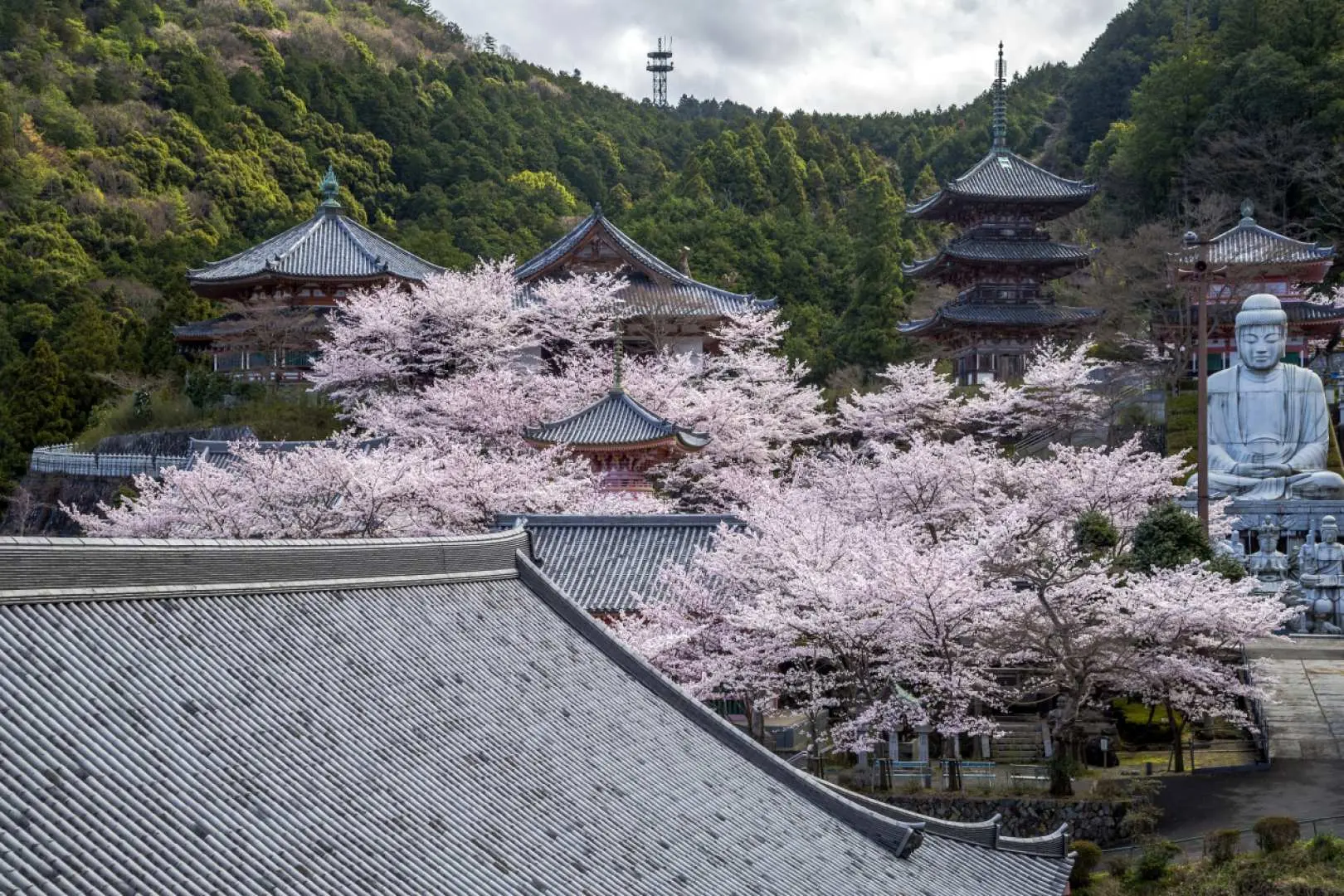
Amidst the blooming cherry blossoms, the three-story pagoda and the main hall appear to float, creating a spectacular sight, hence the name "Sakura Cloud Temple." The "Sakura Buddha," surrounded by cherry blossoms, has also become a popular new cherry blossom viewing spot in Nara. Furthermore, this is also a temple dedicated to the principal image of Kannon Bodhisattva, renowned for its efficacy in treating eye ailments.


Nara Park, located at the foot of Mount Wakakusa and adjacent to the Great Buddha of Todai-ji Temple, is a historically significant scenic spot. Approximately 1,300 wild deer inhabit the park, attracting numerous domestic and international tourists. The park boasts about 1,700 cherry blossom trees on its flat ground alone, and it has been selected as one of the "100 Famous Cherry Blossom Spots in Japan."
Purchase Notice
- Due to the influence of climate and natural conditions, the flowering period may not be exactly the same as the itinerary. Please be aware of this before making a reservation.
【Travel Terms and Conditions】
Departure point and destination: Kyoto and Nara
Trip duration: Same-day round trip
Transportation: Air-conditioned comfort bus
Bus Company Name: Keihan Bus Co., Ltd.
Meals: Breakfast 0 times / Lunch 1 time / Dinner 0 times
Accommodation: None
Minimum group size: 25 people
Accompanying personnel: None (no tour leader)
English-speaking tour guide: 1 person
Travel planning/operation company
Operating Company Name: Keihan Bus Co., Ltd.
Company Address: 5 Minami-Ishida-cho, Higashikujo, Minami-ku, Kyoto City
Business License Number: Kyoto Prefecture Governor's Registered Travel Agency No. 2-192
Reminders
A minimum of 25 traveler(s) are required for the tour to depart. If the number of participants does not reach the minimum requirement, the tour will be canceled. An email regarding tour cancellation will be sent 14 day(s) before the departure date
Please arrive at the designated location 20 minute(s) before the scheduled departure time, as the tour will depart on time
Meals are not included for children under the age of 6
Admission tickets will not be included for travelers under the age of 6 and are required to be purchased on-site
If there are not many seats left on the day, passengers traveling together may be assigned separate seats. You will be informed of this when you make your booking.
Please arrive at the meeting point at the designated time and do not be late. This tour cannot be changed or joined midway. If you are unable to participate in the day tour due to personal reasons, any resulting losses will be borne by the traveler. Thank you for your understanding.
In the event of severe weather such as typhoons or blizzards, the tour may be cancelled before departure to ensure safety. You will be notified via email and assistance will be provided with a full refund.
The above itinerary is for reference only. Due to unpredictable traffic conditions, please avoid scheduling activities for that evening. We apologize for any delays.
During Japanese holidays or weekends, traffic congestion may occur during your trip. Please understand that the itinerary or duration of your visit may be adjusted due to traffic congestion, early closure of attractions, facility maintenance, etc.
If the trip is cancelled due to force majeure events such as weather or natural disasters after it has commenced, a refund will be issued for the unfulfilled portion based on actual expenses incurred. Return transportation costs or additional expenses such as local accommodation are the responsibility of the traveler.
If a passenger withdraws from the trip midway due to personal reasons, the fee will not be refunded.
Infants under 3 years old who do not occupy a seat can join the tour for free. Each adult can bring one infant who does not occupy a seat.
Cancellation Policy
- Cancellations 11 day(s) (inclusive) before the selected date are allowed. Unused orders can be canceled for free
- For cancellations made 8 to 10 days prior to selected date, a cancellation fee of 20% will apply
- For cancellations made 2 to 7 days prior to selected date, a cancellation fee of 30% will apply
- For cancellations made 1 to 1 days prior to selected date, a cancellation fee of 40% will apply
- Cancellation is not allowed between 0–0 days from the selected date. Orders cannot be canceled or modified, and refunds will not be granted.
- Due to time zone differences, the confirmed cancellation date is based on the supplier’s local time. Please allow 2–5 business days to process your cancellation request, after which the cancellation fee will be charged according to the product’s cancellation policy. Once your refund request is confirmed, KKday will initiate the refund to your original payment method within 15 days. The actual refund timing depends on your card-issuing bank’s policy.
FAQ
1. When do the Somei Yoshino cherry blossoms at Bagged Embankment typically bloom?
The Somei Yoshino cherry blossoms at Bagged Embankment typically reach their peak bloom from late March to early April each year. This cherry blossom tunnel, stretching about 1.4 kilometers, is considered a must-visit cherry blossom viewing spot in the Kansai region, offering the most spectacular cherry blossom scenery during this period. As the blooming period is influenced by the annual climate, it is recommended to pay close attention to the cherry blossom forecast for the year when planning your trip to ensure you experience the best bloom.
2. Besides Bagged Embankment, what other cherry blossom viewing locations around Kyoto will the itinerary visit?
In addition to the renowned Bagged Embankment cherry blossom tunnel, this itinerary will also take you to visit the Great Buddha at Tsubosaka Temple in Nara. Numerous cherry trees surround the majestic Great Buddha at Tsubosaka Temple, creating a unique spring scenery. The cherry blossoms here complement the ancient temple architecture, allowing you to experience the serene atmosphere of Buddhist culture and the weight of history while enjoying the blossoms.
3. What are the characteristics of the cherry blossoms in Nara Park and how can they be enjoyed?
Nara Park boasts approximately 1,700 cherry trees, including various types such as Somei Yoshino. Its most distinctive feature is the unique landscape where cherry blossoms intertwine with adorable wild deer and ancient historical buildings like Todai-ji Temple. You can wander through the park, observe the deer resting or foraging under the cherry trees, and experience the harmonious coexistence of nature and history. The backdrop of cherry blossoms against ancient temples and shrines also provides an excellent setting for photography.
4. Is the time spent at Nara Park and Todai-ji Temple sufficient for an in-depth experience?
The time allocated for Nara Park and Todai-ji Temple has been carefully planned to allow visitors to fully experience their main attractions. You will have ample time to admire the magnificent Great Buddha at Todai-ji Temple and interact with the deer in Nara Park, soaking in the unique atmosphere of cherry blossoms intertwined with ancient architecture. This duration is sufficient for capturing classic photo opportunities and leaving a lasting impression of Nara's cultural and natural beauty, making it a highlight of the day trip.
5. When is the approximate cherry blossom viewing period in Nara Park?
The cherry blossom viewing period in Nara Park, much like the cherry blossom season in Kyoto, generally falls from late March to early April each year. The approximately 1,700 cherry trees in the park will gradually bloom in spring, forming a spectacular sea of pink and white flowers. During this spring-limited cherry blossom tour, you will experience Nara's unique spring charm, complemented by deer and historical buildings, making it an ideal time for cherry blossom viewing.
6. What is unique about the cherry blossom scenery at the Great Buddha of Tsubosaka Temple?
The uniqueness of the cherry blossom scenery at the Great Buddha of Tsubosaka Temple lies in the serene and magnificent picture created by the surrounding blooming cherry trees encircling the solemn and grand Great Buddha statue. Visitors can not only admire the compassionate visage of the Great Buddha up close but also feel the historical depth of the temple and the vibrant atmosphere of spring, all set against the backdrop of the cherry blossoms. This location combines religious art with natural beauty, offering a special cherry blossom viewing experience.
7. What is the historical or cultural significance of the traditional 'Ryuban' (floating bridge) visited during the itinerary?
The traditional 'Ryuban' (floating bridge) visited during the itinerary holds significant importance for flood and disaster prevention wisdom. These bridges are designed in a special way; when river levels rise dramatically, the bridge deck is automatically washed away to protect the piers from damage. After the water recedes, the bridge is reassembled. This intelligent engineering technique not only embodies traditional Japanese craftsmanship but was also selected as a symbol of disaster prevention and mitigation to be showcased in the Japan Pavilion at the Osaka Kansai Expo, demonstrating the wisdom of coexisting with nature.
8. What are some precautions or recommendations when interacting with deer in Nara Park?
When interacting with deer in Nara Park, please be mindful of safety and etiquette. Although the deer are accustomed to people, they are still wild animals and may snatch food. It is recommended to purchase 'Shika Senbei' (deer crackers) sold within the park for feeding, and to offer only small amounts at a time to avoid attracting a swarm of deer by displaying too much food at once. Also, do not tease or chase the deer, especially mother deer with fawns, and maintain a proper distance to ensure a pleasant experience for both you and the deer.


